C32 Marine Engine Alternator and Starting Motor: Common Questions Every Boat Owner Should Know
C32 Marine Engine Alternator and Starting Motor: Two Components You Should Never Ignore
Imagine you're getting ready to leave the dock.
You turn the key…
Nothing.
Or perhaps the engine starts perfectly, but after a few hours underway, warning lights appear because the batteries are no longer charging.
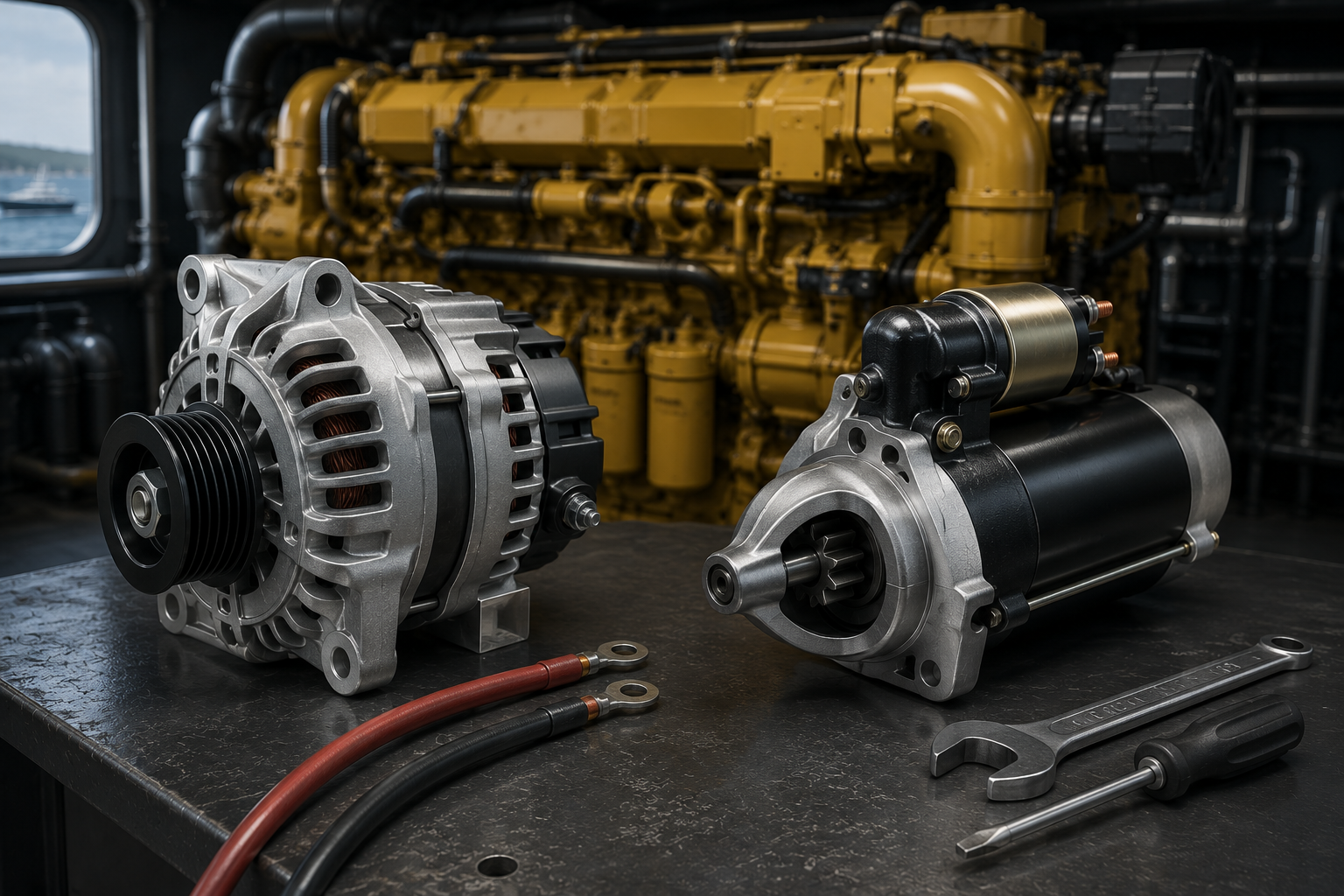
Two components are usually at the center of these situations: the C32 marine engine alternator and the starting motor.
Although they perform different jobs, they work together every time you start and operate your engine. If either one develops a fault, your vessel could be left stranded at the worst possible moment.
Let's answer the questions that marine engineers and vessel owners ask most often.
What does the C32 marine engine starting motor do?
The starting motor has one simple but essential job.
It turns the engine's flywheel fast enough for combustion to begin.
When you turn the ignition key or press the start button, electrical power from the batteries flows to the starter solenoid. The solenoid engages the starter pinion with the flywheel ring gear before the electric motor begins turning the engine.
Once the engine starts, the starter automatically disengages to prevent damage.
Without a healthy starting motor, even a perfectly maintained C32 engine won't start.
What does the C32 marine engine alternator do?
Once the engine is running, the alternator takes over.
Its job is to generate electrical power for the vessel while also recharging the batteries used during starting.
The alternator supplies electricity to systems such as:
- Engine electronic controls
- Navigation equipment
- Lighting
- Communication systems
- Instrument panels
- Battery charging circuits
A properly working alternator keeps the electrical system stable throughout the voyage.
Can the engine run with a faulty alternator?
Sometimes—but only for a limited time.
If the alternator stops charging, the engine may continue running using battery power.
However, every electrical component continues drawing energy from the batteries.
Eventually, battery voltage drops.
As voltage decreases, electronic systems may begin operating incorrectly, warning alarms may appear, and eventually the engine may no longer restart after shutdown.
For this reason, a charging warning should never be ignored.
Why won't my C32 marine engine start?
This is one of the most common questions marine engineers hear.
Many people immediately blame the starter motor.
In reality, several issues can prevent the engine from cranking.
Common causes include:
- Weak batteries
- Loose battery terminals
- Corroded electrical connections
- Faulty starter solenoid
- Damaged wiring
- Worn starter motor components
- Low system voltage
The starter motor should always be tested as part of the diagnosis—not automatically replaced.
Can low battery voltage affect the starting motor?
Absolutely.
The starting motor requires a large amount of electrical current.
If battery voltage is too low, you may notice:
- Slow cranking
- Clicking from the starter solenoid
- Starter engagement problems
- Failure to crank the engine
- Intermittent starting
Sometimes the solution is simply charging or replacing the batteries rather than replacing the starter.
Why is the starter solenoid important?
The starter solenoid is often overlooked.
Its job is to do two things at the same time:
First, it pushes the starter pinion into the flywheel.
Second, it connects battery power to the starter motor.
If the solenoid fails, the starter may click but never turn the engine.
This is why technicians often inspect both the starter motor and the solenoid during troubleshooting.
What are the warning signs of a failing alternator?
Alternator problems usually develop gradually.
Common warning signs include:
- Battery warning lights
- Low charging voltage
- Dim navigation lights
- Batteries that won't stay charged
- Electrical equipment behaving unpredictably
- Slow engine cranking after shutdown
- Unusual noises from the alternator
Finding these symptoms early often prevents unexpected breakdowns.
Can loose electrical connections cause charging problems?
Yes—and they're more common than many people think.
Marine engine rooms are harsh environments.
Over time, vibration, moisture, and salt air can affect electrical connections.
Loose or corroded terminals increase electrical resistance.
The result may be:
- Reduced charging performance
- Voltage drops
- Intermittent electrical faults
- Poor starter performance
Simply cleaning and tightening connections is sometimes enough to restore normal operation.
How can you tell if the alternator is charging correctly?
One of the easiest checks is measuring system voltage while the engine is running.
A healthy charging system should produce a higher voltage than the batteries provide with the engine stopped.
If charging voltage remains close to battery voltage, further testing of the alternator, wiring, and regulator may be required.
Routine voltage checks can help detect charging problems long before complete failure occurs.
How often should the starter motor and alternator be inspected?
Although these components don't require daily attention, they should be included during routine engine maintenance.
A typical inspection includes:
- Checking mounting bolts
- Inspecting electrical cables
- Cleaning battery terminals
- Looking for corrosion
- Checking belt condition and tension (where applicable)
- Listening for unusual noises
- Measuring charging voltage
- Inspecting starter connections
These simple checks take only a short time but can prevent costly downtime.
Can regular maintenance extend the life of the alternator and starter?
Definitely.
Most failures occur because of poor electrical connections, moisture, vibration, or neglected maintenance rather than defective components.
Good maintenance habits include:
- Keep batteries fully charged.
- Clean battery terminals regularly.
- Inspect cables for corrosion.
- Tighten loose electrical connections.
- Keep the alternator free from excessive dirt and oil.
- Check charging voltage during scheduled servicing.
- Investigate slow cranking immediately.
- Replace damaged cables before they create larger electrical problems.
These simple maintenance practices can significantly increase the service life of both the C32 marine engine alternator and the starting motor.
Final Thoughts
The C32 marine engine alternator and starting motor may only get your attention when something goes wrong, but they are two of the most important components in your vessel's electrical system.
The starting motor gives your engine life by cranking it into operation, while the alternator keeps the batteries charged and supplies power to essential onboard equipment throughout your journey.
The good news is that many starting and charging problems are preventable. Regular inspections, clean electrical connections, healthy batteries, and routine voltage checks can greatly improve reliability and reduce the risk of unexpected failures at sea.
If your C32 engine starts cranking slowly, your batteries aren't charging properly, or warning lights begin appearing on the panel, don't ignore the signs. Diagnosing the problem early can save time, reduce repair costs, and help keep your vessel operating safely and reliably.