MTU 10V 2000 M86 Oil Pump Problems: How to Protect Your Marine Engine from Lubrication Failure
The MTU 10V 2000 M86 marine engine is designed to deliver dependable performance for luxury yachts, patrol boats, pilot vessels, commercial craft, and other demanding marine applications. Whether cruising at sea or operating under continuous load, every rotating and moving component inside the engine depends on one essential system—the lubrication system.
At the center of that system is the engine oil pump.
Although it is rarely visible during routine inspections, the oil pump continuously circulates lubricating oil to the crankshaft, camshaft, pistons, turbochargers, bearings, and valve train. Without adequate oil pressure, these precision components can suffer severe damage within minutes.
This guide explains how the oil pump works, why it fails, the warning signs to watch for, and the maintenance practices that help keep the MTU 10V 2000 M86 operating reliably.
What Does the Oil Pump Do?
The oil pump draws engine oil from the sump, pressurizes it, and distributes it through oil galleries to every critical moving component.
Its primary functions include:
- Maintaining correct oil pressure
- Lubricating bearings
- Reducing friction
- Cooling internal engine components
- Carrying contaminants to the oil filters
- Protecting turbocharger bearings
- Extending engine life
Without a properly functioning oil pump, the engine cannot maintain an effective lubricating film between moving parts.
Why Is Proper Oil Pressure So Important?
Every component inside the MTU 10V 2000 M86 depends on consistent oil pressure.
Low oil pressure affects:
- Main bearings
- Connecting rod bearings
- Camshaft bearings
- Cam lobes
- Rocker arms
- Turbocharger bearings
- Timing gears
- Pistons and cylinder liners
Even a short period of insufficient lubrication can cause accelerated wear and costly repairs.
Common Causes of Oil Pump Problems
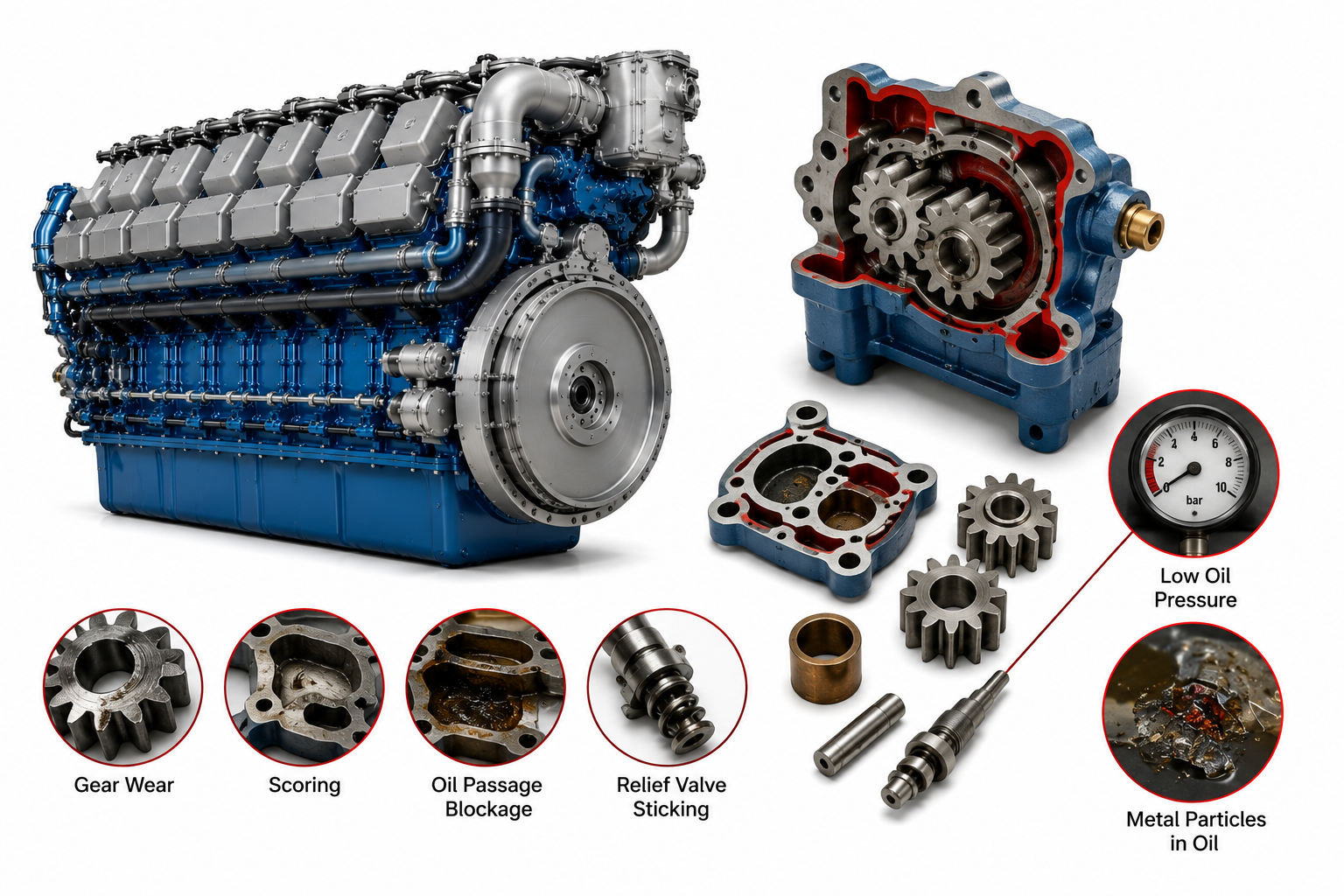
Worn Internal Gears
Over thousands of operating hours, the internal gears or rotors gradually wear, reducing pumping efficiency.
Contaminated Engine Oil
Dirt, sludge, carbon deposits, or metal particles can damage internal pump surfaces.
Blocked Oil Pickup Screen
Sludge or debris inside the oil sump can restrict oil flow to the pump.
Low Engine Oil Level
Operating with insufficient oil allows air to enter the lubrication system, reducing pressure.
Worn Pressure Relief Valve
A sticking or worn pressure relief valve can prevent the pump from maintaining proper oil pressure.
Incorrect Lubricating Oil
Using oil with an incorrect viscosity may reduce lubrication performance under certain operating conditions.
Early Warning Signs of Oil Pump Problems
Watch for these symptoms:
- Low oil pressure alarms
- Fluctuating oil pressure
- Increased engine temperature
- Valve train noise
- Knocking sounds
- Turbocharger noise
- Metal particles in the oil filter
- Higher oil consumption
- Reduced engine performance
- Oil pressure dropping at idle
Never ignore an oil pressure warning. Immediate investigation can prevent catastrophic engine damage.
How Oil Pump Problems Affect Other Components
A failing oil pump rarely damages only itself.
Reduced oil pressure affects:
- Camshaft
- Crankshaft
- Main bearings
- Connecting rod bearings
- Turbochargers
- Pistons
- Cylinder liners
- Rocker arms
- Valve train
- Timing gears
One lubrication issue can quickly become a complete engine overhaul if not addressed.
Oil Analysis: Your First Line of Defense
Routine oil analysis provides valuable insight into the health of the lubrication system.
Laboratory reports can identify:
- Iron
- Copper
- Lead
- Chromium
- Fuel dilution
- Water contamination
- Coolant contamination
- Viscosity changes
- Oxidation
- Additive depletion
Monitoring these trends helps engineers identify developing lubrication problems before mechanical failure occurs.
Components to Inspect During Oil Pump Maintenance
Whenever the lubrication system is serviced, inspect:
- Oil filters
- Oil cooler
- Oil pickup screen
- Pressure relief valve
- Oil pressure sensor
- Turbocharger oil supply lines
- Engine sump
- Oil galleries
- Crankcase breather
- Engine seals
A complete inspection provides a much clearer picture than replacing a single component.
Preventive Maintenance Checklist
✔ Check engine oil level before operation.
✔ Replace oil and filters at recommended intervals.
✔ Use manufacturer-approved lubricating oil.
✔ Monitor oil pressure during operation.
✔ Perform routine oil analysis.
✔ Inspect the oil pickup screen during major servicing.
✔ Investigate oil pressure alarms immediately.
✔ Keep maintenance records for trend analysis.
✔ Replace worn seals and gaskets during overhauls.
✔ Never operate the engine with low oil pressure.
Marine Engineer Tip
A gradual drop in oil pressure over several hundred operating hours is often more significant than a sudden warning alarm. Trending oil pressure together with laboratory oil analysis helps identify developing oil pump wear before major engine damage occurs.
Common Mistakes
Avoid these common mistakes:
- Ignoring intermittent oil pressure warnings.
- Extending oil change intervals beyond recommendations.
- Reusing clogged oil filters.
- Assuming low oil pressure always means a faulty sensor.
- Replacing the oil pump without inspecting the lubrication system.
- Continuing operation after an oil pressure alarm.
Frequently Asked Questions
Can a worn oil pump damage the turbocharger?
Yes. Turbochargers depend on a constant supply of pressurized engine oil. Low oil pressure can quickly damage turbocharger bearings.
Does dirty oil affect the oil pump?
Yes. Contaminated oil accelerates wear inside the pump and throughout the lubrication system.
What is the first sign of an oil pump problem?
Low or fluctuating oil pressure is usually the earliest warning sign.
Should I inspect the oil cooler at the same time?
Absolutely. Restricted oil flow or contamination inside the oil cooler can affect lubrication performance.
Can oil analysis detect lubrication problems?
Yes. Oil analysis often identifies wear and contamination before noticeable mechanical symptoms develop.
Worldwide Marine Engine Spare Parts Supply
Alfa Marine Spare Parts supplies genuine, OEM, aftermarket, remanufactured, and reconditioned spare parts for the MTU 10V 2000 M86 and the complete MTU Series 2000 engine family.
We ship worldwide to shipyards, commercial shipping companies, offshore operators, yacht builders, government fleets, marine service companies, and fleet operators.
Our customers are located throughout the United Kingdom, the United States, Dubai (UAE), Monaco, Nigeria, the Netherlands, Italy, Spain, France, Germany, Norway, Greece, and many other maritime regions.
We proudly support customers operating in and around major maritime facilities such as Harland & Wolff, A&P Group, Cammell Laird, Portsmouth Naval Base, Huntington Ingalls Industries (HII), General Dynamics NASSCO, Bollinger Shipyards, Damen Shipyards, Fincantieri, Meyer Werft, Drydocks World Dubai, Dubai Maritime City, and offshore operations in Lagos, Port Harcourt, Onne, and Warri, Nigeria.
Browse Our Complete Spare Parts Catalog
Alfa Marine Spare Parts supplies:
- Oil pumps
- Oil coolers
- Oil filters
- Camshafts
- Crankshafts
- Fuel injectors
- Heat exchangers
- Seawater pumps
- Turbochargers
- Cylinder heads
- Bearings
- Gaskets
- Complete overhaul kits
Browse our complete inventory:
https://alfamarinespareparts.com/spareparts
Why Choose Alfa Marine Spare Parts?
Marine professionals worldwide choose Alfa Marine Spare Parts because we provide:
- Genuine, OEM, aftermarket, remanufactured, and reconditioned parts
- Worldwide shipping
- Technical assistance for correct part identification
- Support for commercial vessels, yachts, offshore fleets, patrol boats, and workboats
- Trusted service for shipyards, marine engineers, chief engineers, technical superintendents, and fleet managers
Contact Alfa Marine Spare Parts
Need assistance with your MTU 10V 2000 M86 or help sourcing lubrication system components?
🌐 Website: https://alfamarinespareparts.com
📧 Email: request@alfamarinespareparts.com
Our technical team is ready to help you identify the correct parts and keep your MTU marine engine operating reliably wherever your vessel is located.
Conclusion
The oil pump is one of the most important components in the MTU 10V 2000 M86 marine engine, ensuring every moving part receives the lubrication needed for safe and efficient operation. Routine oil changes, oil analysis, pressure monitoring, and inspections of the lubrication system help detect problems early, reduce downtime, and prevent expensive engine overhauls. By maintaining the oil pump together with the filters, oil cooler, and related components, marine engineers can maximize engine reliability and extend the service life of their MTU engine in demanding marine environments worldwide.