MTU 12V 2000 M72 Low Oil Pressure: Causes, Diagnosis, and Prevention
The MTU 12V 2000 M72 marine engine is widely used in patrol boats, pilot vessels, commercial workboats, and luxury yachts because of its excellent performance and reliability. Like every high-performance marine diesel engine, it depends on a healthy lubrication system to protect its moving parts.
One of the most serious alarms a marine engineer can encounter is low engine oil pressure. Even if the engine continues running, low oil pressure should never be ignored. Without adequate lubrication, critical components such as the crankshaft, camshaft, bearings, turbochargers, and pistons can suffer severe damage within a short period.
Understanding the causes of low oil pressure and responding quickly can prevent an expensive engine overhaul and reduce vessel downtime.
Why Is Oil Pressure So Important?
Engine oil creates a protective film between moving metal surfaces.
The lubrication system helps to:
- Reduce friction
- Prevent metal-to-metal contact
- Cool internal engine parts
- Remove contaminants
- Protect bearings
- Lubricate turbochargers
- Extend engine life
If oil pressure drops below specification, the oil film becomes too thin to protect engine components effectively.
What Causes Low Oil Pressure?
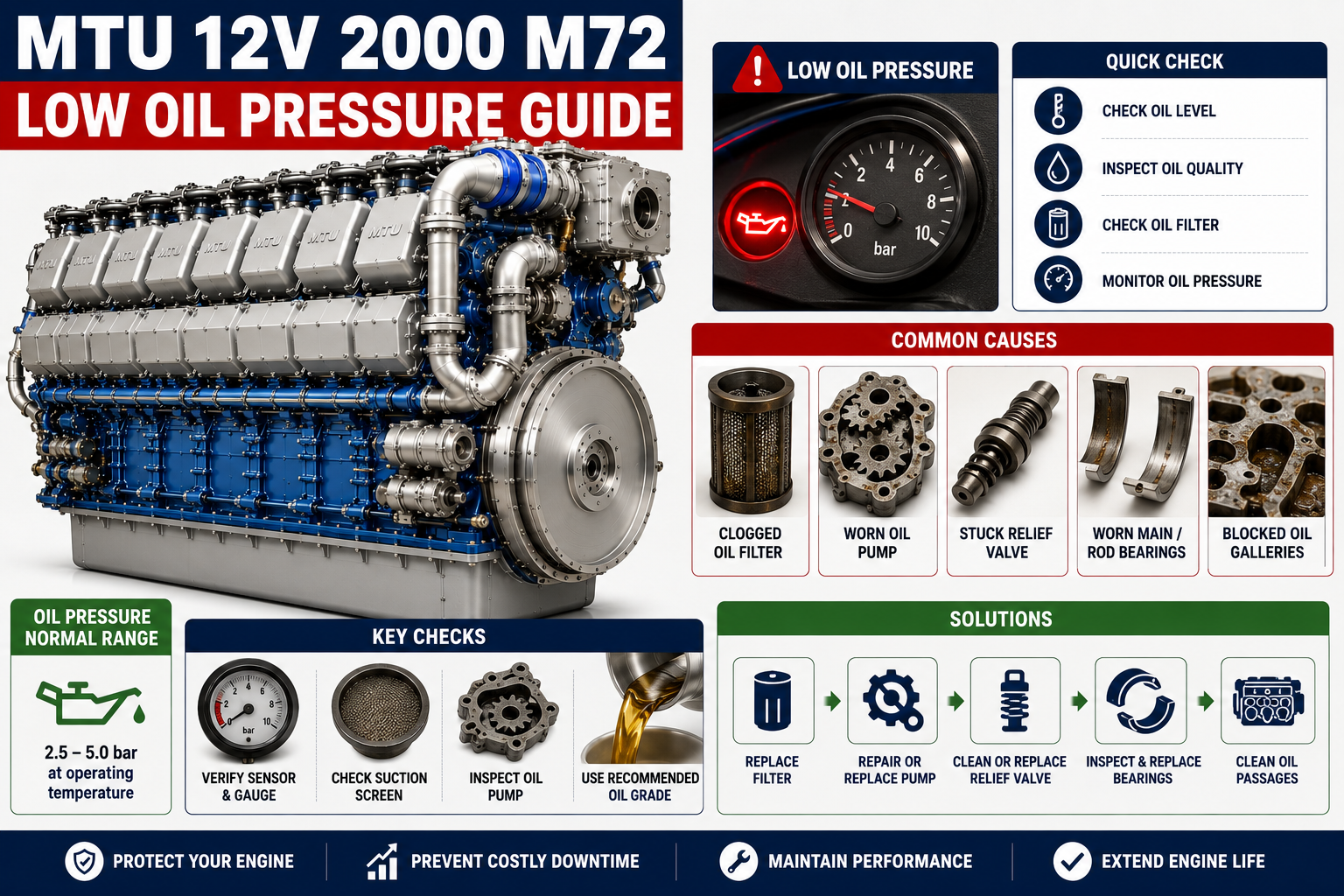
Several issues can reduce oil pressure in the MTU 12V 2000 M72.
Low Engine Oil Level
The simplest cause is insufficient oil in the sump. Always verify the oil level before assuming a mechanical fault.
Worn Oil Pump
Over time, the oil pump's internal gears or rotors may wear, reducing its ability to maintain pressure.
Blocked Oil Pickup Screen
Sludge, carbon deposits, or debris inside the oil pan can restrict oil flow to the pump.
Dirty Oil Filters
Restricted oil filters reduce oil circulation and can affect lubrication performance.
Worn Main Bearings
As bearings wear, internal clearances increase, allowing oil pressure to escape.
Incorrect Engine Oil
Using oil with the wrong viscosity can reduce pressure, particularly during high operating temperatures.
Faulty Oil Pressure Sensor
Sometimes the lubrication system is functioning correctly, but the sensor or wiring provides incorrect readings. Always verify pressure using a calibrated mechanical gauge.
Early Warning Signs
Pay attention to these symptoms:
- Low oil pressure alarm
- Oil pressure fluctuating during operation
- Knocking sounds
- Increased valve train noise
- Higher engine temperature
- Turbocharger noise
- Metal particles in the oil filter
- Reduced engine performance
- Increased oil consumption
- Oil pressure dropping at idle
Never continue operating the engine until the cause has been identified.
Components That May Be Affected
Low oil pressure can damage multiple systems simultaneously.
Inspect:
- Crankshaft
- Main bearings
- Connecting rod bearings
- Camshaft
- Cam followers
- Rocker arms
- Turbocharger bearings
- Pistons
- Cylinder liners
- Timing gears
The longer an engine operates with insufficient lubrication, the greater the risk of secondary damage.
How Oil Analysis Helps
Routine oil analysis is one of the most effective preventive maintenance tools.
Laboratory testing can detect:
- Iron
- Copper
- Lead
- Chromium
- Aluminum
- Fuel dilution
- Coolant contamination
- Water contamination
- Oxidation
- Viscosity loss
Trend analysis often identifies bearing or lubrication wear long before alarms occur.
Additional Inspections
When diagnosing low oil pressure, inspect:
- Oil pump
- Pressure relief valve
- Oil cooler
- Oil pickup tube
- Oil galleries
- Oil filters
- Oil pressure sensor
- Crankcase breather
- Turbocharger oil supply lines
Looking at the complete lubrication system provides a more accurate diagnosis than replacing individual components without testing.
Preventive Maintenance Checklist
✔ Check engine oil level daily.
✔ Use manufacturer-approved lubricating oil.
✔ Replace oil and filters at recommended intervals.
✔ Perform routine oil analysis.
✔ Monitor oil pressure trends.
✔ Inspect the oil pickup screen during major maintenance.
✔ Replace damaged seals and gaskets.
✔ Investigate every oil pressure alarm.
✔ Keep detailed maintenance records.
✔ Never operate the engine with confirmed low oil pressure.
Marine Engineer Tip
A gradual reduction in oil pressure over several months often indicates developing bearing wear rather than a sudden oil pump failure. Recording oil pressure at idle and cruising speed during routine inspections helps engineers identify trends before they become critical.
Common Mistakes
Avoid these common mistakes:
- Ignoring intermittent oil pressure alarms.
- Replacing only the pressure sensor without testing actual pressure.
- Using the wrong engine oil viscosity.
- Extending oil change intervals.
- Failing to inspect the oil pickup screen.
- Continuing operation after repeated alarms.
Frequently Asked Questions
What is the most common cause of low oil pressure?
Low oil level, worn bearings, dirty oil filters, and oil pump wear are among the most common causes.
Can low oil pressure damage the turbocharger?
Yes. Turbochargers depend on pressurized engine oil for lubrication and cooling.
Should I replace the oil pump immediately?
Not always. Confirm the root cause through proper diagnostics before replacing components.
Can oil analysis identify lubrication problems?
Yes. Oil analysis often detects wear metals and contamination long before mechanical failure occurs.
Is low oil pressure always caused by the oil pump?
No. Worn bearings, incorrect oil viscosity, clogged filters, and faulty sensors can produce similar symptoms.
Worldwide Marine Engine Spare Parts Supply
Alfa Marine Spare Parts supplies genuine, OEM, aftermarket, remanufactured, and reconditioned spare parts for the MTU 12V 2000 M72 and the complete MTU Series 2000 engine family.
We ship worldwide to:
- Shipyards
- Commercial shipping companies
- Offshore operators
- Yacht builders
- Marine engineers
- Chief engineers
- Technical superintendents
- Fleet operators
- Government fleets
- Marine service companies
We regularly supply customers across the United Kingdom, United States, Dubai (UAE), Monaco, Nigeria, the Netherlands, Italy, Spain, France, Germany, Norway, and Greece, supporting vessels operating in major ports and shipyards worldwide.
Browse Our Complete Spare Parts Catalog
Alfa Marine Spare Parts supplies:
- Oil pumps
- Oil coolers
- Oil filters
- Crankshafts
- Camshafts
- Main bearings
- Connecting rod bearings
- Turbochargers
- Fuel injectors
- Heat exchangers
- Seawater pumps
- Cylinder heads
- Gasket sets
- Complete overhaul kits
Browse our complete inventory:
https://alfamarinespareparts.com/spareparts
Why Choose Alfa Marine Spare Parts?
Marine operators worldwide trust Alfa Marine Spare Parts because we provide:
- Genuine, OEM, aftermarket, remanufactured, and reconditioned marine engine parts
- Worldwide shipping
- Expert technical support for part identification
- Fast response for urgent vessel requirements
- Solutions for commercial vessels, yachts, offshore fleets, fishing vessels, and patrol boats
- Reliable support for shipyards, marine engineers, chief engineers, and fleet managers
Contact Alfa Marine Spare Parts
Need assistance with your MTU 12V 2000 M72 lubrication system or help identifying the correct replacement parts?
Website: https://alfamarinespareparts.com
Email: request@alfamarinespareparts.com
Our experienced team is ready to help you source the right components and keep your MTU marine engine operating safely and efficiently.
Conclusion
Low oil pressure is one of the most critical warnings on the MTU 12V 2000 M72 marine engine and should never be ignored. Early diagnosis, routine oil analysis, proper lubrication practices, and regular inspection of the oil pump, bearings, filters, and lubrication system can prevent catastrophic engine damage. By following a proactive maintenance strategy and using high-quality replacement parts, marine engineers can improve engine reliability, reduce downtime, and extend the service life of their MTU engine in demanding marine operations.