MTU 20V4000 M73L Parts: Why Load Management Is Critical for Maximum Engine Life
Opening Story
Maximum Power Doesn't Mean Maximum Wear—Poor Load Management Does
A high-speed naval vessel powered by MTU 20V4000 M73L engines had accumulated thousands of successful operating hours.
The engines consistently delivered exceptional performance during demanding missions.
Acceleration remained strong.
Oil pressure was stable.
Cooling temperatures stayed within specification.
There were no active alarms.
Despite this, the Chief Engineer noticed a subtle change while reviewing historical engine data.
During repeated high-speed operations, exhaust gas temperatures had slowly become less balanced between cylinder banks.
The difference was small—far below alarm limits—but experienced engineers know that small trends often become expensive repairs if ignored.
A scheduled inspection revealed minor injector wear, slight fouling within the charge air cooler, and reduced airflow efficiency.
None of the MTU 20V4000 M73L Parts had failed.
However, together they were increasing thermal stress under heavy load.
Correcting these issues restored balanced engine performance and prevented unnecessary wear on critical engine components.
Why This Matters
The MTU 20V4000 M73L is engineered for continuous high-performance marine applications where reliability is essential.
Whether installed in:
- Naval vessels
- Fast ferries
- Offshore patrol vessels
- Large yachts
- Commercial high-speed craft
every component must work efficiently together.
Operating continuously at high load is not harmful when the engine is properly maintained.
Operating at high load with reduced cooling, restricted airflow, contaminated fuel, or declining lubrication accelerates component wear dramatically.
Engineering Lesson
Engine Load Reveals Problems That Idle Operation Never Will
Many developing faults only become noticeable when the engine operates under heavy demand.
Examples include:
- Higher exhaust temperatures
- Reduced turbocharger efficiency
- Injector imbalance
- Charge air cooler fouling
- Increased fuel consumption
- Rising coolant temperatures
- Slight vibration increases
At low engine load, these symptoms may be almost impossible to detect.
Under full operating conditions, however, small inefficiencies become much easier to identify.
This is why engineers compare engine data collected under similar operating conditions rather than relying only on idle inspections.
Engine Room Reality
The engine monitoring system protects the engine.
The engineer protects the engine long before the monitoring system intervenes.
Monitoring trends during normal operation allows maintenance to be planned before performance is affected.
Waiting for warning alarms usually means component wear has already progressed further than necessary.
Chief Engineer's Notebook
"A powerful engine doesn't become reliable by producing maximum horsepower. It becomes reliable through consistent maintenance at every operating load."
Load history tells engineers far more than a single inspection ever can.
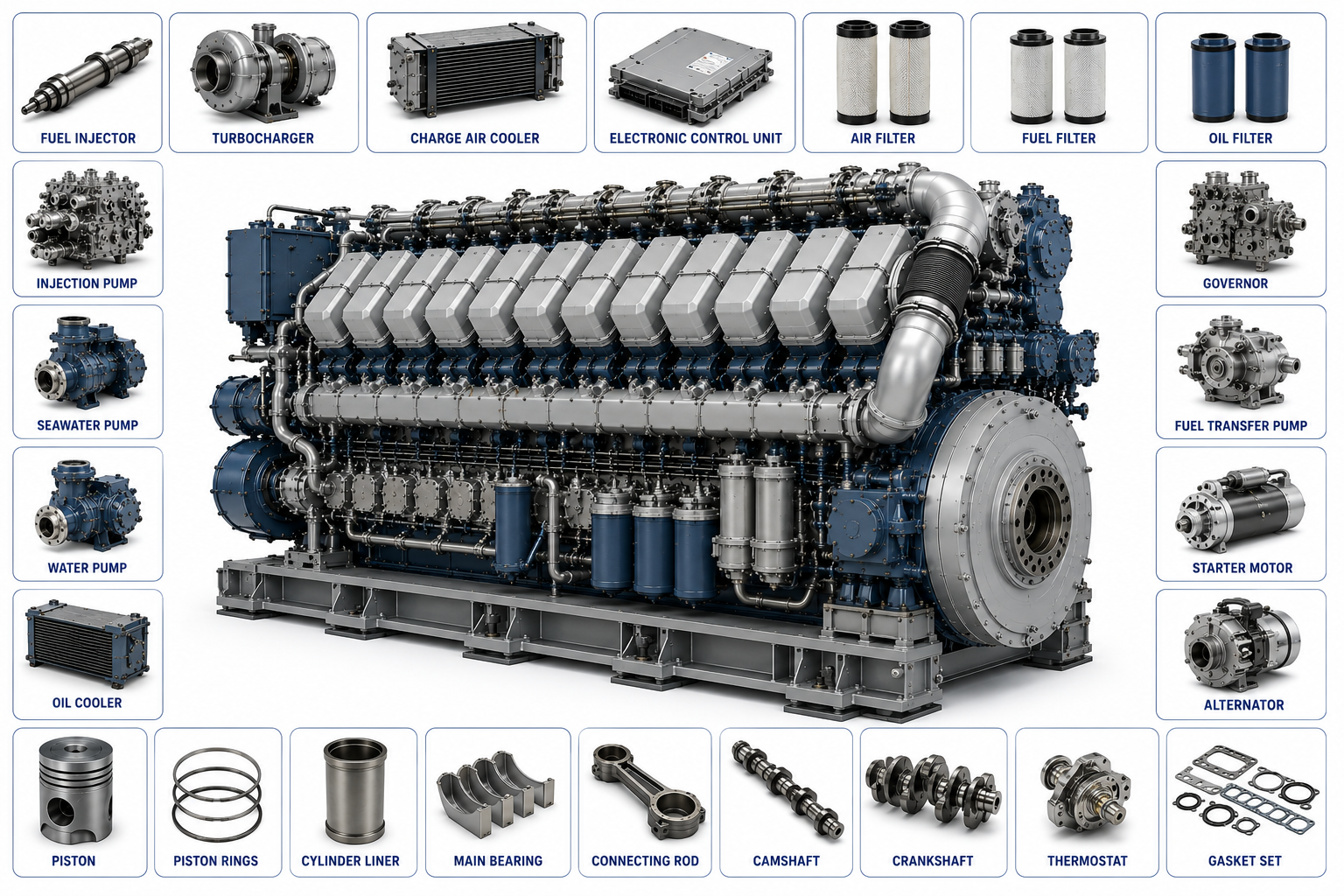
MTU 20V4000 M73L Parts Every Engineer Should Monitor
Fuel Injectors
Fuel injectors must deliver precise fuel quantities under extremely high operating pressures.
Inspect for:
- Uneven combustion
- Increased smoke
- Rising fuel consumption
- Higher exhaust temperatures
- Difficult starting
Routine fuel filtration significantly extends injector life.
Ask Yourself
Have you compared cylinder exhaust temperatures during identical engine loads?
Turbochargers
Turbochargers provide the airflow necessary for efficient combustion.
Routine inspections should include:
- Shaft movement
- Oil leakage
- Compressor cleanliness
- Turbine deposits
- Bearing condition
Healthy turbochargers reduce fuel consumption and improve engine efficiency.
Did You Know?
Even a small reduction in turbocharger efficiency can increase exhaust temperatures during high-load operation.
Charge Air Cooler
Charge air coolers reduce intake air temperature before combustion.
Inspect for:
- Fouling
- Corrosion
- Airflow restriction
- Cooling efficiency
A clean charge air cooler improves combustion and reduces thermal stress.
Seawater Pumps
The seawater pump removes heat from the engine through the cooling circuit.
Inspect for:
- Seal leakage
- Bearing wear
- Impeller condition
- Corrosion
Reliable seawater flow is essential during continuous high-load operation.
Freshwater Pumps
Freshwater pumps circulate coolant throughout the engine.
Inspect for:
- Bearing condition
- Seal wear
- Coolant leaks
- Pump efficiency
Even minor coolant leakage deserves immediate investigation.
Heat Exchangers
Marine deposits gradually reduce heat transfer efficiency.
Routine cleaning helps maintain proper operating temperatures and protects engine performance.
Air Filters
Clean intake air supports efficient combustion and helps reduce fuel consumption.
Restricted air filters increase thermal loading on the engine.
Engine Sensors
Modern MTU engines rely on accurate sensor information.
Routine inspection of wiring, connectors, and sensors helps ensure reliable monitoring data.
(Continue with Part 2: Real Marine Maintenance Scenario, Oil Analysis, Engineer's Toolbox, Preventive Maintenance Checklist, Marine Engineer Tip, Marine Engineer Quote, Common Maintenance Mistakes, FAQs, Worldwide Marine Engine Spare Parts Supply, Browse Our Complete Catalog, Related Engine Pages, Related Products, Further Reading, Why Choose Alfa Marine Spare Parts, Contact, and One Final Thought.)
Real Marine Maintenance Scenario
Performance Restored Through Trend Monitoring
A high-speed naval patrol vessel powered by MTU 20V4000 M73L engines had completed nearly 4,000 operating hours without any major mechanical issues.
The engines continued to produce full rated power.
Oil pressure remained stable.
No warning alarms appeared.
However, during routine engine performance analysis, the Chief Engineer noticed that exhaust gas temperatures on one cylinder bank were gradually increasing during full-load operation.
The increase was only a few degrees.
Most operators would have ignored it.
Instead, the engineering team carried out a detailed inspection.
The investigation revealed:
- Partial fouling inside the charge air cooler.
- Early injector wear on several cylinders.
- Slight contamination in the fuel filtration system.
- Marine growth beginning to restrict seawater flow through the cooling circuit.
None of the MTU 20V4000 M73L Parts had reached the point of failure.
After cleaning the cooling system, replacing the affected injectors, and servicing the fuel system, engine performance returned to normal.
Fuel consumption improved, exhaust temperatures balanced across all cylinders, and the engines continued operating reliably.
The lesson is clear: monitoring small changes under operating load prevents major failures before they occur.
Oil Analysis: Predictive Maintenance Starts With the Lubricating Oil
Routine oil analysis is one of the most effective maintenance tools available for the MTU 20V4000 M73L.
Every oil sample contains valuable information about internal engine condition.
Instead of waiting for visible damage, engineers use laboratory reports to monitor wear trends and schedule maintenance before failures occur.
Iron
Iron commonly indicates wear from:
- Cylinder liners
- Timing gears
- Camshafts
- Crankshaft components
Increasing iron levels should always be compared with previous reports.
Copper
Copper may indicate bearing or bushing wear.
Trend monitoring provides early warning of developing lubrication issues.
Lead
Lead often originates from bearing materials.
Unexpected increases require further investigation.
Aluminium
Aluminium may indicate piston or housing wear.
Long-term trends are more valuable than isolated readings.
Silicon
Silicon is frequently associated with dirt entering through the air intake system.
Proper filtration helps prevent abrasive engine wear.
Fuel Dilution
Fuel contamination reduces oil viscosity and lubricant performance.
Injector condition should be checked whenever fuel dilution increases.
Water Contamination
Water contamination reduces lubrication quality and accelerates corrosion.
Immediate investigation is recommended.
Oxidation
Oxidation measures lubricant ageing and helps determine appropriate oil replacement intervals.
Viscosity
Maintaining correct viscosity ensures effective lubrication of bearings, turbochargers, camshafts, and crankshaft components.
Routine oil analysis extends the service life of MTU 20V4000 M73L Parts and supports condition-based maintenance.
Engineer's Toolbox
Daily MTU 20V4000 M73L Inspection
Experienced marine engineers routinely perform the following checks:
✔ Inspect oil, fuel, and coolant levels.
✔ Compare exhaust temperatures between cylinder banks.
✔ Inspect turbochargers for oil leakage and abnormal sounds.
✔ Check seawater and freshwater pumps.
✔ Review fuel consumption trends.
✔ Monitor oil pressure and coolant temperature.
✔ Inspect charge air cooler condition where accessible.
✔ Record all observations in the engine logbook.
Consistent inspections help identify trends before they become costly repairs.
Preventive Maintenance Checklist
Daily
- Check engine oil level.
- Verify coolant level.
- Inspect for leaks.
- Monitor engine instruments.
- Observe exhaust smoke.
- Listen for abnormal vibration.
Weekly
- Inspect fuel filters.
- Check air filters.
- Inspect turbochargers.
- Examine seawater strainers.
- Review engine performance data.
Every 250–500 Operating Hours
- Replace engine oil according to the maintenance schedule.
- Replace oil and fuel filters.
- Review oil analysis reports.
- Inspect injectors.
- Check cooling system efficiency.
Every 1,000 Operating Hours
- Inspect charge air coolers.
- Clean heat exchangers if required.
- Test injector performance.
- Inspect seawater and freshwater pumps.
- Review long-term operating trends.
Long-Term Maintenance
- Maintain detailed engine history.
- Compare operating data over time.
- Investigate small changes early.
- Replace wear components during scheduled maintenance.
- Never rely solely on warning alarms.
A structured preventive maintenance programme helps maximise the life of MTU 20V4000 M73L Parts.
Marine Engineer Tip
Compare engine data under the same operating conditions.
Load, sea state, and ambient temperature all influence engine performance. Meaningful trend analysis only comes from comparing similar operating conditions over time.
Marine Engineer Quote
"Reliable marine engines are not maintained by reacting to failures—they are maintained by recognising trends before failures begin."
Common Maintenance Mistakes
Avoid these common mistakes:
- Ignoring gradual increases in exhaust temperature.
- Delaying charge air cooler cleaning.
- Extending fuel filter service intervals.
- Skipping oil analysis.
- Neglecting seawater pump inspections.
- Waiting for alarms before scheduling maintenance.
- Failing to compare historical engine performance data.
- Ignoring injector performance during routine servicing.
Small maintenance decisions today prevent major engine overhauls tomorrow.
Frequently Asked Questions
Which MTU 20V4000 M73L Parts require the most routine attention?
Fuel injectors, turbochargers, charge air coolers, freshwater pumps, seawater pumps, heat exchangers, oil filters, fuel filters, air filters, sensors, and engine control components should all be inspected according to the manufacturer's maintenance schedule.
Why is load monitoring important?
Some developing faults only become visible when the engine operates under high load. Monitoring performance during normal working conditions helps identify issues before alarms occur.
Can oil analysis detect developing engine wear?
Yes. Oil analysis identifies wear metals, contamination, and lubricant degradation, allowing maintenance to be planned before component failure.
How can I extend the life of MTU 20V4000 M73L Parts?
Follow the recommended maintenance schedule, use approved lubricants and coolants, maintain clean fuel and air systems, monitor engine trends, and replace wear components before failure occurs.
Worldwide Marine Engine Spare Parts Supply
Alfa Marine Spare Parts supplies genuine, OEM, aftermarket, remanufactured, and reconditioned MTU 20V4000 M73L Parts for commercial vessels, naval fleets, offshore support vessels, fast ferries, and luxury yachts worldwide.
We support:
- Shipyards
- Marine engineers
- Chief engineers
- Technical superintendents
- Fleet operators
- Offshore operators
- Government fleets
- Commercial shipping companies
- Ferry operators
- Yacht operators
- Marine service companies
We deliver worldwide, including the United Kingdom, the United States, Canada, Italy, Spain, France, Germany, the Netherlands, Norway, Greece, Monaco, Dubai (UAE), Nigeria, Singapore, and Australia.
Browse Our Complete Catalog
Explore our complete inventory of MTU marine engine spare parts and maintenance solutions.
https://alfamarinespareparts.com/spareparts
Related Engine Pages
- MTU Series 4000 Marine Engine Spare Parts
- MTU 8V4000 M70 Parts
- MTU 12V4000 M70 Parts
- MTU 12V4000 M90 Parts
- MTU 16V4000 M73 Parts
- MTU 16V4000 M90 Parts
Related Products
- Fuel Injectors
- Turbochargers
- Charge Air Coolers
- Freshwater Pumps
- Seawater Pumps
- Heat Exchangers
- Oil Filters
- Fuel Filters
- Air Filters
- Temperature Sensors
- Gasket and Seal Kits
Further Reading
Continue expanding your marine engineering knowledge with these related topics:
- Charge Air Cooler Maintenance Guide
- Marine Diesel Oil Analysis Explained
- Turbocharger Performance and Inspection
- Cooling System Best Practices
- Predictive Maintenance for High-Speed Marine Engines
Why Choose Alfa Marine Spare Parts?
Alfa Marine Spare Parts supplies genuine, OEM, aftermarket, remanufactured, and reconditioned MTU spare parts backed by experienced technical support for marine professionals worldwide.
Whether you need help identifying the correct MTU 20V4000 M73L Parts, sourcing replacement components, or planning preventive maintenance, our experienced team is ready to provide expert assistance and fast worldwide delivery.
Contact Alfa Marine Spare Parts
Website: https://alfamarinespareparts.com
Browse Our Catalog: https://alfamarinespareparts.com/spareparts
Email: request@alfamarinespareparts.com
Contact Alfa Marine Spare Parts today for expert guidance, technical support, and worldwide delivery of MTU 20V4000 M73L Parts.
One Final Thought
The MTU 20V4000 M73L is designed to deliver exceptional power and reliability in some of the world's most demanding marine environments. Achieving that reliability requires more than responding to alarms—it requires understanding how engine performance changes over time.
Every oil analysis report, injector inspection, cooling system service, and engine performance review contributes to extending component life and reducing operating costs.
Understanding MTU 20V4000 M73L Parts means adopting a proactive maintenance strategy that identifies trends early, protects critical systems, and keeps your vessel operating efficiently and confidently throughout its service life.