
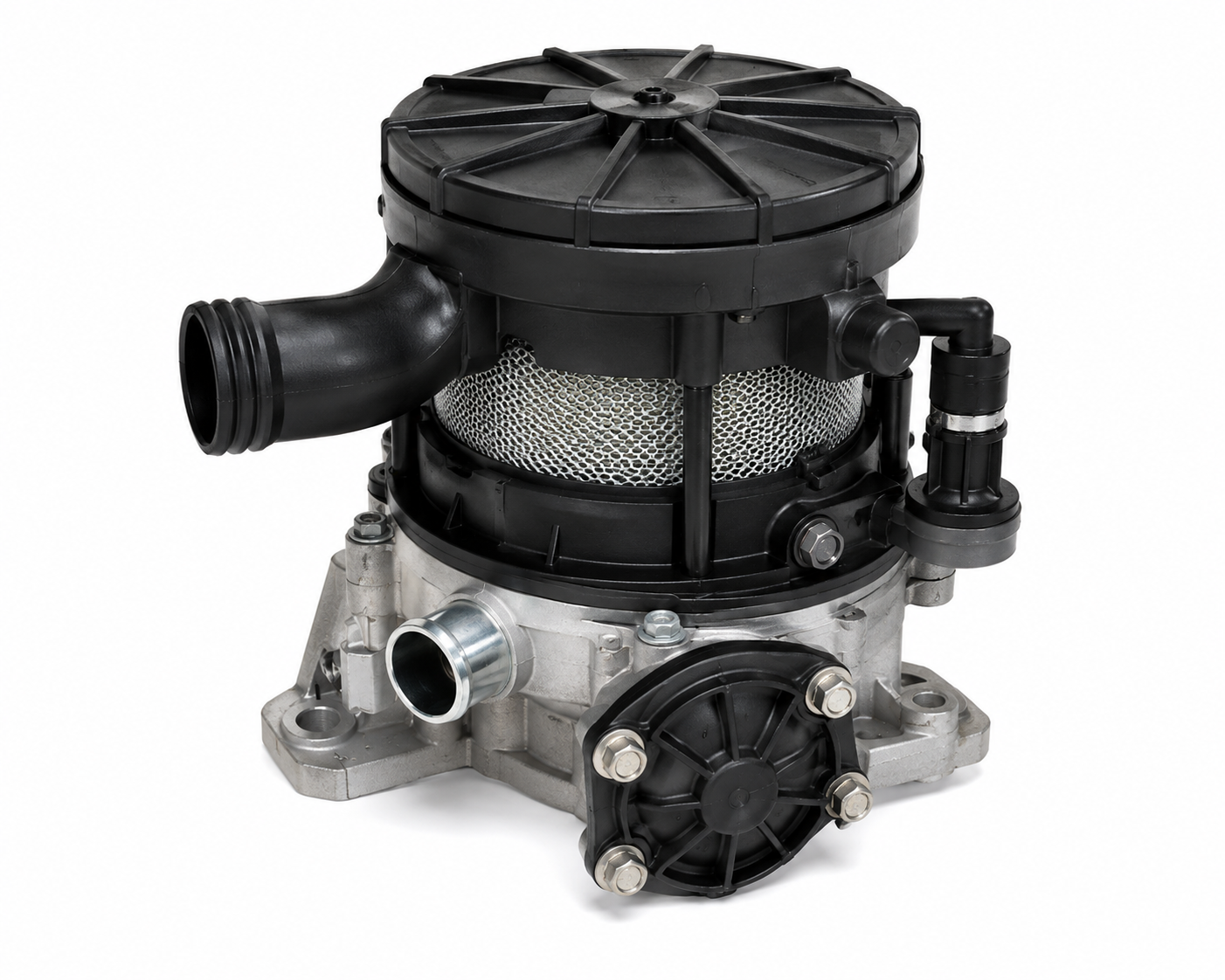
MTU 8V 2000 M94 Crankcase Breather Maintenance: The Overlooked System That Protects Your Engine from Internal Pressure
When marine engineers troubleshoot oil leaks, worn seals, or excessive crankcase pressure, they often focus on the turbocharger, piston rings, or lubrication system. However, one component that is frequently overlooked is the crankcase breather.
On the MTU 8V 2000 M94, the crankcase breather plays an important role in controlling internal engine pressure. During combustion, a small amount of gas passes the piston rings and enters the crankcase. This is known as blow-by. The breather system safely vents these gases while separating oil mist before it can escape the engine.
A restricted or poorly maintained crankcase breather can increase crankcase pressure, leading to oil leaks, damaged seals, reduced engine efficiency, and unnecessary maintenance costs. Fortunately, routine inspections can help identify problems long before they affect engine reliability.
What Does the Crankcase Breather Do?
The crankcase breather is part of the engine ventilation system.
Its primary functions are to:
- Relieve crankcase pressure
- Vent combustion gases safely
- Separate oil mist from blow-by gases
- Reduce oil consumption
- Protect engine seals
- Maintain proper crankcase ventilation
Without adequate ventilation, pressure builds inside the engine and places stress on numerous components.
Why Is the Crankcase Breather Important?
Every diesel engine experiences a small amount of combustion gas leakage past the piston rings.
The breather system prevents this pressure from building inside the crankcase.
A properly functioning breather helps:
- Prevent oil seal failure
- Reduce oil leaks
- Maintain engine cleanliness
- Protect gaskets
- Improve lubrication system performance
- Extend engine life
Although it performs a simple task, it has a significant impact on long-term engine reliability.
A Real Marine Maintenance Scenario
A commercial fishing vessel powered by MTU 8V 2000 M94 engines began developing persistent oil leaks around the front crankshaft seal.
The seals were replaced twice within a year, but the problem continued.
Rather than replacing the seals again, engineers inspected the crankcase ventilation system.
The crankcase breather element was heavily contaminated with oil residue and carbon deposits, restricting airflow.
Once the breather assembly was replaced and the engine cleaned, crankcase pressure returned to normal and the oil leaks disappeared.
The actual cause of the problem was not the seals—it was excessive crankcase pressure.
Common Causes of Crankcase Breather Problems
Several factors can reduce breather efficiency.
Oil Mist Build-Up
Over time, oil vapour accumulates inside the breather element and gradually restricts airflow.
Carbon Deposits
Combustion by-products can clog internal passages, especially after long operating hours.
Extended Service Intervals
Delaying breather replacement allows contamination to accumulate.
High Blow-By
Engines with worn piston rings naturally produce greater crankcase gases, increasing breather workload.
Harsh Marine Environment
Moisture, salt, and continuous engine vibration contribute to gradual deterioration.
Early Warning Signs
Inspect the crankcase breather if you notice:
- Oil leaks around seals
- Oil seepage from gaskets
- Increased crankcase pressure
- Excessive oil mist
- Higher oil consumption
- Blow-by visible during inspection
- Dirty engine exterior
- Restricted breather housing
- Oil contamination around ventilation pipes
- Frequent seal replacement
Early diagnosis often prevents larger engine repairs.
Related Components to Inspect
Whenever the crankcase breather is serviced, inspect:
- Front crankshaft seal
- Rear crankshaft seal
- Valve cover gasket
- Turbocharger compressor inlet
- Air intake piping
- Piston rings
- Cylinder liners
- Oil separator
- Engine ventilation hoses
- Oil level
Examining these components together provides a more complete assessment of engine condition.
Oil Analysis and Condition Monitoring
Oil analysis cannot directly diagnose a blocked crankcase breather, but it can identify related engine conditions.
Routine analysis may reveal:
- Fuel dilution
- Excessive soot
- Oxidation
- Metal wear particles
- Increased oil degradation
- Contamination trends
Combined with visual inspections, oil analysis helps engineers monitor overall engine health.
Preventive Maintenance Checklist
Protect the crankcase ventilation system by following these practices.
✔ Inspect the breather during scheduled maintenance.
✔ Replace breather elements at recommended intervals.
✔ Monitor engine oil consumption.
✔ Investigate new oil leaks immediately.
✔ Check ventilation hoses for restrictions.
✔ Keep the engine exterior clean.
✔ Perform regular oil analysis.
✔ Monitor crankcase pressure where applicable.
✔ Replace damaged seals promptly.
✔ Follow MTU maintenance recommendations.
Marine Engineer Tip
Repeated oil seal failures often indicate excessive crankcase pressure rather than poor-quality seals.
Before replacing seals again, inspect the crankcase breather and verify that the ventilation system is operating correctly.
Common Maintenance Mistakes
Avoid these common mistakes:
- Ignoring oil mist around the breather.
- Cleaning instead of replacing heavily contaminated breather elements.
- Assuming all oil leaks originate from worn seals.
- Extending breather service intervals.
- Ignoring increasing engine blow-by.
- Failing to inspect ventilation hoses.
Frequently Asked Questions
What is crankcase blow-by?
Blow-by is the small amount of combustion gas that passes the piston rings and enters the crankcase during engine operation.
Can a blocked breather cause oil leaks?
Yes. Restricted ventilation increases crankcase pressure, forcing oil past seals and gaskets.
Should the breather be replaced during scheduled maintenance?
Yes. Many operators replace breather elements as part of routine preventive maintenance.
Does excessive blow-by always mean the engine needs rebuilding?
Not necessarily. Increased blow-by should be investigated, but the breather system should be inspected before drawing conclusions.
Can a dirty breather affect engine performance?
Indirectly, yes. Increased crankcase pressure can contribute to oil leaks, contamination, and reduced engine reliability.
Worldwide Marine Engine Spare Parts Supply
Alfa Marine Spare Parts supplies genuine, OEM, aftermarket, remanufactured, and reconditioned spare parts for the MTU 8V 2000 M94 and the complete MTU Series 2000 engine family.
We proudly support:
- Marine Engineers
- Chief Engineers
- Technical Superintendents
- Shipyards
- Commercial Vessel Operators
- Offshore Operators
- Fishing Fleets
- Government Fleets
- Yacht Operators
- Marine Service Companies
We regularly supply marine engine spare parts throughout the United Kingdom, United States, Italy, Spain, France, Germany, the Netherlands, Norway, Greece, Monaco, Dubai (UAE), and Nigeria.
Browse Our Complete Catalog
Explore our extensive inventory of MTU Series 2000 marine engine spare parts, including:
- Crankcase breather assemblies
- Oil separators
- Engine seals
- Gaskets
- Piston rings
- Cylinder liners
- Oil pumps
- Turbochargers
- Water pumps
- Cylinder heads
- Complete overhaul kits
Browse our complete catalog:
https://alfamarinespareparts.com/spareparts
Why Choose Alfa Marine Spare Parts?
At Alfa Marine Spare Parts, we understand that reliable engine performance depends on maintaining every system—not just the major components. Our experienced team supplies quality marine engine spare parts and provides technical assistance to help shipowners, engineers, and maintenance teams keep their MTU engines operating efficiently.
We provide:
- Genuine, OEM, aftermarket, remanufactured, and reconditioned marine engine spare parts
- Worldwide shipping
- Fast quotations
- Technical support for part identification
- Parts for MTU, Caterpillar, Wärtsilä, MAN, Cummins, Volvo Penta, Scania, Detroit Diesel, Perkins, Yanmar, and many other leading marine engine manufacturers
Contact Alfa Marine Spare Parts
Website: https://alfamarinespareparts.com
Email: request@alfamarinespareparts.com
Whether you need a replacement crankcase breather, engine seals, or complete overhaul components, our specialists are ready to help you identify the correct parts for your MTU marine engine.
Conclusion
The crankcase breather on the MTU 8V 2000 M94 is a simple but essential component that helps control internal engine pressure and protect seals, gaskets, and the lubrication system. When the breather becomes restricted, crankcase pressure can rise gradually, leading to oil leaks and unnecessary repairs. By inspecting and replacing the breather at the recommended service intervals, monitoring engine blow-by, and including the ventilation system in your preventive maintenance routine, you can improve engine reliability and extend the service life of your MTU Series 2000 engine.