Caterpillar Marine HEUI Injector Explained: How It Works and Why It's Different from a Conventional Injector
Caterpillar Marine HEUI Injector: Why Does It Use Engine Oil Instead of a Mechanical Pump?
If you've worked on older marine diesel engines, you're probably familiar with mechanical fuel injection systems.
A pump sends fuel to the injectors.
The injectors spray diesel into the cylinders.
Simple.
Then along came Caterpillar's HEUI (Hydraulically Actuated Electronically Controlled Unit Injector) system.
Many marine engineers ask the same question the first time they see it:
"Why is engine oil involved in fuel injection?"
It's a great question—and once you understand how a Caterpillar marine HEUI injector works, you'll see why it became such an important development in diesel engine technology.
Let's break it down in simple terms.
What is a Caterpillar marine HEUI injector?
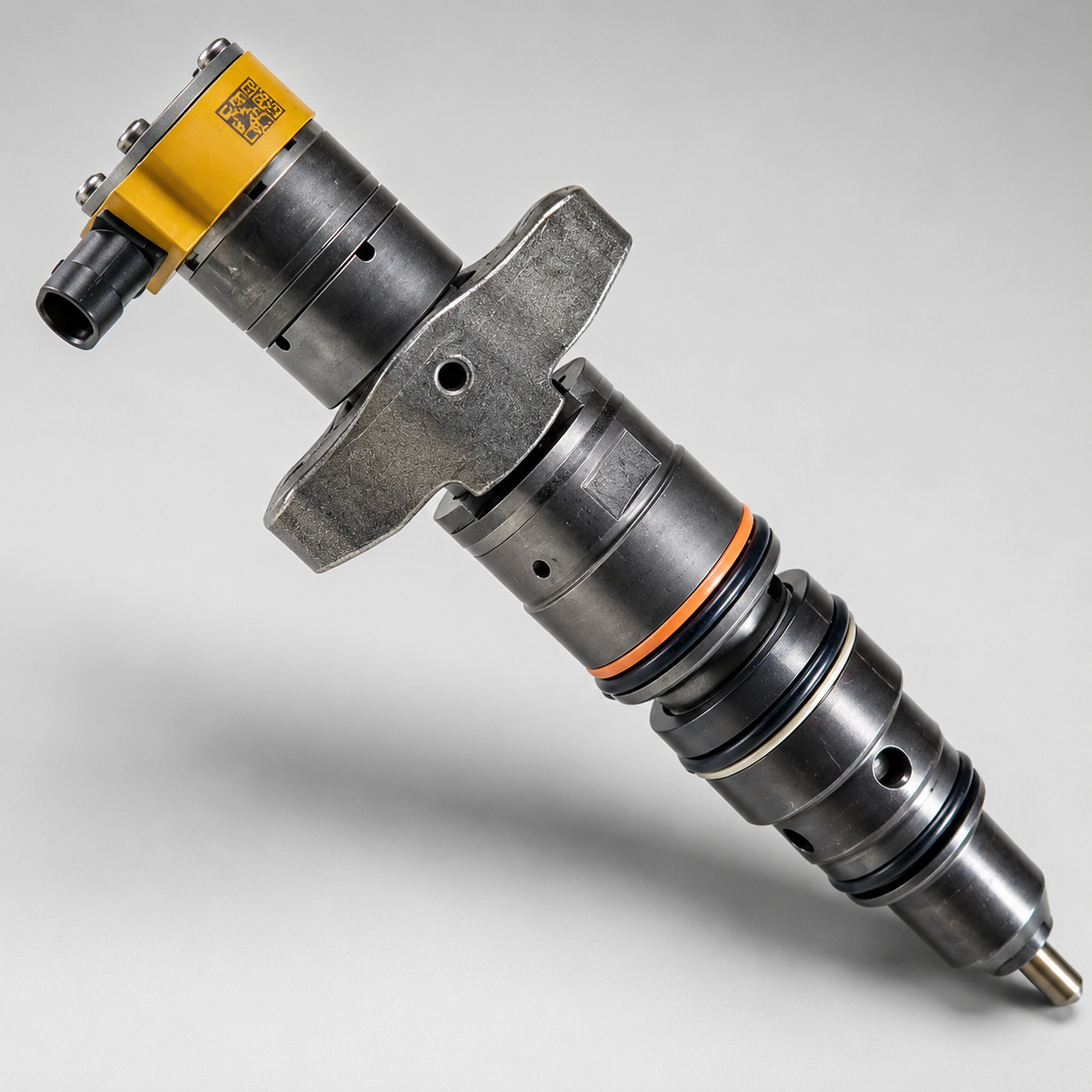
A Caterpillar marine HEUI injector is an electronically controlled fuel injector that uses high-pressure engine oil to create the force needed to inject diesel fuel into the combustion chamber.
Unlike older mechanical systems, the injector doesn't rely solely on a camshaft or mechanical injection pump.
Instead, it combines:
- High-pressure engine oil
- Low-pressure diesel fuel
- Electronic engine controls
Together, these systems allow the injector to deliver the right amount of fuel at precisely the right moment.
Why does the HEUI injector use engine oil?
This is what makes the HEUI system unique.
Inside the injector is a hydraulic piston called an intensifier piston.
When high-pressure engine oil enters the injector, it pushes on this piston.
The piston multiplies the force applied to the fuel below it, dramatically increasing fuel pressure inside the injector.
The result is an extremely fine fuel spray that burns more efficiently inside the cylinder.
Instead of using a mechanical pump to generate injection pressure, the HEUI system uses the engine's lubricating oil as its hydraulic power source.
How does a Caterpillar marine HEUI injector work?
Although the system is advanced, the operating sequence is surprisingly easy to understand.
Here's what happens every time a cylinder fires.
Step 1: Fuel enters the injector
Fuel is supplied to the injector at relatively low pressure.
At this stage, the injector is simply waiting for a command from the engine's electronic control system.
Step 2: The ECM sends a signal
The Engine Control Module (ECM) constantly monitors engine speed, load, throttle position, coolant temperature, and many other operating conditions.
When the correct moment arrives, the ECM energizes the injector's solenoid.
This opens an internal oil control valve.
Step 3: High-pressure oil enters the injector
High-pressure engine oil flows into the top of the injector.
The oil pushes down on the intensifier piston.
Because of the piston's design, the pressure applied to the diesel fuel becomes much higher than the oil pressure itself.
This pressure multiplication allows the injector to atomize the fuel extremely well.
Step 4: Fuel is injected
As fuel pressure rises inside the injector, the nozzle opens.
A precisely measured amount of diesel fuel is sprayed into the combustion chamber as a very fine mist.
The hot compressed air inside the cylinder ignites the fuel, producing the power stroke.
Step 5: The injector resets
Once the injection event is complete, the ECM removes the electrical signal.
The oil control valve closes.
Oil pressure is released, the internal spring returns the injector to its original position, and the injector prepares for the next combustion cycle.
This entire process happens in milliseconds and repeats thousands of times every minute while the engine is running.
Why is fuel atomization so important?
Imagine trying to burn a bucket of water compared with a fine mist from a spray bottle.
The fine mist spreads much more evenly.
Diesel fuel behaves in a similar way.
A Caterpillar marine HEUI injector produces an extremely fine fuel spray that mixes thoroughly with compressed air.
Better mixing results in:
- More complete combustion
- Better engine performance
- Improved fuel economy
- Lower exhaust smoke
- Smoother engine operation
This is one reason the HEUI system became popular in electronically controlled Caterpillar marine engines.
What makes the HEUI injector different from a conventional injector?
The biggest difference is how injection pressure is created.
A conventional mechanical injector relies on a fuel injection pump or camshaft-driven mechanism.
A Caterpillar marine HEUI injector uses:
- High-pressure engine oil
- Electronic controls
- Hydraulic force inside the injector
This allows injection pressure and timing to be adjusted more precisely under different operating conditions.
The result is better engine response across a wide range of speeds and loads.
What causes HEUI injector problems?
Like any precision component, HEUI injectors depend on clean fluids and proper maintenance.
Some common causes of injector problems include:
- Dirty engine oil
- Contaminated diesel fuel
- Water in the fuel system
- Restricted oil passages
- Worn injector components
- Poor maintenance practices
- Low engine oil pressure
Because the injector relies on both oil and fuel, problems in either system can affect its performance.
What are the warning signs of a faulty HEUI injector?
The engine usually gives several clues.
You may notice:
- Hard starting
- Rough idle
- Loss of engine power
- Increased fuel consumption
- Black exhaust smoke
- White exhaust smoke
- Engine misfires
- Poor throttle response
- Uneven engine operation
These symptoms don't automatically mean an injector has failed, but they do indicate that the fuel and oil systems should be inspected.
Why is engine oil so important for HEUI injectors?
This surprises many people.
In a HEUI system, engine oil isn't just lubricating the engine.
It's also providing the hydraulic force needed to inject fuel.
If the oil is:
- Dirty
- Too thick
- Too thin
- Contaminated
- Low in pressure
The injector may not operate correctly.
That's why regular oil changes using the correct oil specification are essential for engines equipped with Caterpillar marine HEUI injectors.
How can you extend the life of Caterpillar marine HEUI injectors?
The best way is through consistent maintenance.
Good habits include:
- Change engine oil at the recommended intervals.
- Replace oil filters on schedule.
- Use clean, high-quality diesel fuel.
- Replace fuel filters regularly.
- Drain water separators frequently.
- Monitor engine oil pressure.
- Investigate hard starting or rough running early.
- Follow Caterpillar's recommended maintenance schedule.
Taking care of both the lubrication and fuel systems helps protect the injectors and improve overall engine reliability.
Final Thoughts
The Caterpillar marine HEUI injector is more than just a fuel injector—it's a precision hydraulic and electronic component that combines high-pressure engine oil, clean diesel fuel, and electronic control to deliver accurate fuel injection under all operating conditions.
Its design allows for excellent fuel atomization, smooth engine performance, and efficient combustion, but it also means the injector depends on clean oil, clean fuel, and proper maintenance. Ignoring either system can reduce injector performance and eventually lead to costly repairs.
Understanding how the HEUI injector works makes troubleshooting much easier. When an engine develops hard starting, rough running, smoke, or reduced power, it's important to look at both the fuel system and the hydraulic oil system rather than assuming the injector itself has failed.