
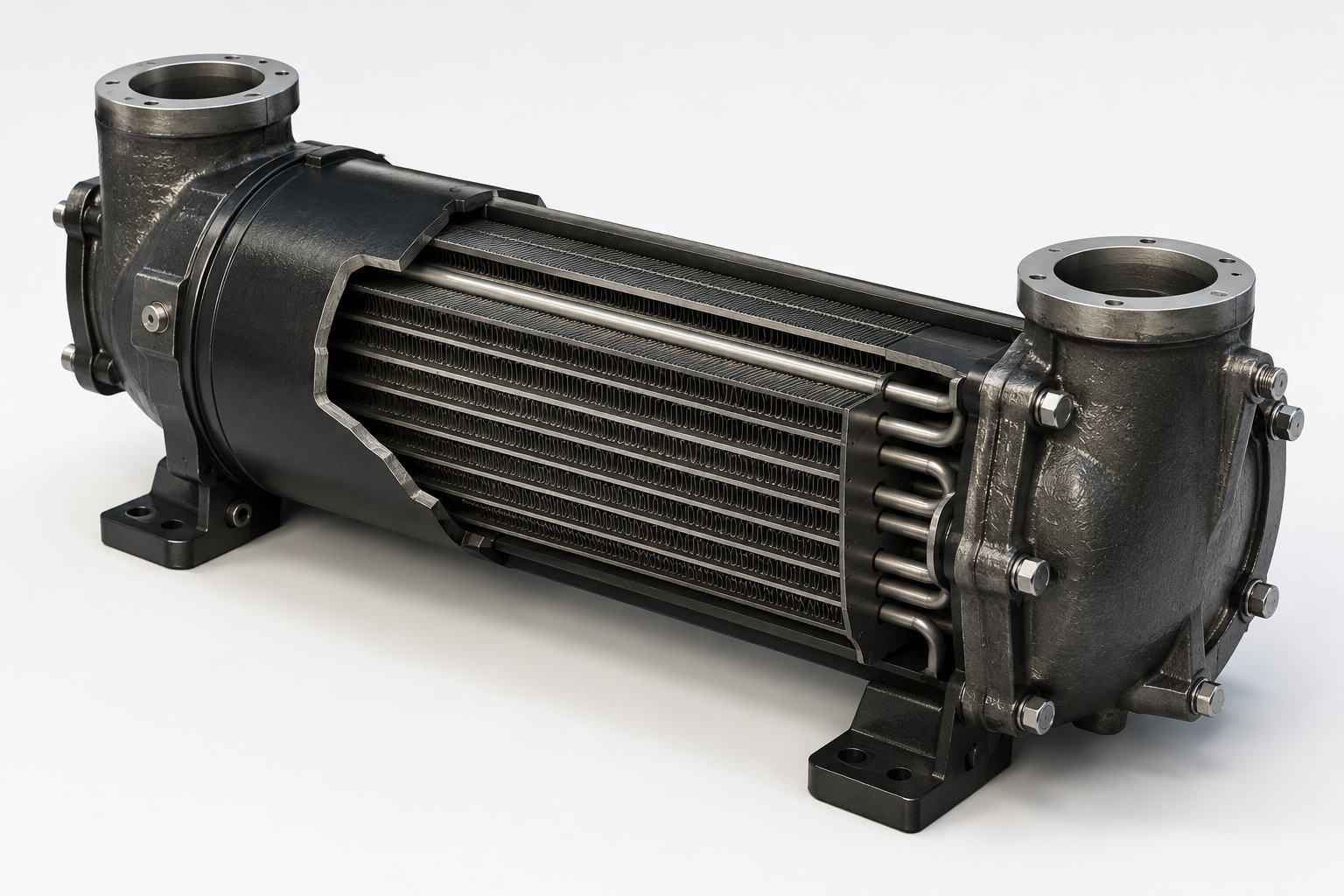
Caterpillar Marine Aftercooler Core Inspection: 8 Warning Signs You Should Never Ignore
Caterpillar Marine Aftercooler Core Inspection: Could This Small Problem Lead to a Major Engine Failure?
A Caterpillar marine engine begins losing power.
Fuel consumption slowly increases.
Exhaust temperatures start climbing.
Most engineers immediately suspect the turbocharger or fuel injectors.
But what if the real problem is hiding inside the Caterpillar marine aftercooler core?
The aftercooler rarely attracts attention until performance begins to suffer. By then, deposits, corrosion, or internal leaks may already be affecting engine efficiency.
The good news is that your engine usually gives several warning signs long before serious damage occurs.
Let's look at the questions marine engineers ask when inspecting an aftercooler core.
Why should the Caterpillar marine aftercooler core be inspected regularly?
The Caterpillar marine aftercooler core operates in one of the harshest environments on the engine.
It is constantly exposed to:
- Saltwater
- High temperatures
- Moisture
- Engine vibration
- Pressure changes
- Mineral deposits
Over time, these conditions can reduce its cooling efficiency.
Routine inspections allow engineers to identify small problems before they become expensive engine repairs.
What is the first sign that the aftercooler may need attention?
One of the earliest warning signs is often a gradual loss of engine performance.
You might notice:
- The engine doesn't accelerate as quickly.
- The vessel struggles under heavy load.
- Fuel consumption slowly increases.
- Exhaust temperatures begin to rise.
These changes are often gradual, making them easy to overlook during day-to-day operation.
Can higher intake air temperatures indicate an aftercooler problem?
Yes.
The main job of the Caterpillar marine aftercooler core is to cool compressed intake air.
If the core becomes restricted or loses efficiency, the intake air remains hotter than it should.
Hotter air contains less oxygen, reducing combustion efficiency and engine performance.
Monitoring intake air temperature trends can help identify problems before they become serious.
How do you visually inspect a Caterpillar marine aftercooler core?
A careful visual inspection can reveal a surprising amount.
Look for:
- Corrosion
- Salt deposits
- Damaged cooling fins
- Oil contamination
- Coolant stains
- Loose fasteners
- Damaged end covers
- Leaking seals
Even small signs of corrosion deserve further investigation.
Why are internal deposits such a concern?
Not every problem is visible from the outside.
Over time, cooling passages inside the Caterpillar marine aftercooler core can become restricted by:
- Mineral scale
- Salt crystals
- Marine deposits
- Rust
- Corrosion products
These restrictions reduce heat transfer, making the aftercooler less efficient.
The engine may continue operating, but at reduced performance.
Can an aftercooler leak without obvious symptoms?
Unfortunately, yes.
Small internal leaks may develop slowly.
In some cases, the only clues are:
- Unexplained coolant loss
- White exhaust smoke
- Moisture inside intake piping
- Rust around air passages
- Increasing engine temperatures
Detecting these problems early can prevent significant internal engine damage.
How does a dirty aftercooler affect the turbocharger?
Many people assume reduced engine power means the turbocharger is failing.
Sometimes the turbocharger is working perfectly.
The real problem is that the hot compressed air isn't being cooled properly before entering the engine.
The turbocharger and the Caterpillar marine aftercooler core work together.
If one component loses efficiency, overall engine performance suffers.
Should the aftercooler be pressure tested?
Yes.
A pressure test is one of the most effective ways to check for internal leaks that cannot be seen during a visual inspection.
During scheduled maintenance or overhaul, technicians often pressure test the aftercooler core to confirm that it is sealed properly before reinstalling it.
This simple procedure can help prevent coolant from entering the engine's intake system.
How often should the Caterpillar marine aftercooler core be cleaned?
There isn't a single answer.
Cleaning intervals depend on:
- Operating hours
- Water quality
- Saltwater exposure
- Engine load
- Manufacturer's maintenance schedule
Commercial vessels operating every day often require more frequent inspections than recreational vessels.
Following the recommended service schedule is always the best approach.
What maintenance helps extend aftercooler life?
Simple maintenance habits can greatly improve reliability.
Good practices include:
- Inspect the cooling system regularly.
- Flush cooling passages when required.
- Monitor engine operating temperatures.
- Replace worn seals during servicing.
- Check for coolant leaks.
- Clean salt deposits before corrosion develops.
- Pressure test the core during major maintenance.
- Investigate performance changes early.
These steps help keep the Caterpillar marine aftercooler core working efficiently for many operating hours.
Final Thoughts
The Caterpillar marine aftercooler core is one of the most overlooked components in a marine diesel engine, yet it has a direct impact on power, fuel efficiency, and engine reliability. Regular inspections can reveal corrosion, restricted cooling passages, or internal leaks long before they lead to serious damage.
Instead of waiting for overheating or a noticeable loss of performance, make the aftercooler core part of your preventative maintenance routine. A careful inspection today can prevent costly repairs tomorrow and help your Caterpillar marine engine deliver dependable performance throughout its service life.