MTU 10V 2000 M96L Exhaust Flex Pipe Inspection: A Small Component That Protects Your Entire Exhaust System
When marine engineers investigate exhaust leaks, they often inspect the turbocharger, exhaust manifold, or silencer first. However, one component that deserves equal attention is the exhaust flex pipe.
On the MTU 10V 2000 M96L, the exhaust flex pipe absorbs engine movement and vibration while maintaining a secure connection between the turbocharger and the vessel's exhaust system. Without this flexibility, constant engine movement would place excessive stress on rigid exhaust piping, increasing the risk of cracks, leaks, and expensive repairs.
Although the exhaust flex pipe is designed to withstand high temperatures and continuous vibration, it should always be included in routine maintenance inspections.
What Is an Exhaust Flex Pipe?
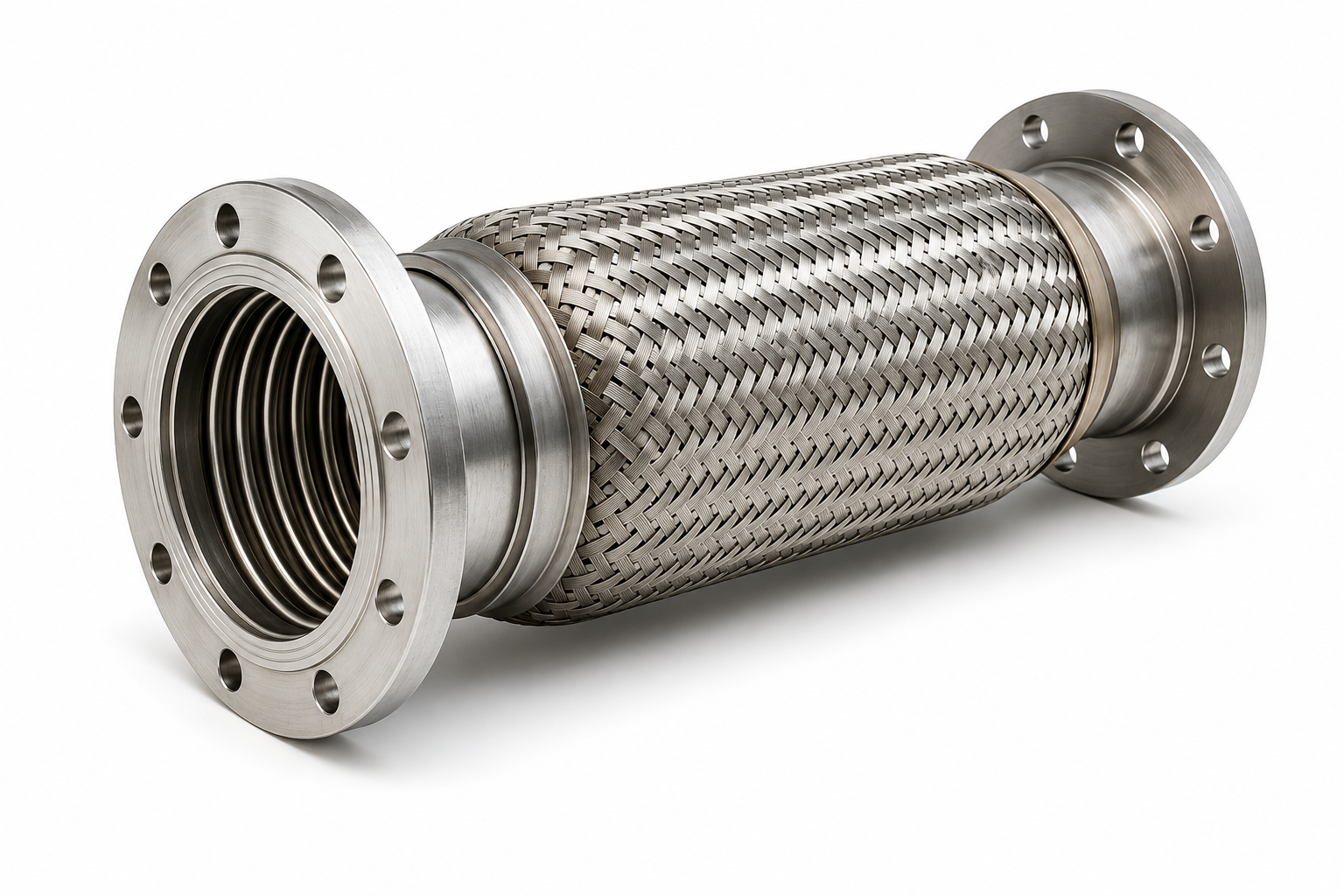
The exhaust flex pipe is a flexible metal section installed within the exhaust system.
Its primary functions are to:
- Absorb engine movement
- Reduce vibration transfer
- Compensate for thermal expansion
- Protect rigid exhaust piping
- Reduce stress on the turbocharger
- Maintain a sealed exhaust system
It acts as a buffer between the moving engine and the fixed exhaust installation.
Why Is the Exhaust Flex Pipe Important?
Marine diesel engines naturally move during operation due to engine torque and vibration.
Without a flexible connection:
- Exhaust manifolds experience higher stress.
- Turbocharger housings can be overloaded.
- Exhaust pipes may crack.
- Exhaust leaks become more likely.
- Maintenance costs increase.
The exhaust flex pipe helps prevent these problems by allowing controlled movement.
A Real Marine Maintenance Scenario
A high-speed patrol vessel powered by MTU 10V 2000 M96L engines developed a noticeable exhaust smell inside the engine room during extended operation.
The turbocharger showed no signs of damage.
The exhaust manifold remained leak-free.
After a detailed inspection, engineers found several small cracks in the braided section of the exhaust flex pipe.
The damage had developed gradually after years of continuous vibration and thermal cycling.
Replacing the flex pipe eliminated the exhaust leak and reduced vibration transmitted through the exhaust system.
A relatively inexpensive component prevented much larger repairs.
What Causes Exhaust Flex Pipe Wear?
The exhaust flex pipe operates under demanding conditions every time the engine runs.
Several factors contribute to wear.
Continuous Vibration
Constant engine movement gradually fatigues the flexible metal braid.
High Exhaust Temperatures
Repeated heating and cooling cycles cause expansion and contraction of the metal.
Over time, this weakens the material.
Corrosion
Salt-laden air and moisture accelerate corrosion, particularly on externally mounted exhaust components.
Excessive Engine Movement
Worn engine mounts allow greater engine movement, placing additional stress on the flex pipe.
Improper Installation
A flex pipe installed under tension or misalignment may fail prematurely.
Early Warning Signs
An exhaust flex pipe rarely fails without warning.
Watch for:
- Exhaust smell in the engine room
- Soot deposits around the flex pipe
- Increased engine room noise
- Visible cracks in the braided section
- Heat discoloration
- Exhaust leaks
- Unusual vibration
- Loose clamps or fasteners
- Increased turbocharger stress
- Higher exhaust temperatures near damaged areas
Early detection helps prevent damage to surrounding components.
Why Exhaust Leaks Should Never Be Ignored
Even a small exhaust leak can create larger problems over time.
Potential consequences include:
- Increased engine room temperatures
- Reduced turbocharger efficiency
- Corrosion of nearby equipment
- Safety risks for crew members
- Damage to insulation
- Higher maintenance costs
Prompt repairs protect both the engine and onboard personnel.
Components to Inspect Alongside the Exhaust Flex Pipe
Whenever the flex pipe is inspected, engineers should also examine:
- Turbocharger
- Exhaust manifold
- Exhaust bellows
- Exhaust clamps
- Engine mounts
- Exhaust insulation
- Silencer
- Expansion joints
- Exhaust supports
- Exhaust temperature sensors
Inspecting the complete exhaust system provides a better understanding of overall condition.
Can Condition Monitoring Help?
Yes.
Although oil analysis cannot detect exhaust flex pipe damage, routine engine condition monitoring can reveal related issues.
Engineers should monitor:
- Exhaust temperatures
- Vibration trends
- Engine room inspections
- Thermal imaging
- Visual inspections during maintenance
Combining these methods helps identify problems before a complete failure occurs.
Preventive Maintenance Checklist
Protect your exhaust system with routine inspections.
✔ Inspect the flex pipe for cracks.
✔ Look for soot deposits around joints.
✔ Check all mounting clamps.
✔ Verify engine mount condition.
✔ Inspect exhaust insulation.
✔ Monitor exhaust temperatures.
✔ Repair corrosion promptly.
✔ Replace damaged flex pipes immediately.
✔ Inspect during every scheduled service.
✔ Follow MTU maintenance recommendations.
Marine Engineer Tip
During engine shutdown, perform a visual inspection of the exhaust flex pipe while the system is cooling.
Small cracks often become easier to identify after thermal expansion has reduced, especially around welded ends and braided sections.
Adding this simple inspection to routine maintenance can help prevent unexpected exhaust leaks.
Common Maintenance Mistakes
Avoid these common mistakes:
- Ignoring minor soot deposits.
- Delaying replacement after small cracks appear.
- Reusing damaged clamps.
- Overlooking worn engine mounts.
- Assuming exhaust leaks only occur at the manifold.
- Failing to inspect the entire exhaust system during servicing.
Frequently Asked Questions
How long does an exhaust flex pipe last?
Service life depends on operating hours, vibration levels, engine movement, and environmental conditions. Regular inspections help determine when replacement is needed.
Can a damaged flex pipe affect turbocharger performance?
Yes. Exhaust leaks may reduce exhaust gas efficiency and place additional stress on the turbocharger.
Why are soot deposits important?
Soot around the flex pipe often indicates a developing exhaust leak that should be repaired promptly.
Should engine mounts be inspected at the same time?
Yes. Excessive engine movement caused by worn mounts can significantly shorten flex pipe life.
Is replacement better than repair?
In most cases, replacing a damaged exhaust flex pipe provides the safest and most reliable long-term solution.
Worldwide Marine Engine Spare Parts Supply
Alfa Marine Spare Parts supplies genuine, OEM, aftermarket, remanufactured, and reconditioned spare parts for the MTU 10V 2000 M96L and the complete MTU Series 2000 engine family.
We proudly support:
- Marine engineers
- Chief engineers
- Technical superintendents
- Shipyards
- Commercial shipping companies
- Offshore operators
- Luxury yacht operators
- Government fleets
- Fishing vessel operators
- Marine service companies
We regularly supply marine engine spare parts throughout the United Kingdom, United States, Dubai (UAE), Monaco, Nigeria, the Netherlands, Italy, Spain, France, Germany, Norway, and Greece.
Browse Our Complete Spare Parts Catalog
Alfa Marine Spare Parts supplies a comprehensive range of MTU Series 2000 components, including:
- Exhaust flex pipes
- Exhaust manifolds
- Turbochargers
- Exhaust bellows
- Engine mounts
- Heat exchangers
- Water pumps
- Fuel injectors
- Oil pumps
- Cylinder heads
- Complete overhaul kits
Browse our complete catalog:
https://alfamarinespareparts.com/spareparts
Why Choose Alfa Marine Spare Parts?
Every component in the exhaust system contributes to the safe and reliable operation of your MTU engine. At Alfa Marine Spare Parts, we help marine professionals source high-quality replacement parts that meet the demands of commercial, offshore, and yacht applications.
We provide:
- Genuine, OEM, aftermarket, remanufactured, and reconditioned marine engine spare parts
- Worldwide shipping
- Fast quotations
- Technical support for part identification
- Support for MTU, Caterpillar, Wärtsilä, MAN, Cummins, Volvo Penta, Scania, Detroit Diesel, Perkins, Yanmar, and many other leading marine engine brands
Contact Alfa Marine Spare Parts
Looking for MTU 10V 2000 M96L exhaust flex pipes, exhaust system components, or overhaul parts?
Website: https://alfamarinespareparts.com
Email: request@alfamarinespareparts.com
Our experienced marine parts specialists are ready to help you identify the correct components for preventive maintenance, repairs, and complete engine overhauls.
Conclusion
The exhaust flex pipe on the MTU 10V 2000 M96L may not receive as much attention as the turbocharger or exhaust manifold, but it plays a vital role in protecting the entire exhaust system from vibration and thermal stress. Routine inspections for cracks, soot deposits, corrosion, and excessive engine movement can prevent exhaust leaks, improve reliability, and reduce repair costs. Including the exhaust flex pipe in your preventive maintenance program is a simple step that helps ensure long-term performance and dependable operation of your MTU Series 2000 marine engine.