Quote

Menu

Marine Spare Parts Blog & News

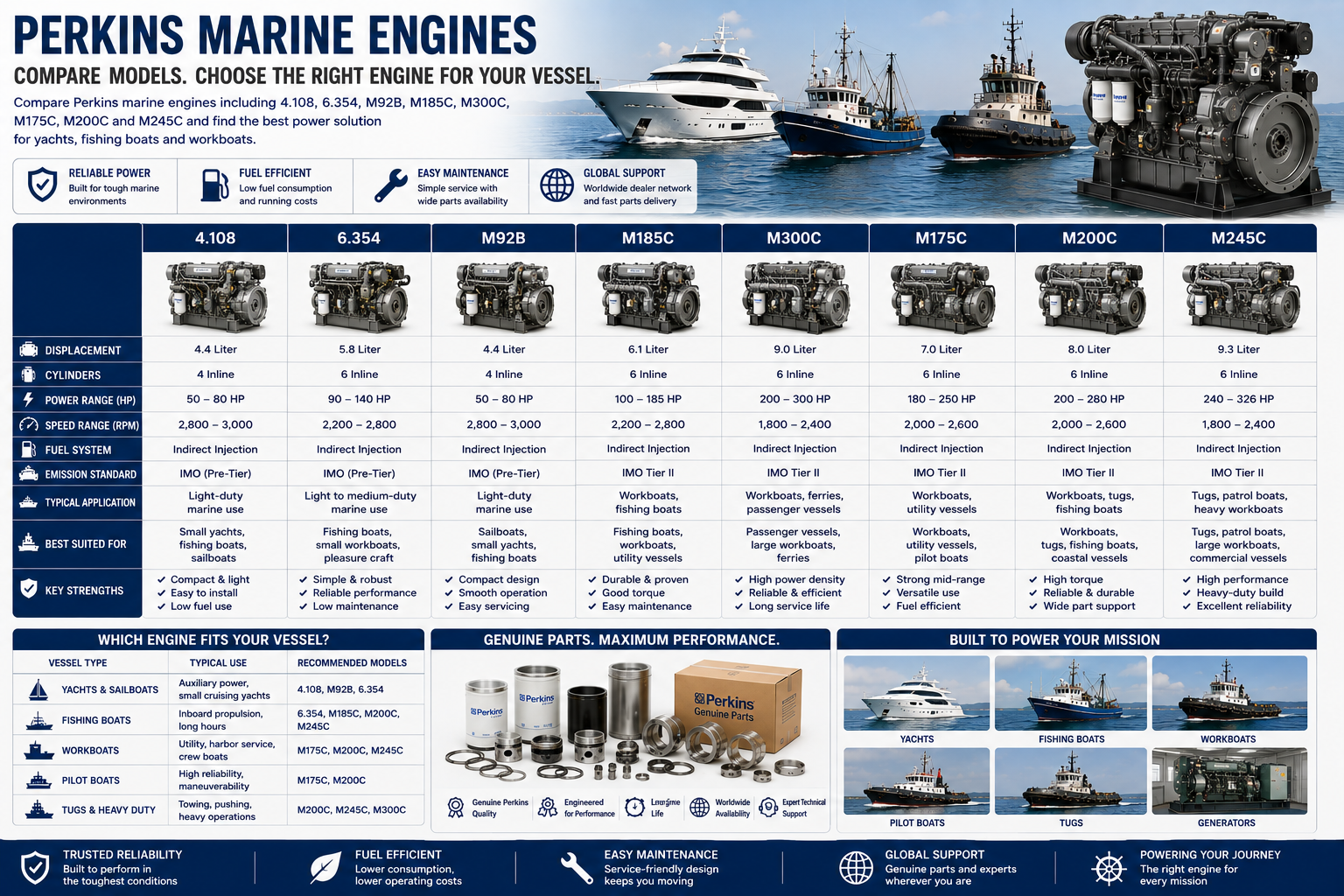
  • Perkins Marine Engine Types: What Is the Difference, and Which Engine Fits Which Vessel?
  • Understanding the Perkins Marine Engine Family
  • The Main Perkins Marine Engine Types You May Encounter
  • Perkins Marine Heritage: Why So Many Old Engines Are Still Around
  • Perkins 4.108: The Classic Sailing-Yacht Engine
  • Why Do Owners Still Like Engines Like the 4.108?
  • Perkins 4.236: The Bigger Traditional Four-Cylinder
  • Perkins 6.354: The Classic Six-Cylinder Workhorse
  • Why Inline Six?
  • Old Perkins vs. Perkins Sabre: What Changed?
  • Perkins M65: Compact Marine Propulsion
  • Which Boats Suit an M65?
  • Perkins M85T: Add Turbocharging
  • Perkins M92 and M92B: A Familiar Cruiser Engine
  • Where Does an M92B Fit?
  • Perkins M115T: A Step Up in Power
  • Perkins Sabre M130C and M135
  • Perkins M150Ti
  • Perkins M185C: Proven in Commercial Passenger Service
  • M185C Personality
  • Perkins M190C and M216C
  • Perkins M215C and M225Ti
  • Where Do These Engines Fit?
  • Perkins M250C and M300C
  • Perkins M300C: The Electronic Commercial Workhorse
  • Where Has the M300C Been Used?
  • Why the M300C Matters in Perkins History
  • Mechanical Perkins vs. Electronic Perkins
  • Older Mechanical Perkins
  • Later Electronic Perkins
  • The New Perkins Marine Propulsion Generation
  • Why Use One Platform for Three Ratings?
  • M175C vs. M200C vs. M245C
  • Perkins M175C
  • Perkins M200C
  • Perkins M245C
  • Which Perkins Engine Fits a Sailing Yacht?
  • Which Perkins Engine Fits a Motor Yacht?
  • Which Perkins Engine Fits a Fishing Boat?
  • Which Perkins Engine Fits a Workboat?
  • Which Perkins Engine Fits a Passenger Boat or Water Taxi?
  • What About Tugs and Dredges?
  • Perkins Marine Auxiliary Engines
  • Generator Engine vs. Propulsion Engine
  • Understanding Perkins Engine Names
  • Perkins 400 Series in Marine Auxiliary Applications
  • Perkins 1100 Series
  • Perkins 1200 Series and Marine Development
  • Industrial Perkins vs. Marine Perkins
  • Why Marine Cooling Changes Everything
  • The Raw-Water Pump Is More Important Than It Looks
  • Why Perkins' 500-Hour Service Interval Matters
  • Which Perkins Engine Is Easiest to Repair?
  • Classic Perkins vs. Modern Perkins
  • CLASSIC PERKINS
  • PERKINS SABRE
  • ELECTRONIC PERKINS MARINE
  • NEW GENERATION
  • Perkins Marine Engine “Personalities”
  • 4.108 — The Sailor
  • 4.236 — The Traditional Worker
  • 6.354 — The Classic Workhorse
  • M92B — The Cruiser
  • M225Ti — The Compact Performer
  • M185C — The Passenger-Boat Engine
  • M300C — The Commercial Electronic Workhorse
  • M175C / M200C / M245C — The New Generation
  • Quick Perkins Marine Engine Comparison
  • Which Perkins Engine Would You Choose for Different Boats?
  • Sailing Yacht
  • Fishing Boat
  • Workboat
  • Passenger Boat / Water Taxi
  • Pleasure Craft
  • Buying a Used Perkins Marine Engine: What Should You Check?
  • Why the Perkins Engine Serial Number Matters
  • Common Perkins Marine Spare Parts
  • Why Cooling Parts Are Especially Important on Old Perkins Engines
  • Marine Engineer Tip
  • Frequently Asked Questions
  • Does Perkins Still Make Marine Engines?
  • What Boats Use Perkins Marine Engines?
  • What Is Perkins Sabre?
  • Is the Perkins M300C a Six-Cylinder Engine?
  • How Much Power Does the M300C Produce?
  • Are M300C Engines Used in Fishing Boats?
  • What Are the New Perkins Marine Propulsion Engines?
  • How Much Power Do the M175C, M200C and M245C Produce?
  • Does Perkins Make Marine Generator Engines?
  • What Is the Difference Between a Perkins Propulsion Engine and Generator Engine?
  • Can Perkins Support Old Marine Engines?
  • Perkins Marine Engine Spare Parts
  • Related Perkins Marine Engine Pages
  • Why Choose Alfa Marine Spare Parts?
  • Worldwide Perkins Marine Spare Parts Supply
  • Contact Alfa Marine Spare Parts
  • One Final Thought
Read more
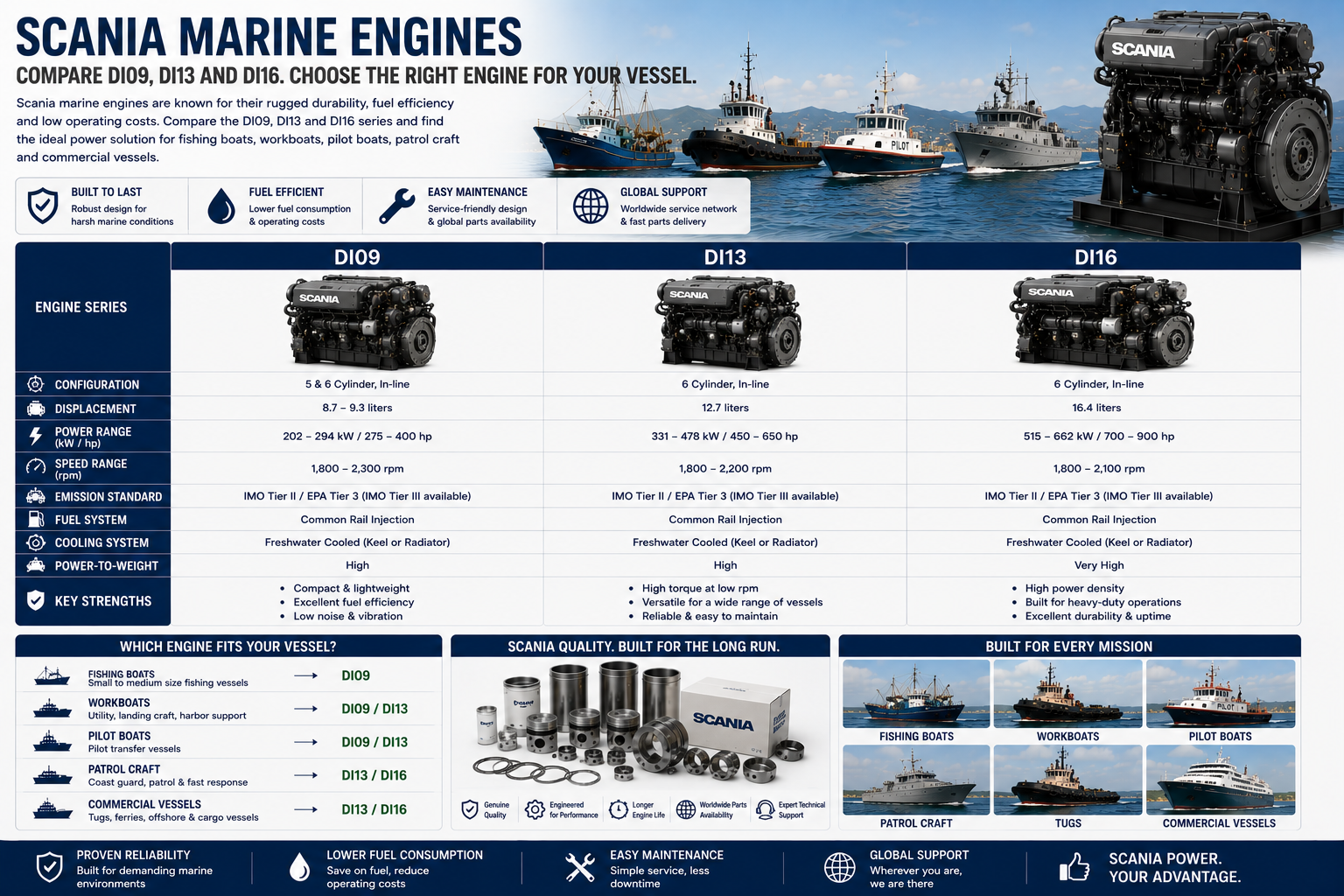
  • Scania Marine Engine Types: What Is the Difference, and Which Engine Fits Which Vessel?
  • Understanding the Main Scania Marine Engine Families
  • Why Scania Marine Engines Are Different From Ordinary Truck Engines
  • Scania DI09: The Compact Commercial Worker
  • Why Five Cylinders?
  • Which Boats Suit a Scania DI09?
  • Scania DI09 Personality
  • Why the DI09 Can Be Attractive for Fishing Boats
  • Scania DI13: The Marine All-Rounder
  • Which Boats Suit a Scania DI13?
  • Why an Inline-Six Works Well in Commercial Boats
  • DI09 vs. DI13: What's the Main Difference?
  • Scania DI09
  • Scania DI13
  • Scania DI13 for Pilot Boats
  • Scania DI13 for Passenger Vessels
  • One Scania DI13 Can Have Different Power Ratings
  • Scania DI16: The V8 Heavyweight
  • Why Does a V8 Make Sense in a Boat?
  • Which Boats Suit a Scania DI16?
  • DI16 Personality
  • DI13 vs. DI16: Which One Makes More Sense?
  • DI13
  • DI16
  • Scania DI16 076M: How Powerful Can It Get?
  • Wet Cylinder Liners: Why Engineers Care
  • Scania's Modular Engine Philosophy
  • Mechanical Scania vs. Modern Electronic Scania
  • Traditional Mechanical Diagnosis
  • Modern Electronic Diagnosis
  • Scania Marine Cooling: Heat Exchanger or Keel Cooling
  • Heat-Exchanger Cooling
  • Keel Cooling
  • Why Higher-Power DI13 and DI16 Cooling Can Be Different
  • Scania Marine Auxiliary Engines
  • Propulsion Engine vs. Auxiliary Engine
  • Propulsion Engine
  • Auxiliary Engine
  • Scania and Diesel-Electric Propulsion
  • Scania and Hybrid Marine Power
  • Why Hybrid Power Can Make Sense for Workboats
  • Scania and Renewable Fuels
  • Which Scania Engine Makes Sense for a Fishing Vessel?
  • Smaller commercial fishing vessel
  • Medium fishing vessel
  • Larger or faster fishing vessel
  • Which Scania Engine Makes Sense for a Workboat?
  • Which Scania Engine Makes Sense for a Patrol Boat?
  • Which Scania Engine Makes Sense for a Pilot Boat?
  • Which Scania Engine Makes Sense for a River Barge?
  • Which Scania Engine Makes Sense for a Pleasure Craft?
  • Commercial Duty vs. Pleasure Duty
  • Boat A
  • Boat B
  • DI09, DI13 and DI16 at a Glance
  • Scania Marine Engine “Personalities”
  • DI09 — The Compact Worker
  • DI13 — The All-Rounder
  • DI16 — The V8 Muscle
  • Common Scania Marine Engine Spare Parts
  • Why Cooling Parts Need Exact Identification
  • Why the Complete Scania Model Code Matters
  • Why Engine Serial Number Matters
  • Scania Wet Liners and Overhaul Planning
  • Don't Throw Away the Old Bearings Without Looking at Them
  • Turbocharger Condition Matters
  • Marine Engineer Tip
  • Frequently Asked Questions
  • What are the main Scania marine engine families?
  • How much power do Scania marine engines produce?
  • Is the Scania DI09 a six-cylinder engine?
  • Is the Scania DI13 an inline six?
  • Is the Scania DI16 a V8?
  • How powerful is the Scania DI16?
  • What types of boats use Scania marine engines?
  • Does Scania make marine generator engines?
  • Can Scania marine engines be keel cooled?
  • Does Scania offer heat-exchanger-cooled marine engines?
  • Can Scania engines be used in diesel-electric vessels?
  • Does Scania support hybrid marine propulsion?
  • Scania Marine Engine Spare Parts
  • Common Scania Parts We Can Help Identify
  • Related Scania Marine Engine Pages
  • Why Choose Alfa Marine Spare Parts?
  • Worldwide Scania Marine Spare Parts Supply
  • Contact Alfa Marine Spare Parts
  • One Final Thought
Read more
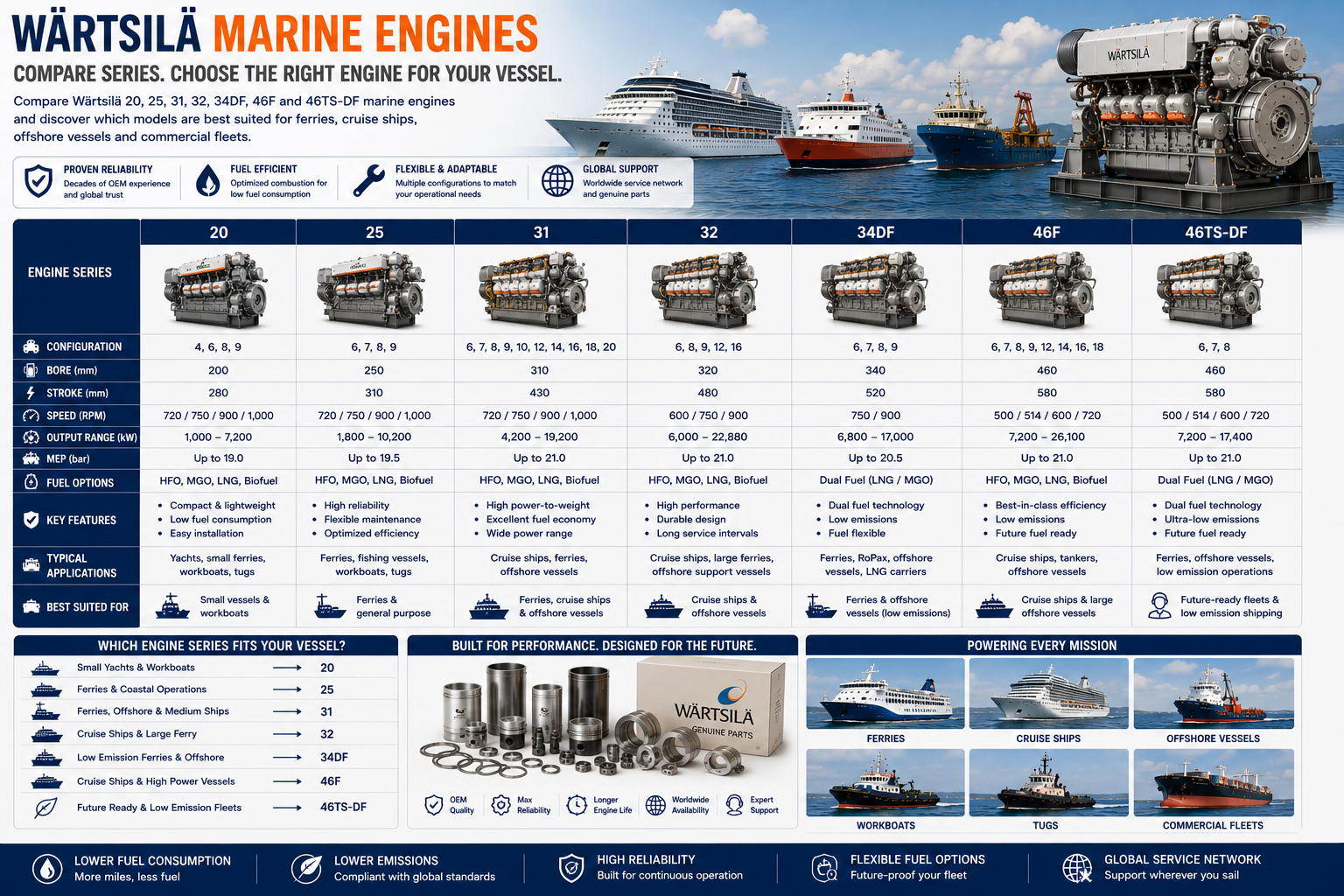
  • Wärtsilä Marine Engine Types: What Is the Difference, and Which Engine Fits Which Vessel?
  • First: Understanding Wärtsilä Engine Names
  • The Main Wärtsilä Marine Engine Families
  • Wärtsilä 20: The Compact Workhorse
  • Where Does a Wärtsilä 20 Fit?
  • Wärtsilä 20 Personality
  • Wärtsilä 20DF: Same Family, More Fuel Flexibility
  • Wärtsilä 25: The New-Generation Compact Platform
  • Which Vessels Suit a Wärtsilä 25?
  • Why the Wärtsilä 25 Is Interesting
  • Wärtsilä 25 Personality
  • Wärtsilä 25DF and Methane Slip
  • Wärtsilä 31: The Efficiency Specialist
  • Where Does a Wärtsilä 31 Fit?
  • Why Would a Ferry Operator Like the Wärtsilä 31?
  • Wärtsilä 31DF: Add Dual-Fuel Capability
  • Wärtsilä 31 Personality
  • Wärtsilä 32: The Proven Marine Workhorse
  • Why the Wärtsilä 32 Became So Popular
  • Which Vessels Suit a Wärtsilä 32?
  • Wärtsilä 32 Personality
  • Wärtsilä 32 Methanol: Giving an Established Engine a New Fuel
  • Wärtsilä 34DF: The Dual-Fuel Specialist
  • Where Does a 34DF Fit?
  • Why LNG Vessels Like Dual-Fuel Engines
  • Wärtsilä 46: The Classic Large-Bore Marine Engine
  • Wärtsilä 46F: Large Ship Power
  • Which Ships Suit the Wärtsilä 46F?
  • Wärtsilä 46F Personality
  • Wärtsilä 46DF: Large Dual-Fuel Power
  • Wärtsilä 46TS-DF: Two-Stage Turbocharging Changes the Game
  • Which Ships Suit the 46TS-DF?
  • Why Two-Stage Turbocharging Matters
  • Diesel vs. Dual Fuel: What's the Difference?
  • Diesel Engine
  • Dual-Fuel Engine
  • Why Choose Dual Fuel?
  • Methanol: The Next Step
  • Wärtsilä 46F Methanol
  • Wärtsilä 46TS Methanol
  • What About Ammonia?
  • Wärtsilä Engine Families Compared
  • WÄRTSILÄ 20
  • WÄRTSILÄ 25
  • WÄRTSILÄ 31
  • WÄRTSILÄ 32
  • WÄRTSILÄ 34DF
  • WÄRTSILÄ 46F
  • WÄRTSILÄ 46TS-DF
  • Which Wärtsilä Engine Makes Sense for a Ferry?
  • Which Wärtsilä Engine Makes Sense for a Cruise Ship?
  • Which Wärtsilä Engine Makes Sense for an LNG Carrier?
  • Which Wärtsilä Engine Makes Sense for an Offshore Vessel?
  • Which Wärtsilä Engine Makes Sense for a Fishing Vessel?
  • Mechanical Propulsion vs. Diesel-Electric
  • Mechanical Propulsion
  • Diesel-Electric Propulsion
  • Why Cruise Ships Often Like Diesel-Electric
  • Inline vs. V-Type Wärtsilä Engines
  • Inline Engine
  • V Engine
  • One Cylinder Can Be an Entire Maintenance Project
  • Common Wärtsilä Marine Engine Spare Parts
  • Why Exact Wärtsilä Engine Identification Matters
  • Fuel Type Matters When Ordering Parts
  • Common Wärtsilä Maintenance Areas
  • Turbocharger Maintenance
  • Cylinder Head Maintenance
  • Cylinder Liners and Pistons
  • Why Spare-Parts Planning Is Different on a Wärtsilä Engine
  • Marine Engineer Tip
  • Quick Wärtsilä Marine Engine Comparison
  • Wärtsilä Marine Engine “Personalities”
  • Wärtsilä 20 — The Compact Worker
  • Wärtsilä 25 — The Future-Ready Engine
  • Wärtsilä 31 — The Efficiency Expert
  • Wärtsilä 32 — The Veteran Workhorse
  • Wärtsilä 34DF — The LNG Specialist
  • Wärtsilä 46F — The Big Ship Engine
  • Wärtsilä 46TS-DF — The Next-Generation Heavyweight
  • Frequently Asked Questions
  • What types of marine engines does Wärtsilä make?
  • What is the Wärtsilä 20DF?
  • What is special about the Wärtsilä 25?
  • How powerful is the Wärtsilä 31?
  • What ships use the Wärtsilä 32?
  • What is the Wärtsilä 34DF?
  • How powerful is the Wärtsilä 46F?
  • What is the difference between 46F and 46TS-DF?
  • Can Wärtsilä engines run on methanol?
  • Does Wärtsilä have an ammonia engine?
  • Can Wärtsilä engines be used for diesel-electric propulsion?
  • Wärtsilä Marine Engine Spare Parts
  • Common Wärtsilä Parts We Can Help Identify
  • Related Wärtsilä Marine Engine Pages
  • Why Choose Alfa Marine Spare Parts?
  • Worldwide Wärtsilä Marine Spare Parts Supply
  • Contact Alfa Marine Spare Parts
  • One Final Thought
Read more
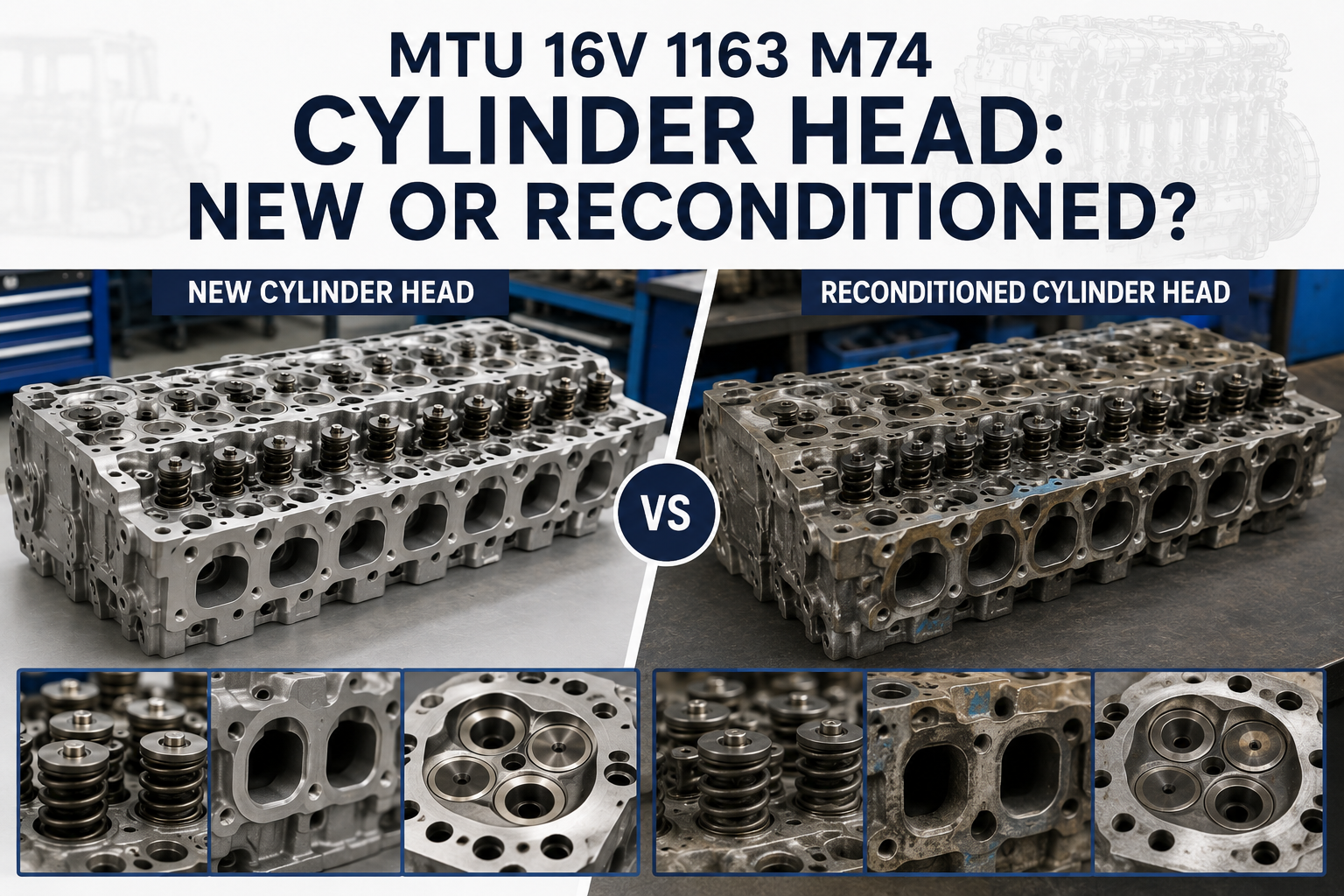
  • Why Buying a New MTU 16V 1163 M74 Cylinder Head Is Sometimes Better Than Sending It to the Machine Shop
  • Where Does the MTU 16V 1163 M74 Belong?
  • The First Question Shouldn't Be: "Can the Machine Shop Repair It?"
  • "Should we repair it?"
  • Engineering Lesson: Serviceable Does Not Always Mean Desirable
  • Chief Engineer's Notebook
  • When Reconditioning an MTU 16V 1163 M74 Cylinder Head Makes Sense
  • When Buying a New Cylinder Head Can Be the Better Decision
  • 1. The Cylinder Head Has Been Overheated
  • 2. Cracking Is Found
  • 3. Corrosion Has Reached the Cooling Passages
  • 4. The Sealing Surface Has Already Been Machined Before
  • 5. Valve-Seat Areas Have Significant Damage
  • 6. The Valve Guides Are Heavily Worn
  • 7. You Don't Know the Cylinder Head's History
  • Engine Room Reality: Labor Changes the Economics
  • The Real Calculation Is Cost Per Reliable Operating Hour
  • Machine-Shop Downtime Matters Too
  • Don't Automatically Replace All 16 Cylinder Heads
  • What Can the Old Cylinder Head Tell You?
  • Look at the Exhaust Valve
  • Look at the Intake Valve
  • Look at the Combustion Face
  • Look at the Head Gasket
  • Look at the Cooling Passages
  • Why Did the Cylinder Head Fail?
  • Real Marine Maintenance Scenario
  • Option 1 — Repair
  • Option 2 — Replace
  • Engineer's Toolbox: Repair or Replace?
  • Marine Engineer Tip
  • Common Cylinder Head Repair Mistakes
  • Frequently Asked Questions
  • Is the MTU 16V 1163 M74 part of the MTU Series 1163?
  • What vessels use the MTU 16V 1163 M74?
  • Can an MTU 16V 1163 M74 cylinder head be rebuilt?
  • When is buying a new cylinder head better?
  • Is a remanufactured cylinder head another option?
  • Should I provide the engine serial number when ordering?
  • Related MTU 16V 1163 M74 Cylinder Head Components
  • Related Engine Pages
  • Browse Our Complete Catalog
  • Worldwide MTU Marine Spare Parts Supply
  • Why Choose Alfa Marine Spare Parts?
  • Contact Alfa Marine Spare Parts
  • One Final Thought
Read more
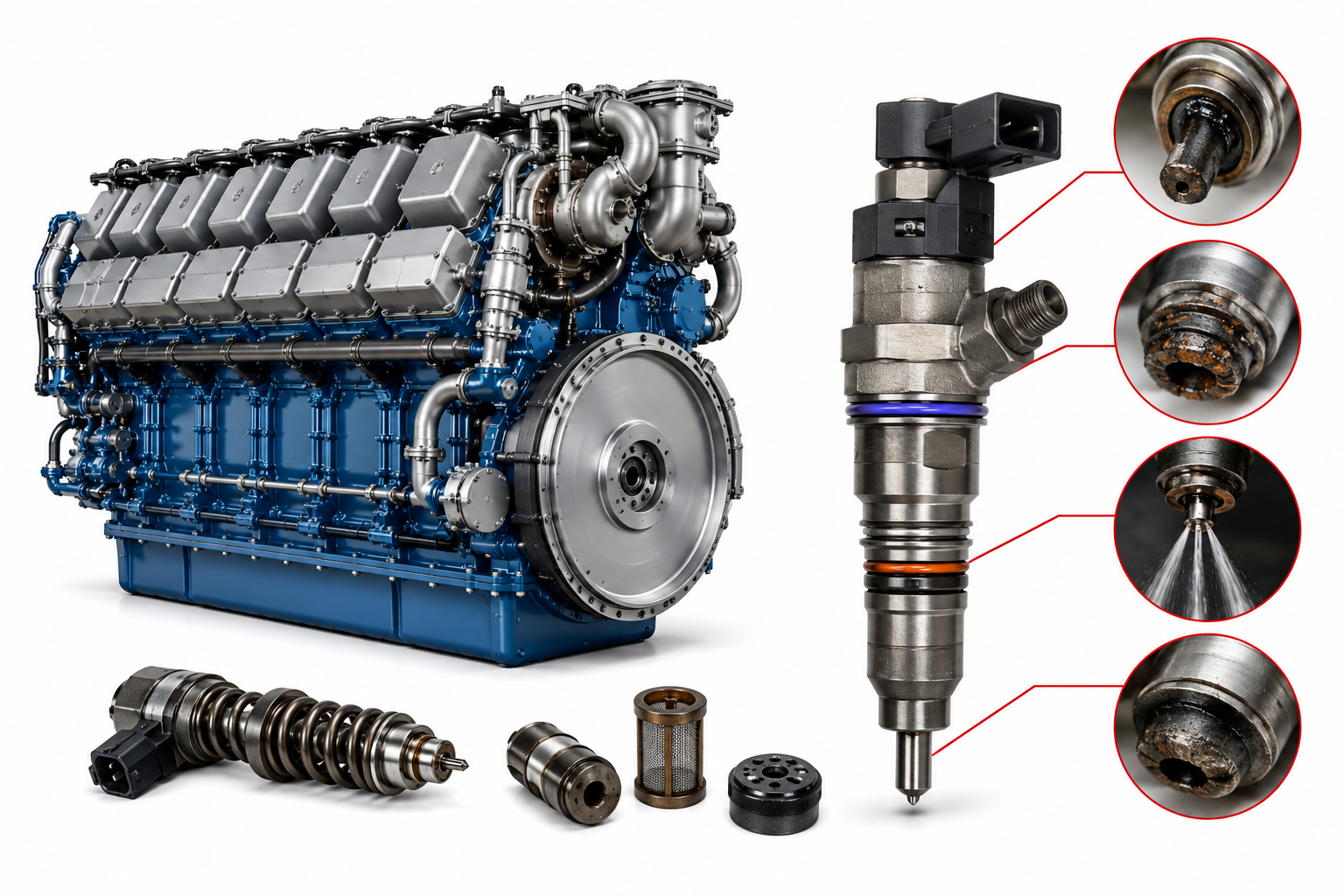
  • MTU 12V 2000 M96X Fuel Injector Problems: Causes, Symptoms and Preventive Maintenance
  • What Do Fuel Injectors Do?
  • Common Causes of Injector Failure
  • Contaminated Fuel
  • Poor Fuel Filtration
  • Normal Wear
  • Fuel Quality Problems
  • Water in the Fuel System
  • Warning Signs of Worn Injectors
  • Why Fuel Filters Are Critical
  • Oil Analysis Can Detect Injector Problems
  • Components to Inspect Alongside Injectors
  • Preventive Maintenance Checklist
  • Marine Engineer Tip
  • Common Mistakes
  • Frequently Asked Questions
  • What causes black smoke?
  • Can injectors increase fuel consumption?
  • Should injectors be tested before replacement?
  • Can dirty fuel damage injectors?
  • Can leaking injectors damage the engine?
  • Worldwide Marine Engine Spare Parts Supply
  • Browse Our Complete Spare Parts Catalog
  • Why Choose Alfa Marine Spare Parts?
  • Contact Alfa Marine Spare Parts
  • Conclusion
Read more
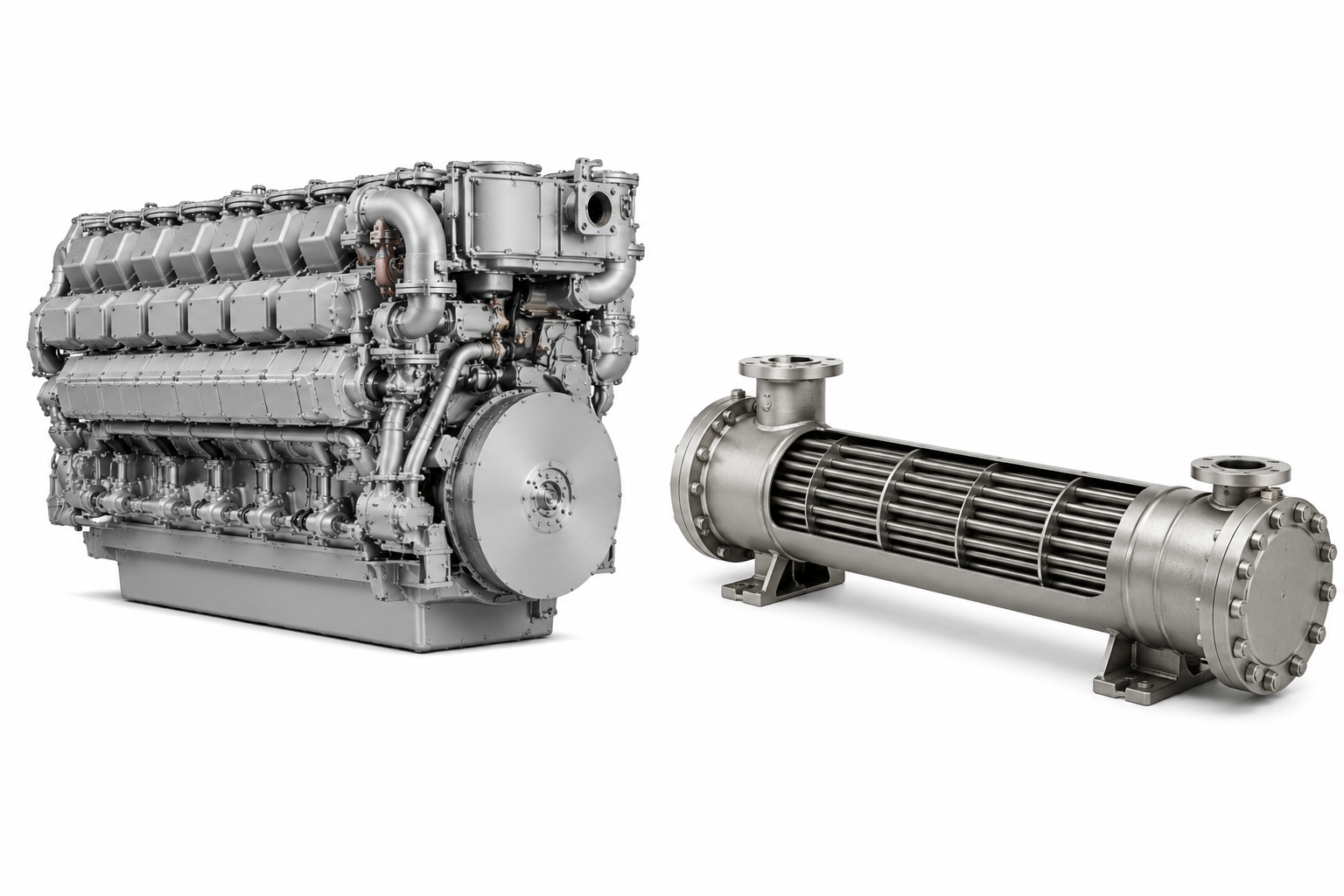
  • MTU 10V 2000 M96L Heat Exchanger Maintenance: How to Prevent Overheating and Extend Engine Life
  • What Does the Heat Exchanger Do?
  • Why Is Heat Exchanger Maintenance So Important?
  • Common Causes of Heat Exchanger Problems
  • Marine Growth
  • Salt Deposits
  • Corrosion
  • Debris
  • Poor Maintenance
  • Warning Signs of a Dirty or Restricted Heat Exchanger
  • Components to Inspect at the Same Time
  • Why Seawater Flow Matters
  • Preventive Maintenance Checklist
  • Marine Engineer Tip
  • Common Mistakes
  • Frequently Asked Questions
  • How often should a heat exchanger be cleaned?
  • Can a blocked heat exchanger increase fuel consumption?
  • What happens if the heat exchanger fails?
  • Should I inspect the seawater pump at the same time?
  • Can overheating damage the turbocharger?
  • Worldwide Marine Engine Spare Parts Supply
  • Browse Our Complete Spare Parts Catalog
  • Why Choose Alfa Marine Spare Parts?
  • Contact Alfa Marine Spare Parts
  • Conclusion
Read more
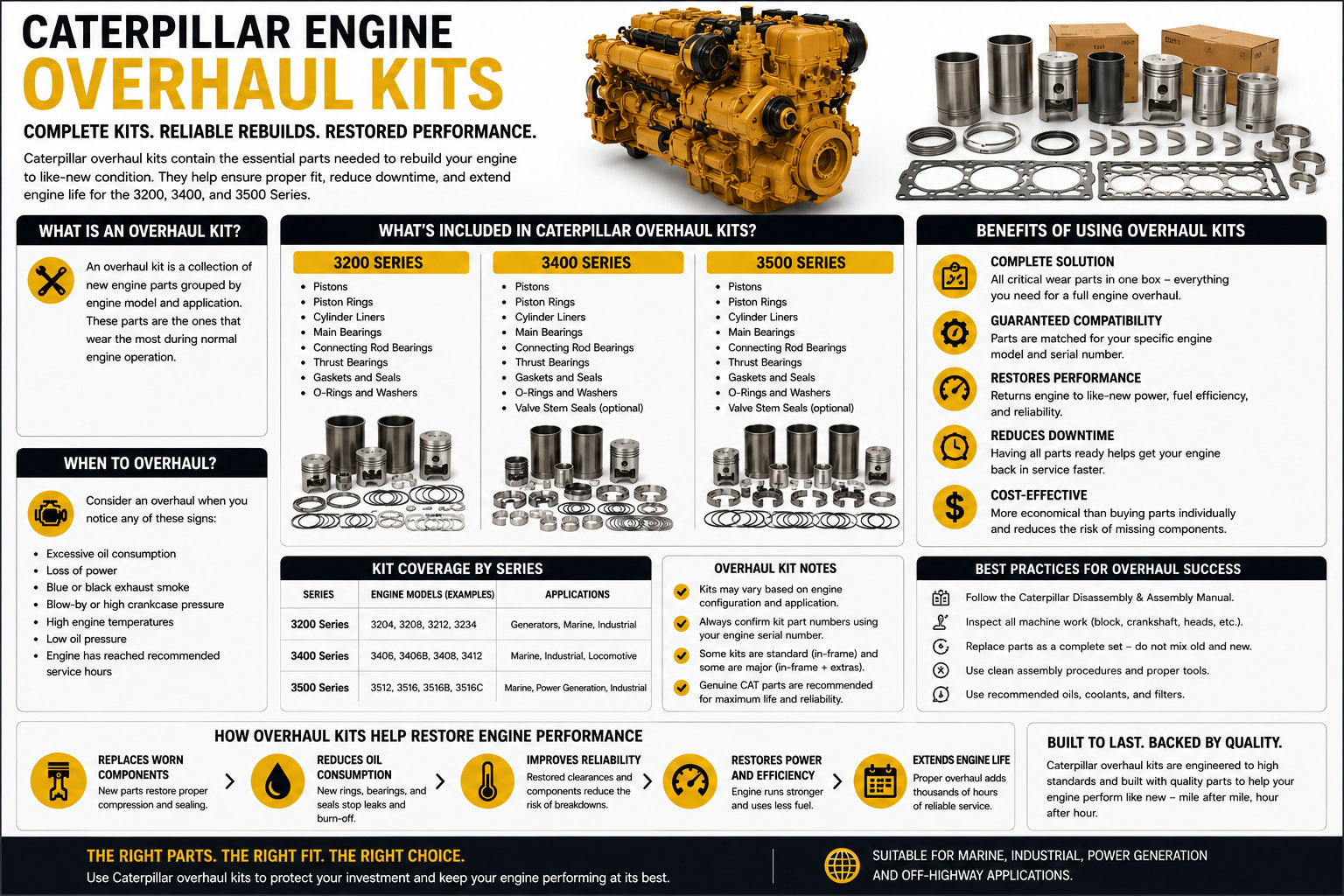
  • Caterpillar Engine Overhaul Kits: A Smart Investment for Long-Term Performance
  • Introduction
  • Table of Contents
  • Key Takeaways
  • What Is a Caterpillar Engine Overhaul Kit?
  • What's Included in a Quality Overhaul Kit?
  • Essential Components for Performance Restoration
  • Pistons and Rings
  • Cylinder Liners
  • Bearings
  • Gaskets and Seals
  • Cylinder Head Gasket
  • Engine Room Insight
  • Chief Engineer's Tip
  • Benefits of Overhauling Your Caterpillar Engine & Overhaul Kits by Engine Series
  • Benefits of Overhauling Your Caterpillar Engine
  • Why Choose an Overhaul Instead of a Replacement?
  • 1. Cost Savings
  • 2. Extended Engine Life
  • 3. Improved Fuel Efficiency
  • 4. Minimized Downtime
  • 5. Maintaining Engine Compatibility
  • Caterpillar Engine Overhaul Kits by Series
  • Caterpillar 3200 Series Overhaul Kits
  • Caterpillar 3400 Series Overhaul Kits
  • Caterpillar 3500 Series Overhaul Kits
  • Choosing the Correct Overhaul Kit
  • Choosing the Right Caterpillar Engine Overhaul Kit, FAQs & Final Thoughts
  • Genuine vs OEM Replacement vs Premium Aftermarket Components
  • Understanding the Differences
  • Genuine Caterpillar Parts
  • OEM Replacement Parts
  • Premium Aftermarket Parts
  • Choosing the Right Overhaul Kit for Your Application
  • Maximising Engine Life After an Overhaul
  • Frequently Asked Questions
  • When should a Caterpillar engine be overhauled?
  • What is included in a Caterpillar Engine Overhaul Kit?
  • Is an overhaul better than replacing the engine?
  • Can an overhaul improve engine performance?
  • How do I know which overhaul kit fits my engine?
  • Related Caterpillar Marine Parts
  • Why Choose Alfa Marine Spare Parts?
  • Industries We Support
  • Worldwide Marine Spare Parts Supply
  • Browse Our Complete Marine Spare Parts Catalog
  • Contact Alfa Marine Spare Parts
  • Technical Reference
  • Final Thoughts
Read more
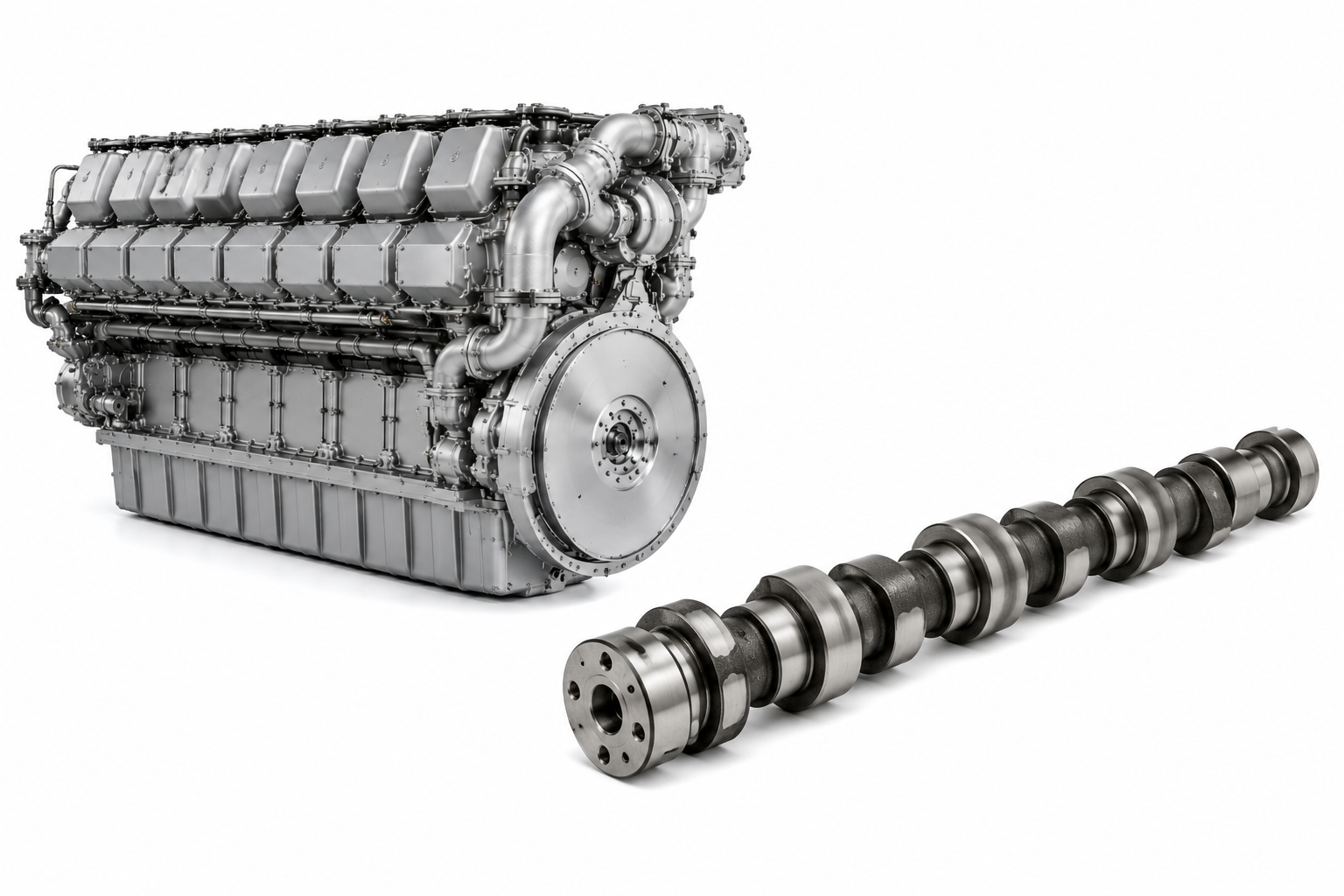
  • MTU 16V 2000 M94 Camshaft Maintenance: How to Prevent Valve Train Failures
  • What Does the Camshaft Do?
  • Why Is Camshaft Maintenance Important?
  • Common Causes of Camshaft Wear
  • Poor Lubrication
  • Extended Oil Change Intervals
  • Oil Contamination
  • Incorrect Valve Adjustment
  • High Operating Temperatures
  • Warning Signs of Camshaft Problems
  • Components to Inspect Together
  • The Importance of Engine Oil Analysis
  • Preventive Maintenance Checklist
  • Marine Engineer Tip
  • Common Mistakes
  • Frequently Asked Questions
  • Can oil analysis detect camshaft wear?
  • What causes camshaft wear?
  • Does camshaft wear reduce engine performance?
  • Should rocker arms be inspected at the same time?
  • Can overheating damage the camshaft?
  • Worldwide Marine Engine Spare Parts Supply
  • Browse Our Complete Spare Parts Catalog
  • Why Choose Alfa Marine Spare Parts?
  • Contact Alfa Marine Spare Parts
  • Conclusion
Read more
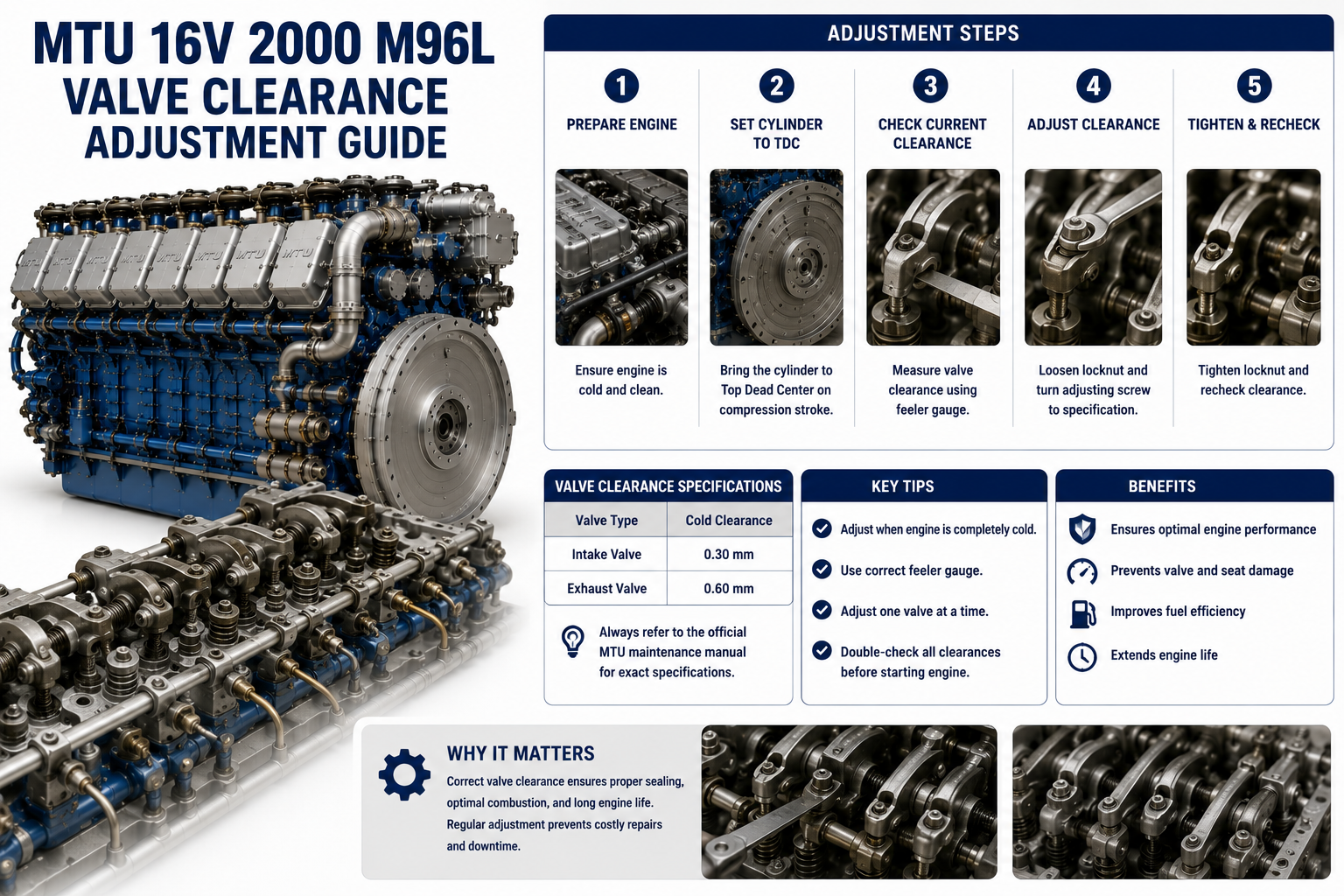
  • MTU 16V 2000 M96L Valve Clearance Adjustment: Why Proper Valve Settings Can Prevent Major Engine Repairs
  • What Is Valve Clearance?
  • Why Does Valve Clearance Matter?
  • A Real Marine Engineering Scenario
  • Why Does Valve Clearance Change?
  • What Happens If Valve Clearance Is Too Tight?
  • What Happens If Valve Clearance Is Too Loose?
  • Early Warning Signs
  • Components That Should Be Inspected Together
  • Why Following the Correct Adjustment Procedure Matters
  • Can Oil Analysis Help?
  • Preventive Maintenance Checklist
  • Marine Engineer Tip
  • Common Maintenance Mistakes
  • Frequently Asked Questions
  • How often should valve clearances be inspected?
  • Can incorrect valve clearance increase fuel consumption?
  • Is valve noise always a sign of incorrect adjustment?
  • Can tight valves damage the engine?
  • Should injectors be inspected during valve adjustments?
  • Worldwide Marine Engine Spare Parts Supply
  • Browse Our Complete Spare Parts Catalog
  • Why Choose Alfa Marine Spare Parts?
  • Contact Alfa Marine Spare Parts
  • Conclusion
Read more
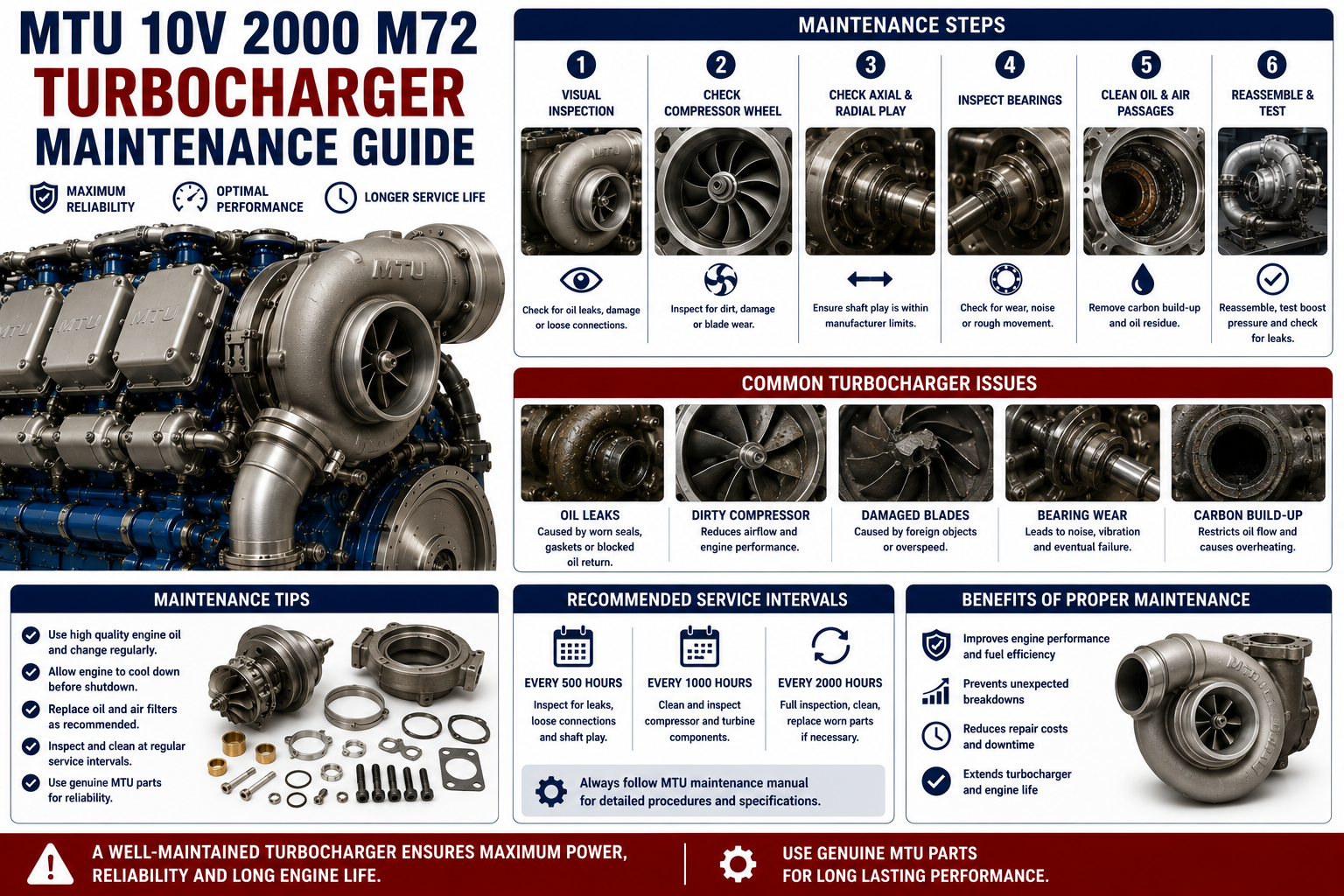
  • MTU 10V 2000 M72 Turbocharger Maintenance: The Power Behind Your Marine Engine
  • What Does a Turbocharger Actually Do?
  • Why Is Turbocharger Maintenance So Important?
  • A Real Marine Scenario
  • Why Do Turbochargers Wear Out?
  • Dirty Engine Oil
  • Delayed Oil Changes
  • Restricted Air Filters
  • Carbon Deposits
  • Foreign Object Damage
  • Early Warning Signs
  • Why Oil Quality Matters More Than Many People Realize
  • Components to Inspect During Turbocharger Maintenance
  • Can Oil Analysis Predict Turbocharger Problems?
  • Preventive Maintenance Checklist
  • Marine Engineer Tip
  • Common Maintenance Mistakes
  • Frequently Asked Questions
  • How long does an MTU turbocharger normally last?
  • Can dirty oil damage the turbocharger?
  • Why does a faulty turbocharger increase fuel consumption?
  • Can black smoke indicate turbocharger problems?
  • Should the charge air cooler be inspected at the same time?
  • Worldwide Marine Engine Spare Parts Supply
  • Browse Our Complete Spare Parts Catalog
  • Why Choose Alfa Marine Spare Parts?
  • Contact Alfa Marine Spare Parts
  • Conclusion
Read more
« Previous 1 2 3 7