MTU 12V 2000 M96L Heat Exchanger Maintenance: The Key to Reliable Engine Cooling
The MTU 12V 2000 M96L marine engine is widely recognized for its high power output, reliability, and efficiency in luxury yachts, patrol vessels, pilot boats, and commercial workboats. To deliver consistent performance, the engine depends on a well-maintained cooling system, with the heat exchanger playing one of its most important roles.
Although many operators focus on fuel injectors, turbochargers, or lubrication, a neglected heat exchanger can quietly reduce engine efficiency long before warning alarms appear. Marine deposits, scale, corrosion, and restricted seawater flow can gradually increase engine temperatures and place unnecessary stress on critical components.
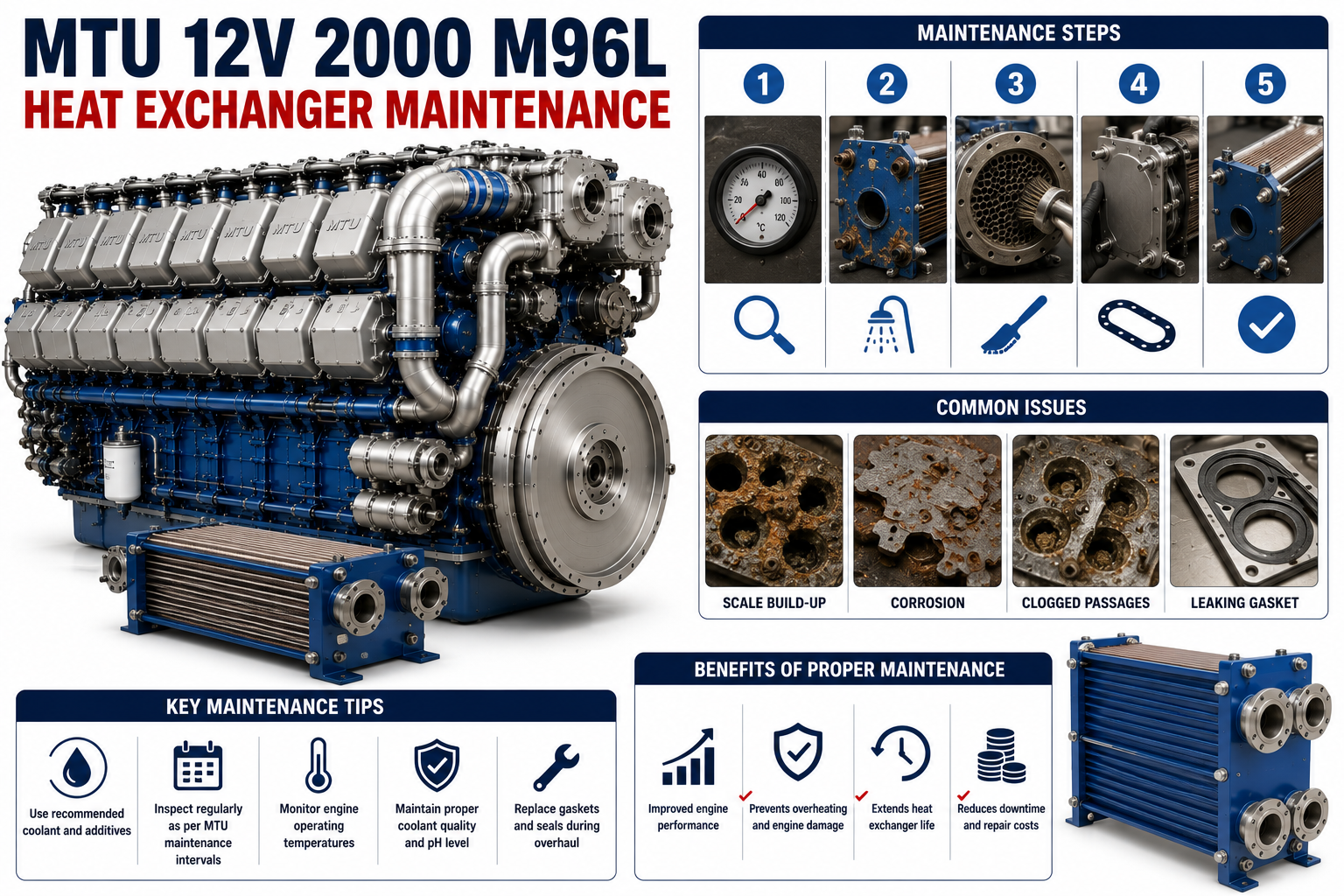
Routine heat exchanger maintenance helps prevent overheating, improves fuel efficiency, and extends the service life of your MTU engine.
What Does the Heat Exchanger Do?
The heat exchanger transfers heat from the engine's closed freshwater cooling circuit to seawater without allowing the two fluids to mix.
Its main functions include:
- Removing engine heat
- Maintaining stable coolant temperatures
- Protecting cylinder heads
- Improving combustion efficiency
- Supporting turbocharger cooling
- Extending engine life
- Reducing thermal stress
A properly functioning heat exchanger keeps the engine operating within its designed temperature range under all load conditions.
Why Heat Exchanger Maintenance Is Essential
Marine engines operate in harsh environments where seawater contains salt, minerals, sand, and biological material.
Over time these contaminants may:
- Restrict cooling passages
- Reduce heat transfer efficiency
- Increase engine temperatures
- Accelerate corrosion
- Reduce engine performance
- Increase fuel consumption
Regular inspections and cleaning prevent these issues from developing into major repairs.
Common Causes of Heat Exchanger Problems
Salt Deposits
Salt gradually accumulates inside seawater passages, reducing cooling efficiency.
Marine Growth
Algae, barnacles, and shell growth restrict seawater flow.
Internal Corrosion
Old coolant or improper maintenance can accelerate corrosion inside the exchanger.
Blocked Cooling Tubes
Sand, debris, and mineral deposits reduce heat transfer.
Damaged Seals
Worn seals may allow coolant leaks or reduce cooling efficiency.
Warning Signs of a Dirty Heat Exchanger
Watch for these common symptoms:
- Rising coolant temperature
- Frequent overheating alarms
- Higher exhaust temperatures
- Reduced engine power
- Increased fuel consumption
- Engine derating
- Reduced maximum RPM
- Poor performance under heavy load
- Coolant loss
- Steam around the engine compartment
These symptoms often develop gradually, making routine inspections extremely valuable.
Components to Inspect During Heat Exchanger Service
Whenever servicing the heat exchanger, inspect:
- Seawater pump
- Freshwater circulation pump
- Charge air cooler
- Thermostats
- Cooling hoses
- Hose clamps
- Seawater strainers
- Temperature sensors
- Expansion tank
- Oil cooler
Evaluating the complete cooling system provides a more accurate diagnosis than replacing individual components.
How the Heat Exchanger Protects the Turbocharger
The turbocharger generates significant heat during operation.
If the cooling system becomes less efficient:
- Exhaust temperatures increase.
- Turbocharger operating temperatures rise.
- Bearing life decreases.
- Engine performance suffers.
Maintaining the heat exchanger also helps protect one of the engine's most valuable components.
Can Oil Analysis Detect Cooling Problems?
Yes.
Oil analysis often identifies cooling system issues before mechanical damage becomes visible.
Laboratory testing may detect:
- Coolant contamination
- Water contamination
- Sodium
- Potassium
- Oxidation
- Reduced oil viscosity
- Increased wear metals
Trend analysis provides valuable early warning information for marine engineers.
Preventive Maintenance Checklist
✔ Clean the heat exchanger at recommended service intervals.
✔ Inspect seawater strainers before operation.
✔ Check seawater pump performance.
✔ Monitor coolant temperatures.
✔ Replace worn gaskets and seals.
✔ Flush the cooling system when required.
✔ Inspect cooling hoses.
✔ Test thermostat operation.
✔ Perform routine oil analysis.
✔ Record engine operating temperatures.
Marine Engineer Tip
A gradual increase in operating temperature during identical vessel operating conditions is often one of the earliest signs of reduced heat exchanger efficiency. Comparing engine data over several months helps detect cooling problems before alarms occur or engine performance is affected.
Common Mistakes
Avoid these common mistakes:
- Ignoring small increases in engine temperature.
- Cleaning only the exterior of the heat exchanger.
- Neglecting seawater strainers.
- Reusing damaged seals after servicing.
- Replacing the seawater pump without inspecting the heat exchanger.
- Delaying cooling system maintenance until overheating occurs.
Frequently Asked Questions
How often should the heat exchanger be cleaned?
Cleaning intervals depend on operating conditions, water quality, and vessel usage. Follow MTU maintenance recommendations and inspect more frequently in waters with high marine growth.
Can a dirty heat exchanger increase fuel consumption?
Yes. Reduced cooling efficiency lowers combustion performance and may increase fuel usage.
Does the heat exchanger affect turbocharger performance?
Yes. Higher engine temperatures increase thermal stress on the turbocharger and reduce overall engine efficiency.
Should the charge air cooler be serviced at the same time?
Yes. The charge air cooler and heat exchanger work together to maintain engine performance and should be inspected during the same maintenance period.
Can overheating damage engine oil?
Yes. High temperatures accelerate oil oxidation, reduce lubrication quality, and increase internal engine wear.
Worldwide Marine Engine Spare Parts Supply
Alfa Marine Spare Parts supplies genuine, OEM, aftermarket, remanufactured, and reconditioned spare parts for the MTU 12V 2000 M96L and the complete MTU Series 2000 engine family.
We supply customers worldwide, including:
- Commercial shipping companies
- Shipyards
- Offshore operators
- Yacht builders
- Marine engineers
- Chief engineers
- Technical superintendents
- Government fleets
- Fishing fleets
- Marine maintenance companies
We regularly ship marine engine components to the United Kingdom, United States, Dubai (UAE), Monaco, Nigeria, the Netherlands, Italy, Spain, France, Germany, Norway, and Greece, supporting vessels in major ports and maritime service centers.
Browse Our Complete Spare Parts Catalog
Alfa Marine Spare Parts supplies:
- Heat exchangers
- Charge air coolers
- Seawater pumps
- Freshwater pumps
- Oil coolers
- Thermostats
- Turbochargers
- Fuel injectors
- Oil pumps
- Camshafts
- Crankshafts
- Cylinder heads
- Gasket kits
- Complete overhaul kits
Browse our complete inventory:
https://alfamarinespareparts.com/spareparts
Why Choose Alfa Marine Spare Parts?
Marine professionals choose Alfa Marine Spare Parts because we offer:
- Genuine, OEM, aftermarket, remanufactured, and reconditioned marine engine parts
- Worldwide shipping
- Expert technical assistance with part identification
- Fast support for planned maintenance and emergency repairs
- Solutions for commercial vessels, yachts, offshore vessels, patrol boats, and fishing fleets
- Reliable service for shipyards, marine engineers, chief engineers, technical superintendents, and fleet managers
Contact Alfa Marine Spare Parts
Need assistance with your MTU 12V 2000 M96L heat exchanger or help sourcing cooling system components?
Website: https://alfamarinespareparts.com
Email: request@alfamarinespareparts.com
Our experienced team is ready to help you identify the correct replacement parts and keep your MTU marine engine operating at maximum cooling efficiency.
Conclusion
The heat exchanger is one of the most important components in the MTU 12V 2000 M96L marine engine cooling system. Regular cleaning, inspection, and maintenance help maintain stable engine temperatures, improve fuel efficiency, and protect critical components such as the turbocharger, cylinder heads, and lubrication system. By including the heat exchanger in every preventive maintenance program, marine engineers can reduce unplanned downtime, extend engine service life, and ensure reliable performance in demanding marine environments worldwide.