MTU 12V 2000 M96X Engine Mount Inspection: Could Excessive Vibration Be Coming from Below Your Engine?
When an engine begins vibrating more than usual, many marine engineers immediately suspect the propeller, shaft alignment, injectors, or turbocharger.
While those are all valid possibilities, there's another component that's often overlooked—the engine mounts.
On the MTU 12V 2000 M96X, engine mounts play a critical role in supporting the engine, absorbing vibration, and maintaining proper alignment between the engine, gearbox, and propeller shaft.
Although they don't receive the same attention as major engine components, worn engine mounts can gradually affect engine performance, increase vibration, accelerate drivetrain wear, and even contribute to expensive repairs if ignored.
Let's explore why engine mounts are so important and how routine inspections can help protect your entire propulsion system.
What Are Engine Mounts?
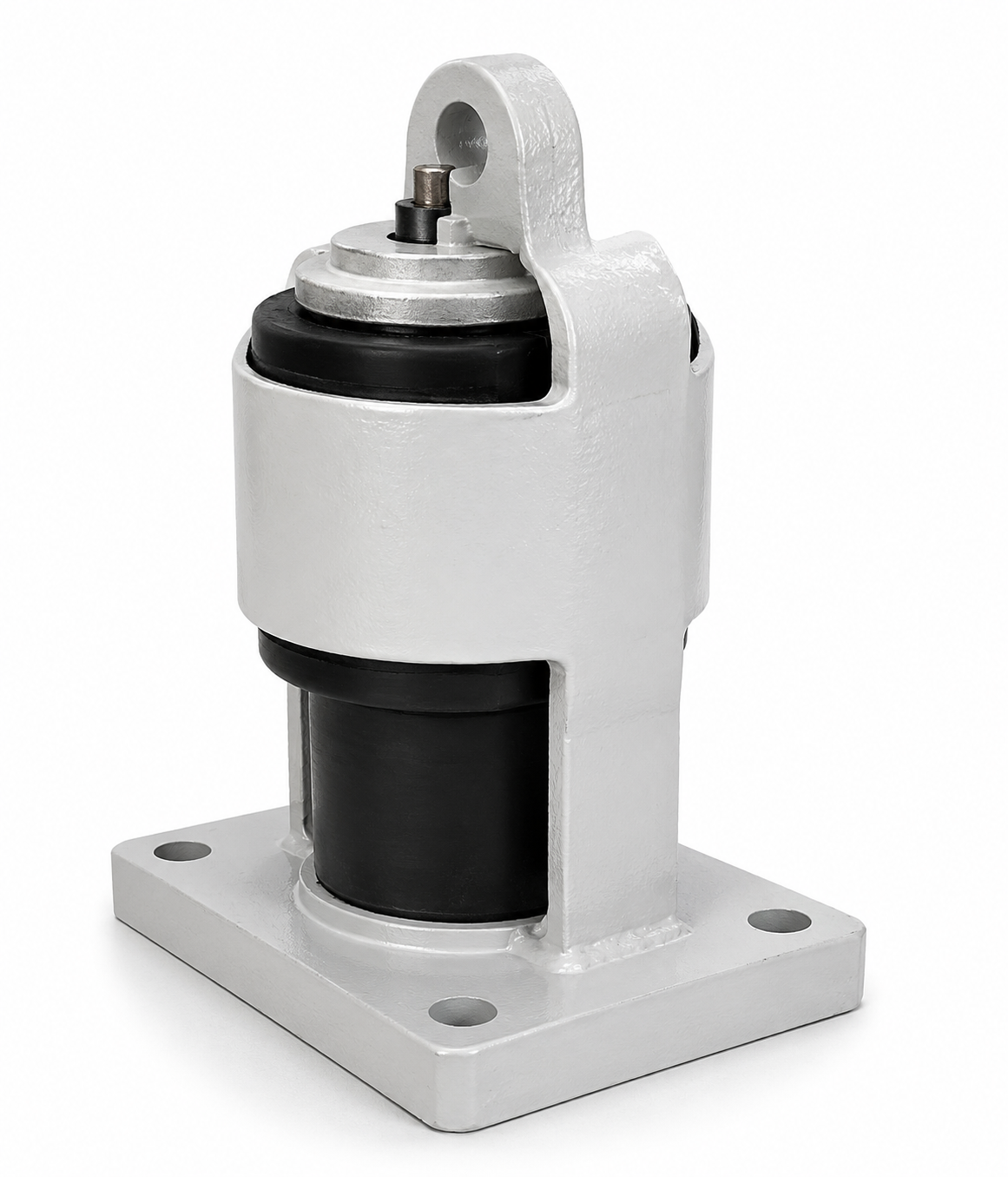
Engine mounts are specially designed support assemblies installed between the engine and the vessel's foundation.
They perform several important functions:
- Support the engine's weight
- Absorb engine vibration
- Reduce transmitted noise
- Maintain correct engine alignment
- Protect the gearbox and shafting system
- Reduce structural stress on the vessel
Without properly functioning mounts, engine movement increases significantly.
Why Are Engine Mounts Important?
Every diesel engine naturally produces vibration.
The engine mounts help isolate this vibration before it reaches:
- Gearbox
- Propeller shaft
- Hull structure
- Engine room equipment
- Control systems
Healthy mounts improve comfort, reliability, and component life throughout the propulsion system.
A Real Marine Maintenance Scenario
A crew transfer vessel equipped with MTU 12V 2000 M96X engines began experiencing increased vibration at cruising speed.
The propellers had recently been balanced.
The shaft alignment checked within acceptable limits.
No engine alarms were recorded.
During a detailed inspection, engineers discovered one rear engine mount had deteriorated internally.
Although it still supported the engine, its ability to absorb vibration had been significantly reduced.
Replacing the complete set of engine mounts restored smooth operation and reduced vibration throughout the vessel.
The problem had never been inside the engine itself—it started beneath it.
What Causes Engine Mount Wear?
Engine mounts are designed to operate for many years, but continuous loading eventually affects their performance.
Normal Age
Rubber elements naturally harden over time.
As flexibility decreases, vibration isolation becomes less effective.
Continuous Vibration
Thousands of engine operating hours gradually fatigue the mount material.
Oil Contamination
Lubricating oil or fuel leaking onto rubber mounts can accelerate deterioration.
Misalignment
Incorrect engine alignment places uneven loads on individual mounts.
This often shortens their service life.
Heavy Operating Conditions
High-speed vessels and engines operating under continuous heavy loads typically place greater stress on engine mounts.
Warning Signs of Worn Engine Mounts
Engine mount problems usually develop gradually.
Common warning signs include:
- Increased engine vibration
- New rattling noises
- Engine movement during acceleration
- Increased gearbox vibration
- Abnormal shaft alignment readings
- Uneven mount compression
- Visible cracks in rubber mounts
- Loose mounting hardware
- Increased hull vibration
- Cabin noise becoming louder than normal
These symptoms should always be investigated during scheduled maintenance.
Why Alignment Depends on Healthy Engine Mounts
Many people think shaft alignment never changes.
In reality, worn engine mounts gradually allow the engine to settle.
Even small changes may affect:
- Gearbox coupling alignment
- Propeller shaft alignment
- Bearing loads
- Shaft seal life
- Vibration levels
Maintaining healthy engine mounts helps protect the entire drivetrain.
Components to Inspect Together
Whenever engine mounts are inspected, engineers should also examine:
- Gearbox
- Flexible coupling
- Propeller shaft
- Shaft bearings
- Engine foundation
- Mounting bolts
- Hull support structure
- Exhaust system supports
- Cooling pipe connections
- Fuel lines
Looking at the complete installation helps identify the true cause of abnormal vibration.
Can Oil Analysis Detect Engine Mount Problems?
Not directly.
Oil analysis cannot determine mount condition.
However, excessive vibration caused by worn mounts may eventually contribute to increased wear in rotating components.
Routine oil analysis remains valuable because it helps monitor the overall condition of bearings, gears, and other internal engine parts while vibration inspections monitor external support systems.
Preventive Maintenance Checklist
Routine inspections help maximize engine mount life.
✔ Inspect engine mounts during every major service.
✔ Check for cracks or rubber deterioration.
✔ Monitor vibration levels.
✔ Inspect mounting bolts for proper torque.
✔ Repair oil leaks promptly.
✔ Verify engine and shaft alignment.
✔ Inspect gearbox coupling condition.
✔ Record vibration trends.
✔ Replace mounts showing excessive wear.
✔ Follow MTU maintenance recommendations.
Marine Engineer Tip
If vibration gradually increases over several months while engine performance remains unchanged, don't immediately suspect internal engine problems.
Inspect the engine mounts before dismantling major components.
A worn mount can often produce symptoms that resemble much more expensive mechanical faults.
Common Maintenance Mistakes
Avoid these common errors:
- Ignoring increased vibration.
- Replacing only one worn engine mount.
- Operating with oil-soaked rubber mounts.
- Ignoring alignment checks after mount replacement.
- Assuming vibration is always caused by the propeller.
- Delaying replacement until visible mount failure occurs.
Frequently Asked Questions
How long do engine mounts last?
Their service life depends on operating hours, vessel type, vibration levels, and environmental conditions. Regular inspections help identify deterioration before failure occurs.
Can worn engine mounts increase vibration?
Yes. Reduced vibration isolation is usually one of the earliest symptoms.
Should all engine mounts be replaced together?
In many cases, replacing the complete set helps maintain proper alignment and even load distribution.
Can oil leaks damage engine mounts?
Yes. Oil contamination accelerates deterioration of rubber components.
Should shaft alignment be checked after replacing engine mounts?
Absolutely. Any change in engine support can affect drivetrain alignment.
Worldwide Marine Engine Spare Parts Supply
Alfa Marine Spare Parts supplies genuine, OEM, aftermarket, remanufactured, and reconditioned spare parts for the MTU 12V 2000 M96X and the complete MTU Series 2000 engine family.
We proudly support:
- Commercial shipping companies
- Shipyards
- Offshore operators
- Luxury yacht operators
- Marine engineers
- Chief engineers
- Technical superintendents
- Government fleets
- Fishing fleets
- Marine service companies
We regularly supply marine engine spare parts throughout the United Kingdom, United States, Dubai (UAE), Monaco, Nigeria, the Netherlands, Italy, Spain, France, Germany, Norway, and Greece.
Browse Our Complete Spare Parts Catalog
Alfa Marine Spare Parts supplies:
- Engine mounts
- Flexible couplings
- Gearbox components
- Crankshafts
- Camshafts
- Fuel injectors
- Turbochargers
- Heat exchangers
- Water pumps
- Oil pumps
- Cylinder heads
- Complete overhaul kits
Browse our complete catalog:
https://alfamarinespareparts.com/spareparts
Why Choose Alfa Marine Spare Parts?
Reliable marine propulsion depends on more than just the engine itself. Components such as engine mounts, couplings, cooling systems, and fuel systems all work together to deliver dependable performance. At Alfa Marine Spare Parts, we help marine professionals source the right components for preventive maintenance and major overhauls.
We provide:
- Genuine, OEM, aftermarket, remanufactured, and reconditioned marine engine spare parts
- Worldwide shipping
- Fast quotations
- Technical support for part identification
- Support for MTU, Caterpillar, Wärtsilä, MAN, Cummins, Volvo Penta, Scania, Detroit Diesel, Perkins, Yanmar, and many other leading marine engine brands
Contact Alfa Marine Spare Parts
Looking for MTU 12V 2000 M96X engine mounts, drivetrain components, or marine engine spare parts?
Website: https://alfamarinespareparts.com
Email: request@alfamarinespareparts.com
Our experienced marine parts specialists are ready to assist you with identifying the correct components for maintenance, repairs, and complete engine overhauls.
Conclusion
The engine mounts supporting the MTU 12V 2000 M96X are essential for controlling vibration, maintaining alignment, and protecting the entire propulsion system. Although they are often overlooked, worn or damaged mounts can gradually increase vibration, affect shaft alignment, and place unnecessary stress on gearboxes and drivetrain components. By including engine mount inspections in every preventive maintenance program and addressing deterioration early, marine engineers can improve onboard comfort, reduce wear throughout the propulsion system, and help ensure long-term reliability from their MTU Series 2000 engine.