MTU 16V4000 M73 Marine Engine: Completing Lubricating Oil Pump Reassembly for Long-Term Reliability
Rebuilding an MTU 16V4000 M73 Marine Engine is a major engineering project that requires precision, patience, and careful attention to detail. By the time the lubricating oil pump has been installed, many people assume the most difficult part of the overhaul is complete.
In reality, some of the most important work is still ahead.
Before the engine can safely return to service, the remaining lubrication system components must be reassembled, the engine inspected thoroughly, and every part of the lubrication system verified before the first start-up.
Experienced marine engineers understand that a successful overhaul is not measured by how quickly an engine is assembled, but by how reliably it performs during the thousands of operating hours that follow.
At Alfa Marine Spare Parts, we support marine engineers, chief engineers, technical superintendents, shipyards, and fleet operators with replacement components for the MTU 16V4000 M73 Marine Engine. One lesson remains consistent throughout every overhaul:
Every component connected to the lubrication system deserves the same attention as the oil pump itself.
In this guide, we'll explain the final stages of lubricating oil pump reassembly, why these steps are essential, and how careful inspection helps protect one of the most valuable assets on board—your engine.
Understanding the MTU 16V4000 M73 Marine Engine Lubrication System
The MTU 16V4000 M73 Marine Engine is designed to operate under demanding marine conditions where reliability is essential.
Installed in fast ferries, offshore support vessels, patrol craft, crew transfer vessels, commercial yachts, and other high-performance marine applications, this engine depends on a lubrication system that continuously protects every major rotating component.
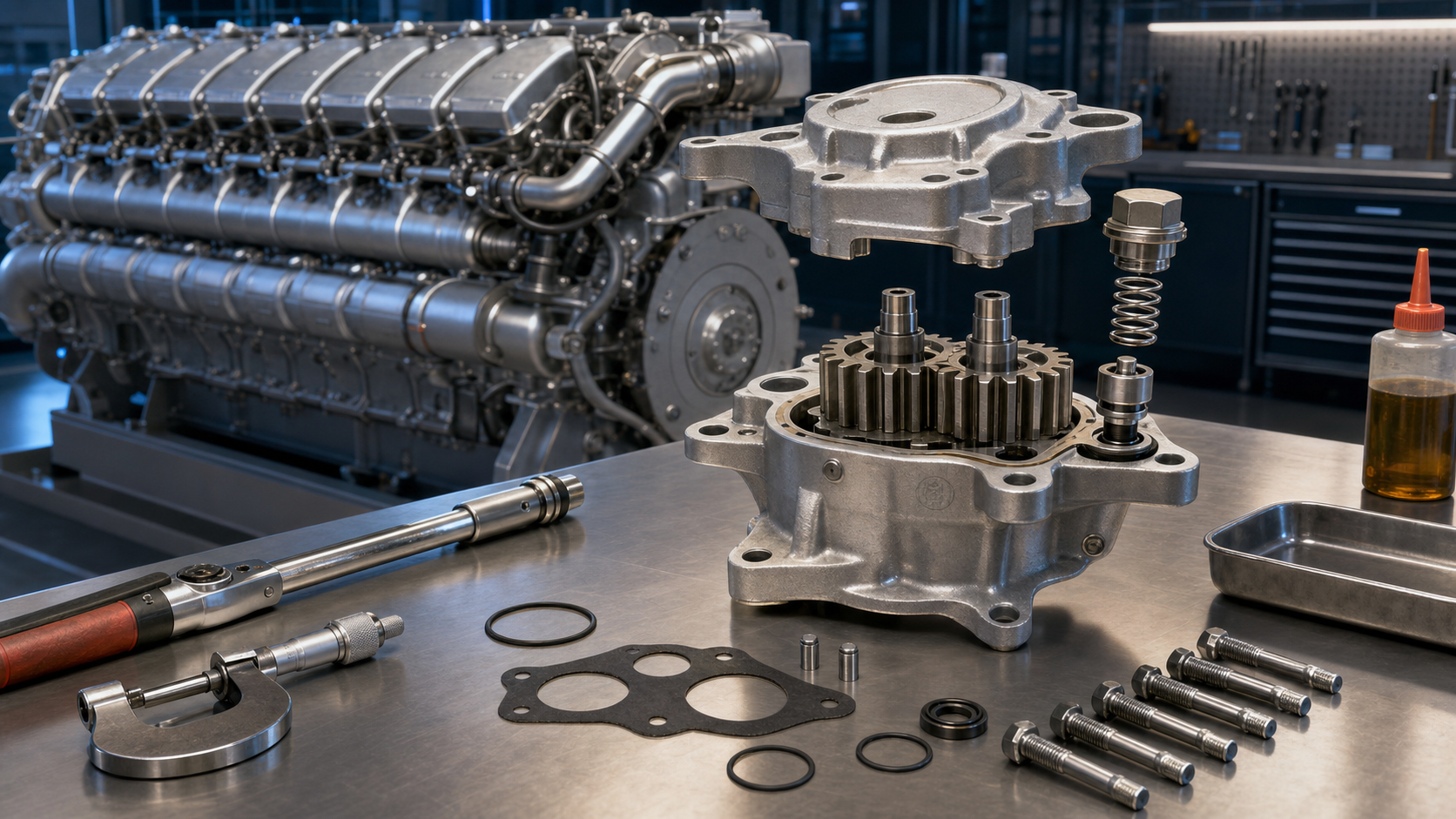
The lubricating oil pump supplies pressurised oil throughout the engine to reduce friction, remove heat, and protect components from premature wear.
Critical engine parts relying on this continuous oil supply include:
- Main Bearings
- Connecting Rod Bearings
- Camshafts
- Valve Train Components
- Timing Gears
- Piston Cooling Jets
- Turbocharger Bearings
Without proper lubrication, these components would experience rapid wear and potentially severe engine damage.
For this reason, the lubrication system is one of the most important systems inspected during every engine overhaul.
Why Final Reassembly Matters
Installing the lubricating oil pump is only one stage of rebuilding the lubrication system.
Every component fitted afterwards contributes to maintaining correct oil pressure and uninterrupted oil circulation.
Small oversights during final assembly can create problems that may only become visible once the engine reaches operating temperature.
Successful engine rebuilds depend on:
- Correct component alignment.
- Clean assembly procedures.
- Proper sealing.
- Careful inspection.
- Systematic final checks.
Marine engineers often say that reliability is built during assembly—not after the engine has been started.
Reinstalling Related Components
With the lubricating oil pump correctly installed, attention turns to the remaining lubrication system.
Each component should be inspected before installation to ensure it is clean, undamaged, and ready for service.
Reinstall the Gear Housing Cover
The gear housing protects the timing gears and other rotating components while helping maintain proper lubrication inside the engine.
Before installation:
- Clean the sealing surfaces thoroughly.
- Inspect for corrosion or damage.
- Remove any old gasket material.
- Verify the condition of mating surfaces.
- Install new sealing components where required.
Careful preparation helps reduce the risk of future oil leaks.
Install the Oil Pan
The oil pan stores the engine's lubricating oil and supports the oil pickup system.
Before reinstalling it:
- Inspect the pan for damage.
- Clean the inside thoroughly.
- Check the sealing flange.
- Replace the gasket if required.
- Tighten fasteners according to the recommended tightening procedure.
A properly sealed oil pan helps maintain lubrication system integrity throughout the engine's operating life.
Install New Oil Filters
Following a major overhaul, installing new oil filters is considered standard good engineering practice.
Fresh filters help capture any remaining particles generated during assembly before they circulate through the lubrication system.
Before fitting the filters:
- Inspect the mounting surfaces.
- Ensure sealing rings are correctly positioned.
- Confirm the correct filter specification.
Using new filters provides additional protection during the first hours of engine operation.
Refill the Engine with the Correct Lubricating Oil
Once the lubrication system has been assembled, the engine must be filled with the correct lubricating oil.
Using the recommended oil grade helps:
- Build oil pressure quickly.
- Protect engine bearings.
- Reduce friction.
- Improve cooling.
- Support long-term engine reliability.
Before starting the engine, verify the correct oil level according to the manufacturer's procedures.
Why Clean Assembly Is Essential
One of the greatest risks during engine assembly is contamination.
Small particles of dirt, gasket material, or metal debris can enter the lubrication system if care is not taken during assembly.
Once the engine starts, these particles may circulate through bearings, oil galleries, and turbocharger lubrication circuits.
Experienced marine engineers understand that keeping components clean throughout the overhaul is one of the simplest ways to protect the engine.
Clean working practices remain one of the foundations of every successful rebuild.
Engine Room Insight
Many engine failures are not caused by major mechanical defects.
Instead, they often begin with small assembly mistakes that go unnoticed during an overhaul.
Something as simple as contamination, an incorrectly installed gasket, or a loose fastener can affect lubrication system performance.
This is why experienced Chief Engineers inspect every stage of assembly rather than assuming everything is correct once the parts have been installed.
Chief Engineer's Tip
Before moving on to the first engine start, take one final walk around the engine.
Ask yourself:
✔ Has every lubrication component been installed?
✔ Are all fasteners tightened correctly?
✔ Has every gasket been replaced where necessary?
✔ Is the engine filled with clean lubricating oil?
✔ Is the oil level correct?
✔ Has the engine been inspected for cleanliness?
These simple checks often prevent unnecessary troubleshooting after start-up.
Post-Installation Inspection, Startup Checks & Preventive Maintenance for the MTU 16V4000 M73 Marine Engine
Preparing for the First Engine Start
After the lubricating oil pump and all related lubrication system components have been reinstalled, it's tempting to start the engine immediately.
However, experienced marine engineers know that the first start after a major overhaul is one of the most critical moments in the engine's service life.
Before pressing the start button, every lubrication system component should be inspected one final time.
Taking a systematic approach helps identify minor assembly issues before they develop into costly mechanical problems.
Post-Installation Inspection Before Startup
A thorough inspection provides confidence that the lubrication system is ready for operation.
Before starting the MTU 16V4000 M73 Marine Engine, experienced engineers typically verify:
Lubrication System
✔ Lubricating oil pump securely mounted.
✔ Oil pickup tube correctly installed.
✔ Oil pan installed and properly sealed.
✔ New oil filters fitted.
✔ Correct lubricating oil level.
Fasteners and Mounting Components
✔ Mounting bolts tightened according to specification.
✔ No missing fasteners.
✔ Mounting surfaces free from damage.
Oil Passages
✔ Oil passages clean.
✔ No foreign material present.
✔ Components correctly assembled.
General Inspection
✔ No loose tools inside the engine.
✔ Wiring and sensors connected.
✔ No visible oil leaks.
✔ Engine area clean and ready for operation.
These simple inspections can significantly reduce the likelihood of unexpected problems during startup.
Checking Oil Pressure During the First Engine Start
The first engine start following an overhaul should always be carefully monitored.
One of the first indicators of lubrication system performance is engine oil pressure.
As the engine starts, marine engineers closely observe:
- Oil pressure gauge.
- Warning indicators.
- Engine noise.
- Lubrication system response.
Stable oil pressure provides reassurance that the lubricating oil pump is circulating oil correctly throughout the engine.
If oil pressure does not develop as expected, the engine should be stopped and inspected before further operation.
Running an engine without adequate lubrication—even for a short period—can result in serious internal damage.
Observe Engine Operation Carefully
Once correct oil pressure has been established, continue monitoring the engine during its initial operating period.
Pay attention to:
Oil Leaks
Inspect around:
- Oil filters.
- Oil pan.
- Lubricating oil pump.
- Oil cooler.
- External oil lines.
Even a minor leak should be investigated before returning the vessel to service.
Engine Noise
The engine should operate smoothly without unusual knocking, grinding, or abnormal mechanical sounds.
Unexpected noises may indicate:
- Incorrect assembly.
- Poor lubrication.
- Loose components.
- Gear alignment issues.
Engine Temperature
As operating temperature increases, continue monitoring:
- Oil pressure stability.
- Engine temperature.
- Cooling system performance.
Both systems work together to protect the engine.
Common Installation Errors to Avoid
Even experienced technicians recognise that small assembly mistakes can affect engine reliability.
Common examples include:
Reusing Old Gaskets
Replacing sealing components during an overhaul helps reduce the risk of oil leaks.
Dirty Assembly Surfaces
Oil contamination or debris trapped between sealing surfaces may prevent proper sealing.
Incorrect Bolt Tightening
Uneven tightening may distort components or reduce sealing performance.
Forgetting to Prime the Lubrication System
Following the manufacturer's overhaul procedures helps ensure the lubrication system is ready before startup.
Skipping Final Inspection
A few minutes spent checking the engine before startup can prevent hours of unnecessary troubleshooting later.
Troubleshooting Lubrication System Problems
If abnormal oil pressure or lubrication issues are observed after installation, a systematic inspection is recommended.
Possible causes include:
- Low engine oil level.
- Incorrect oil viscosity.
- Restricted oil pickup.
- Oil filter installation issues.
- Air entering the lubrication system.
- Internal leakage.
- Damaged drive components.
- Pump wear.
- Contaminated oil passages.
Rather than replacing components immediately, experienced engineers identify the root cause before carrying out repairs.
Engine Room Insight
One of the best habits developed by experienced Chief Engineers is trend monitoring.
Instead of reacting only when alarms appear, they monitor changes in:
- Oil pressure.
- Engine temperature.
- Oil consumption.
- Engine vibration.
- Oil analysis reports.
Small changes often provide early warning of developing problems long before engine protection systems activate.
Chief Engineer's Tip
Never judge a successful overhaul by the first engine start alone.
Continue monitoring the engine during the first several operating hours.
Many experienced engineers perform additional inspections after:
- Initial warm-up.
- First operating cycle.
- First scheduled shutdown.
These follow-up inspections help confirm that the lubrication system continues to operate correctly under normal operating conditions.
Preventive Maintenance Tips
Proper maintenance of the lubrication system helps maximise the service life of the MTU 16V4000 M73 Marine Engine.
Daily
✔ Check engine oil level.
✔ Monitor oil pressure.
✔ Inspect for leaks.
Weekly
✔ Inspect oil filters.
✔ Monitor oil condition.
✔ Check oil cooler.
Monthly
✔ Inspect external oil lines.
✔ Review engine operating data.
✔ Check breather condition.
Scheduled Maintenance
✔ Replace lubricating oil.
✔ Replace oil filters.
✔ Inspect oil pump drive components.
✔ Inspect oil pickup system.
✔ Analyse engine oil where applicable.
Regular maintenance helps identify wear before it affects engine reliability.
Technical Reference
The guidance presented in this article follows recognised marine engineering practices together with overhaul procedures applicable to high-performance marine diesel engines. Maintenance procedures may vary depending on the engine model, serial number, and application. Always consult the appropriate manufacturer documentation before performing maintenance or overhaul procedures.
Frequently Asked Questions, Related Parts & Why Marine Engineers Choose Alfa Marine Spare Parts
Frequently Asked Questions About the MTU 16V4000 M73 Marine Engine
During major maintenance and overhaul projects, marine engineers often ask practical questions about the lubrication system and lubricating oil pump. Below are some of the most frequently asked questions for the MTU 16V4000 M73 Marine Engine.
Should the lubricating oil pump always be inspected during a major overhaul?
Yes.
The lubricating oil pump is one of the most important components in the engine's lubrication system. During a major overhaul, it should be carefully inspected for wear, damage, and proper operation before being reinstalled or replaced if necessary.
A thorough inspection helps ensure reliable oil circulation when the engine returns to service.
Is it necessary to install new oil filters after an overhaul?
Yes.
New oil filters are recommended following a major overhaul because they help remove any remaining assembly debris or contaminants before they circulate through the lubrication system.
Replacing the filters is a simple step that contributes to long-term engine reliability.
Why is monitoring oil pressure after startup so important?
Oil pressure is one of the first indicators that the lubrication system is operating correctly.
A stable oil pressure reading confirms that the lubricating oil pump is circulating oil to critical engine components such as:
- Main bearings
- Connecting rod bearings
- Camshafts
- Turbocharger bearings
- Piston cooling nozzles
Any unexpected change in oil pressure should be investigated immediately.
What could cause low oil pressure after an overhaul?
Several factors may contribute to abnormal oil pressure, including:
- Incorrect oil level
- Restricted oil pickup
- Air entering the lubrication system
- Damaged lubrication components
- Oil filter installation issues
- Internal oil leaks
- Incorrect assembly
A systematic inspection is always recommended before replacing components.
Can contamination damage the lubrication system?
Yes.
Even very small particles can circulate throughout the engine once oil pressure is established.
Maintaining a clean working environment during assembly helps protect bearings, gears, turbochargers, and other precision-engineered components.
How can engine life be extended after an overhaul?
Good maintenance practices remain one of the best ways to maximise engine life.
These include:
- Regular oil changes
- Replacing oil filters
- Monitoring oil pressure
- Maintaining correct oil quality
- Following the manufacturer's maintenance intervals
- Investigating abnormal engine readings early
Preventive maintenance is almost always less expensive than corrective repairs.
Engine Room Insight
Experienced Chief Engineers often pay close attention to engine trends rather than waiting for alarms.
They regularly monitor:
- Oil pressure
- Oil temperature
- Engine temperature
- Oil consumption
- Vibration levels
- Oil analysis reports
A gradual change in one of these values often provides an early warning that maintenance may soon be required.
This proactive approach helps reduce unexpected downtime and supports long-term engine reliability.
Chief Engineer's Tip
One of the best habits after completing a major overhaul is keeping detailed maintenance records.
Record information such as:
✔ Date of overhaul.
✔ Engine operating hours.
✔ Oil specification used.
✔ Oil pressure during startup.
✔ Filter replacement dates.
✔ Inspection findings.
Accurate records make future maintenance planning easier and provide valuable information for troubleshooting if operating conditions change over time.
Preventive Maintenance Checklist
Maintaining the lubrication system is one of the most effective ways to protect the MTU 16V4000 M73 Marine Engine.
Daily
✔ Check engine oil level.
✔ Monitor oil pressure.
✔ Inspect for external oil leaks.
Weekly
✔ Inspect oil filters.
✔ Monitor engine operating temperatures.
✔ Check oil cooler condition.
Monthly
✔ Inspect external oil lines.
✔ Review engine operating trends.
✔ Check crankcase breather condition.
Scheduled Maintenance
✔ Replace lubricating oil.
✔ Replace oil filters.
✔ Inspect oil coolers.
✔ Inspect the lubricating oil pump where required.
✔ Monitor oil analysis reports.
Following a structured maintenance programme helps identify wear before it affects engine performance.
Related MTU 16V4000 M73 Marine Engine Parts
During planned maintenance or a complete overhaul, marine engineers frequently inspect additional lubrication and engine components alongside the oil pump.
These commonly include:
- Lubricating Oil Pump
- Oil Pump Repair Kits
- Oil Filters
- Oil Coolers
- Main Bearings
- Connecting Rod Bearings
- Camshaft Bearings
- Crankshaft Bearings
- Pistons
- Piston Rings
- Cylinder Liners
- Cylinder Heads
- Cylinder Head Gaskets
- Fuel Injectors
- Turbochargers
- Freshwater Pumps
- Seawater Pumps
- Heat Exchangers
- Aftercoolers
- Thermostats
- Complete Gasket Sets
- Complete Overhaul Kits
Replacing related wear components during the same maintenance period can improve reliability and reduce future downtime.
Why Marine Engineers Choose Alfa Marine Spare Parts
Every overhaul begins with identifying the correct replacement parts.
At Alfa Marine Spare Parts, we help customers identify components for the MTU 16V4000 M73 Marine Engine using:
- Engine Model
- Engine Serial Number
- Existing Part Numbers
- Technical Documentation
- Component Identification
We supply:
- Genuine Marine Parts
- OEM Replacement Parts
- Premium Aftermarket Parts
- Professionally Remanufactured Components
Our goal is to help marine professionals source the correct parts efficiently while supporting reliable engine performance.
Industries We Support
We proudly work with customers throughout the maritime industry, including:
- Marine Engineers
- Chief Engineers
- Technical Superintendents
- Shipyards
- Commercial Shipping Companies
- Offshore Operators
- Tugboat Operators
- Ferry Companies
- Fishing Fleets
- Government Fleets
- Naval Operators
- Yacht Management Companies
- Marine Service Companies
- Marine Equipment Distributors
- Boat Builders
Worldwide Marine Spare Parts Supply
Alfa Marine Spare Parts supplies marine engine components to customers across major maritime regions worldwide, including:
- Spain
- Netherlands
- Germany
- Italy
- France
- Norway
- Greece
- United Kingdom
- United States
- Canada
- Brazil
- United Arab Emirates
- Saudi Arabia
- Qatar
- Nigeria
- South Africa
- Singapore
- Australia
Whether your vessel is preparing for routine maintenance or a complete engine overhaul, our team is ready to support your marine spare parts requirements.
Browse Our Complete Marine Spare Parts Catalog
Looking for parts for your MTU 16V4000 M73 Marine Engine or another leading marine diesel engine?
Browse our complete catalogue:
https://alfamarinespareparts.com/spareparts
Our range includes components for:
- MTU
- Caterpillar
- Cummins
- MAN
- Volvo Penta
- Wärtsilä
- Scania
- Yanmar
- Perkins
- Detroit Diesel
- Mitsubishi
- Deutz
- John Deere
- Komatsu
- Doosan
Contact Alfa Marine Spare Parts
Need assistance identifying the correct parts for your MTU 16V4000 M73 Marine Engine?
Our experienced team is ready to assist.
Website
https://alfamarinespareparts.com
Browse Our Marine Spare Parts Catalog
https://alfamarinespareparts.com/spareparts
request@alfamarinespareparts.com
Providing your engine model, serial number, or existing part number allows us to identify compatible replacement components more accurately.
Final Thoughts
The MTU 16V4000 M73 Marine Engine has earned a strong reputation for reliability in demanding marine applications, but its performance depends heavily on a healthy lubrication system. Completing the lubricating oil pump installation with care, inspecting every related component, and carrying out thorough post-installation checks are essential steps before returning the engine to service.
Equally important is ongoing preventive maintenance. Regular oil changes, filter replacement, oil pressure monitoring, and routine inspections help protect critical engine components and reduce the risk of unexpected downtime.
At Alfa Marine Spare Parts, we support marine engineers, chief engineers, shipyards, fleet operators, and vessel owners with genuine, OEM, aftermarket, and professionally remanufactured MTU marine engine parts. Whether you're replacing a single lubrication component or completing a full engine overhaul, our experienced team is ready to help you identify the right parts and keep your MTU 16V4000 M73 Marine Engine operating safely, efficiently, and reliably for years to come.