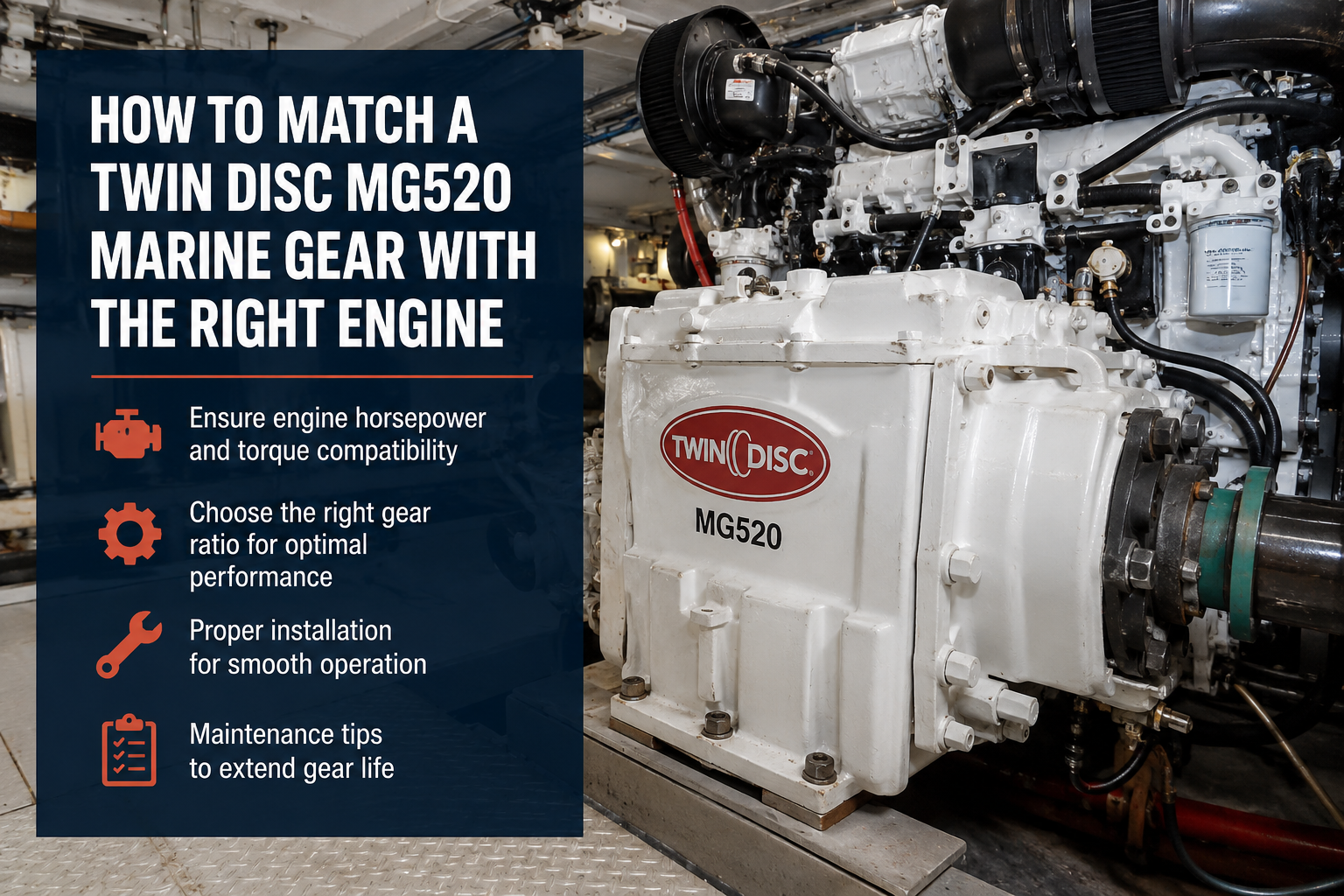
Twin Disc MG520 Marine Gear: How to Choose the Right Engine and Transmission Combination
Introduction
Imagine you're preparing a vessel for a new engine installation or replacing an existing marine transmission. The engine has been selected, the mounting arrangement looks correct, and the horsepower appears to match the gearbox specification.
At first glance, everything seems ready for installation.
However, experienced marine engineers know that matching a marine engine to a Twin Disc MG520 Marine Gear involves much more than horsepower alone.
An engine and transmission must work together as a complete propulsion system. Factors such as engine torque, operating speed, reduction ratio, flywheel housing, flywheel dimensions, coupling design, and cooling arrangements all influence how efficiently power is transferred from the engine to the propeller.
Overlooking just one of these factors can lead to unnecessary modifications, poor vessel performance, increased component wear, or costly downtime.
At Alfa Marine Spare Parts, we regularly assist marine engineers, chief engineers, technical superintendents, shipyards, fleet managers, and vessel owners in identifying the correct marine transmission and compatible replacement parts. Understanding compatibility before installation is one of the most effective ways to improve reliability and maximise the service life of both the engine and the gearbox.
In this guide, we'll explain what makes the Twin Disc MG520 Marine Gear a trusted choice, the factors that influence engine compatibility, and the inspections that should be completed before installation.
Table of Contents
- Understanding the Twin Disc MG520 Marine Gear
- Why Engine Compatibility Matters
- Engine Torque vs Horsepower
- Operating RPM and Reduction Ratios
- SAE Flywheel Housing and Flywheel Compatibility
- Couplings and Driveline Alignment
- Cooling System Requirements
- Common Installation Mistakes
- Engine Room Insight
- Chief Engineer's Tip
- Preventive Maintenance Checklist
- Frequently Asked Questions
- Related Twin Disc MG520 Marine Gear Parts
- Why Choose Alfa Marine Spare Parts
- Industries We Support
- Worldwide Marine Spare Parts Supply
- Technical Reference
- Final Thoughts
Understanding the Twin Disc MG520 Marine Gear
The Twin Disc MG520 Marine Gear is designed to transfer engine power efficiently to the propeller while providing reliable forward, neutral, and reverse operation. It is used in a wide variety of commercial and recreational marine applications where dependable propulsion is essential.
Its robust construction and proven hydraulic clutch design have made it a popular choice for:
- Commercial fishing vessels
- Tugboats
- Workboats
- Crew transfer vessels
- Passenger ferries
- Offshore support vessels
- Patrol boats
- Pilot boats
- High-performance yachts
Like any marine transmission, its long-term performance depends on being correctly matched to the engine and propulsion system.
Why Engine Compatibility Matters
Selecting a Twin Disc MG520 Marine Gear is not simply a matter of choosing a gearbox that can handle the engine's advertised horsepower.
Marine diesel engines produce power differently depending on their torque characteristics and operating speed. Two engines with identical horsepower ratings may deliver that power in very different ways, affecting how the transmission performs under load.
A properly matched engine and marine gear help achieve:
- Efficient power transfer
- Smooth clutch engagement
- Reduced drivetrain stress
- Improved fuel efficiency
- Better vessel manoeuvrability
- Longer service life for both the engine and transmission
Taking the time to confirm compatibility before installation can help avoid unnecessary modifications and reduce the likelihood of premature component wear.
Marine Engineering Insight
One of the most common mistakes during a repower project is assuming that a transmission suitable for one engine will automatically suit another with a similar horsepower rating.
Experienced marine engineers know that horsepower is only one part of the equation. Torque, operating RPM, reduction ratio, flywheel housing, coupling dimensions, and cooling requirements all influence whether an engine and transmission will work together reliably.
Understanding the complete propulsion package before installation is one of the best ways to achieve dependable long-term performance.
Matching the Twin Disc MG520 Marine Gear to the Right Engine
Engine Torque vs Horsepower
One of the most common misconceptions when selecting a Twin Disc MG520 Marine Gear is that horsepower alone determines whether a transmission is suitable for an engine.
In reality, engine torque is just as important.
Horsepower indicates how much work an engine can perform over time, while torque represents the rotational force delivered to the transmission. Two marine diesel engines may have identical horsepower ratings but produce very different torque characteristics depending on their design and operating speed.
When selecting a marine gear, engineers should evaluate both:
- Maximum engine horsepower
- Peak engine torque
- Continuous operating torque
- Engine duty cycle
Matching the transmission to the engine's actual operating characteristics helps reduce stress on internal gears, clutches, bearings, and shafts while improving long-term reliability.
Operating RPM and Reduction Ratios
Another critical factor is operating speed.
Every Twin Disc MG520 Marine Gear is designed to work within specific input speed limits and reduction ratios. Selecting the correct reduction ratio ensures the engine operates within its recommended RPM range while allowing the propeller to deliver efficient thrust.
A reduction ratio influences:
- Propeller shaft speed
- Vessel acceleration
- Fuel efficiency
- Bollard pull
- Cruising performance
- Engine loading
A ratio that is too high or too low may prevent the engine from operating in its most efficient range.
Experienced marine engineers always consider the complete propulsion package rather than selecting a gearbox based on horsepower alone.
Choosing the Correct Reduction Ratio
The reduction ratio should always be selected according to the vessel's intended application.
For example:
Higher Ratios
Often selected for:
- Tugboats
- Fishing vessels
- Heavy displacement vessels
- Workboats requiring greater propeller thrust
These applications benefit from increased torque delivered to the propeller at lower shaft speeds.
Lower Ratios
Often used for:
- Fast patrol boats
- Crew transfer vessels
- High-speed commercial craft
- Performance yachts
These vessels typically require higher propeller shaft speeds to achieve greater cruising performance.
Choosing the correct reduction ratio is one of the most important decisions during engine and transmission matching.
SAE Flywheel Housing Compatibility
One specification that is sometimes overlooked is the SAE flywheel housing.
The flywheel housing provides the mechanical connection between the engine and the transmission.
Before installing a Twin Disc MG520 Marine Gear, engineers should confirm:
- SAE housing size
- Housing condition
- Mounting bolt pattern
- Alignment surfaces
- Bell housing compatibility
An incorrect housing configuration may require additional modifications or prevent proper installation altogether.
Flywheel Dimensions
The flywheel is another essential part of the engine and transmission interface.
Before installation, verify:
- Flywheel diameter
- Flywheel thickness
- Ring gear condition
- Mounting bolt pattern
- Pilot bore dimensions
Accurate flywheel dimensions help ensure proper alignment between the engine, flexible coupling, and marine transmission.
Coupling Compatibility
The flexible coupling absorbs torsional vibration while transmitting engine power to the marine gear.
Selecting the wrong coupling may lead to:
- Increased vibration
- Misalignment
- Premature spline wear
- Bearing damage
- Reduced transmission life
When evaluating coupling compatibility, engineers generally inspect:
- Coupling dimensions
- Torque capacity
- Bolt pattern
- Shaft alignment
- Input flange compatibility
The coupling should always be considered part of the complete propulsion system rather than an individual replacement component.
Cooling Requirements
The Twin Disc MG520 Marine Gear depends on proper oil cooling to maintain reliable operation.
Transmission oil performs several important functions:
- Lubricates gears and bearings
- Removes heat
- Supports hydraulic clutch operation
- Protects internal components from wear
A properly functioning oil cooling system helps maintain stable operating temperatures and contributes to longer transmission life.
During installation, engineers should inspect:
- Oil cooler condition
- Cooling hoses
- Connections
- Oil circulation
- Cooling water flow where applicable
Ignoring cooling system maintenance may reduce gearbox reliability even when the transmission itself is in excellent condition.
Common Installation Mistakes
Many transmission problems originate during installation rather than during operation.
Some common mistakes include:
❌ Selecting the transmission based only on horsepower.
❌ Ignoring engine torque characteristics.
❌ Using the wrong reduction ratio.
❌ Failing to verify SAE flywheel housing compatibility.
❌ Incorrect flywheel dimensions.
❌ Poor driveline alignment.
❌ Reusing worn flexible couplings.
❌ Ignoring transmission cooling requirements.
Taking the time to verify these details before installation helps prevent unnecessary modifications and improves overall propulsion system reliability.
Engine Room Insight
Marine engineers often spend considerable time selecting the right engine but less time evaluating the transmission.
In practice, both components should be considered together.
A well-matched Twin Disc MG520 Marine Gear allows the engine to operate efficiently while delivering smooth power transfer to the propeller. This not only improves vessel performance but also reduces wear on the drivetrain and supports longer service intervals.
Successful propulsion systems are the result of careful planning, accurate measurements, and attention to detail before installation begins.
Chief Engineer's Tip
Before installing any marine transmission, complete a compatibility checklist.
Confirm:
✔ Engine torque rating.
✔ Continuous operating RPM.
✔ Reduction ratio.
✔ SAE flywheel housing size.
✔ Flywheel dimensions.
✔ Flexible coupling specification.
✔ Cooling system compatibility.
✔ Driveline alignment.
Completing these checks before installation can save significant time, reduce commissioning delays, and help avoid expensive modifications later.
Marine Engineer's Preventive Maintenance Checklist
Once the Twin Disc MG520 Marine Gear has been installed, regular inspections help maintain reliable performance.
Daily
✔ Check transmission oil level.
✔ Monitor operating temperature.
✔ Listen for abnormal noise.
Weekly
✔ Inspect for oil leaks.
✔ Check cooling hoses.
✔ Monitor oil pressure where applicable.
Monthly
✔ Inspect transmission mounts.
✔ Check coupling condition.
✔ Verify driveline alignment if vibration is present.
Scheduled Maintenance
✔ Replace transmission oil according to maintenance intervals.
✔ Inspect oil filters where fitted.
✔ Inspect oil cooler.
✔ Check clutch performance.
✔ Monitor transmission operating temperatures.
Regular preventive maintenance helps maximise the service life of both the engine and the marine gear.
Frequently Asked Questions, Related Parts & Why Marine Engineers Choose Alfa Marine Spare Parts
Frequently Asked Questions About the Twin Disc MG520 Marine Gear
Selecting and maintaining a Twin Disc MG520 Marine Gear often raises practical questions for marine engineers, vessel owners, and technical superintendents. Below are answers to some of the most common questions asked during new installations, repowers, and transmission replacements.
Is horsepower the only factor when selecting a Twin Disc MG520 Marine Gear?
No.
Horsepower is only one part of the selection process.
A successful engine and transmission match should also consider:
- Engine torque
- Continuous operating RPM
- Reduction ratio
- SAE flywheel housing
- Flywheel dimensions
- Flexible coupling compatibility
- Cooling system requirements
- Vessel operating profile
Evaluating the complete propulsion package helps improve performance and reliability.
Why is engine torque so important?
Torque is the rotational force transmitted from the engine to the marine gear.
Two engines with identical horsepower ratings may produce very different torque characteristics.
Matching the transmission to the engine's torque output helps:
- Protect internal gears
- Reduce clutch wear
- Improve power transfer
- Extend transmission service life
This is one reason experienced marine engineers always review both horsepower and torque before selecting a marine gear.
How do I choose the correct reduction ratio?
The correct reduction ratio depends on several factors, including:
- Engine operating speed
- Propeller diameter
- Vessel displacement
- Hull design
- Intended service
- Required cruising speed
The goal is to allow the engine to operate efficiently while providing the propeller with the appropriate shaft speed for the vessel's application.
Can I install a Twin Disc MG520 Marine Gear on any engine?
Not necessarily.
Before installation, compatibility should always be verified.
Important checks include:
- Engine power rating
- Maximum torque
- SAE flywheel housing
- Flywheel dimensions
- Input coupling
- Cooling arrangements
- Mounting configuration
Confirming these specifications before installation helps avoid unnecessary modifications and commissioning delays.
Why is driveline alignment important?
Proper alignment between the engine, transmission, shaft, and propeller reduces vibration throughout the propulsion system.
Poor alignment may contribute to:
- Bearing wear
- Oil seal leakage
- Coupling damage
- Gear wear
- Increased vibration
Routine alignment checks are recommended whenever a transmission is installed or removed.
How often should the marine gear be inspected?
Inspection intervals depend on operating conditions and the manufacturer's maintenance schedule.
Routine checks commonly include:
- Oil level
- Oil condition
- Operating temperature
- Cooling system
- External leaks
- Mounting bolts
- Flexible coupling
- Abnormal vibration or noise
Preventive inspections help identify wear before it develops into a larger repair.
Engine Room Insight
One of the best propulsion systems isn't necessarily the one with the highest horsepower—it's the one where every component has been matched correctly.
Experienced marine engineers understand that the engine, marine transmission, flexible coupling, propeller shaft, and propeller all work together as one system.
When each component is correctly selected and installed, the result is smoother operation, improved fuel efficiency, reduced drivetrain stress, and longer equipment life.
Chief Engineer's Tip
Before approving a new engine and transmission installation, complete a compatibility review.
Verify:
✔ Engine horsepower.
✔ Maximum engine torque.
✔ Continuous operating RPM.
✔ Reduction ratio.
✔ SAE flywheel housing size.
✔ Flywheel dimensions.
✔ Flexible coupling specification.
✔ Cooling system compatibility.
✔ Shaft alignment.
These checks take relatively little time but can prevent expensive modifications and unexpected downtime later.
Preventive Maintenance Checklist
Routine maintenance helps maximise the service life of the Twin Disc MG520 Marine Gear.
Daily
✔ Check transmission oil level.
✔ Monitor operating temperature.
✔ Listen for unusual noise.
Weekly
✔ Inspect for oil leaks.
✔ Check oil cooler connections.
✔ Monitor gearbox performance.
Monthly
✔ Inspect transmission mounts.
✔ Check coupling condition.
✔ Monitor vibration.
Scheduled Maintenance
✔ Replace transmission oil according to the maintenance schedule.
✔ Inspect oil filters where applicable.
✔ Inspect the oil cooler.
✔ Check clutch engagement.
✔ Verify driveline alignment.
✔ Inspect external seals.
Consistent preventive maintenance contributes to dependable transmission performance and reduced downtime.
Related Twin Disc MG520 Marine Gear Parts
During scheduled maintenance or a transmission overhaul, marine engineers commonly inspect or replace related components, including:
- Hydraulic Clutch Plates
- Friction Discs
- Steel Plates
- Oil Pump Assemblies
- Oil Filters
- Oil Coolers
- Bearings
- Oil Seals
- Gasket Sets
- Input Shafts
- Output Shafts
- Flexible Couplings
- Pressure Control Valves
- Reduction Gears
- Overhaul Kits
Inspecting these components together helps improve overall transmission reliability and reduces repeat labour.
Why Choose Alfa Marine Spare Parts
Choosing the correct Twin Disc MG520 Marine Gear involves more than selecting a model number.
At Alfa Marine Spare Parts, we assist marine professionals by identifying compatible transmissions and replacement parts using:
- Transmission Model
- Transmission Serial Number
- Engine Model
- Engine Serial Number
- Reduction Ratio
- Existing Part Numbers
- Technical Documentation
We supply:
- Genuine Marine Parts
- OEM Replacement Parts
- Premium Aftermarket Parts
- Professionally Rebuilt Marine Transmissions
- Remanufactured Marine Components
Whether you're replacing a complete transmission or sourcing overhaul parts, our team is ready to help identify the right solution for your vessel.
Industries We Support
Our customers include marine professionals from a wide range of industries, including:
- Marine Engineers
- Chief Engineers
- Technical Superintendents
- Shipyards
- Commercial Shipping Companies
- Offshore Operators
- Fishing Fleets
- Tugboat Operators
- Ferry Companies
- Government Fleets
- Naval Operators
- Yacht Management Companies
- Marine Service Companies
- Boat Builders
- Marine Equipment Distributors
Worldwide Marine Spare Parts Supply
Alfa Marine Spare Parts supplies marine engines, marine transmissions, and spare parts to customers around the world, including:
- Spain
- Netherlands
- Germany
- Italy
- France
- Norway
- Greece
- United Kingdom
- United States
- Canada
- Brazil
- United Arab Emirates
- Saudi Arabia
- Qatar
- Nigeria
- South Africa
- Singapore
- Australia
We support vessels operating in commercial shipping, offshore energy, fishing, passenger transport, and recreational marine industries.
Browse Our Complete Marine Spare Parts Catalog
Looking for parts for your Twin Disc MG520 Marine Gear or another leading marine transmission?
Browse our complete catalogue:
https://alfamarinespareparts.com/spareparts
We supply marine parts for:
- Twin Disc
- MTU
- Caterpillar
- Cummins
- MAN
- Volvo Penta
- Wärtsilä
- Scania
- Yanmar
- Perkins
- Detroit Diesel
- Deutz
- John Deere
- Komatsu
- Doosan
Contact Alfa Marine Spare Parts
Need help selecting the correct Twin Disc MG520 Marine Gear or compatible replacement parts?
Our experienced team is ready to assist.
Website
https://alfamarinespareparts.com
Browse Our Marine Spare Parts Catalog
https://alfamarinespareparts.com/spareparts
request@alfamarinespareparts.com
Providing your transmission model, serial number, engine model, and reduction ratio helps us identify compatible components more efficiently.
Technical Reference
The information presented in this article is based on recognised marine engineering practices and technical guidance applicable to marine propulsion systems. Specifications, installation procedures, and compatibility requirements may vary depending on the transmission configuration, engine model, and vessel application. Always consult the appropriate manufacturer documentation before installation, maintenance, or overhaul.
Final Thoughts
Choosing the correct Twin Disc MG520 Marine Gear is about far more than matching horsepower. A reliable propulsion system depends on selecting a transmission that is compatible with the engine's torque characteristics, operating RPM, reduction ratio, flywheel housing, coupling arrangement, and cooling system.
Taking the time to verify these factors before installation can improve power transfer, reduce drivetrain wear, minimise unexpected downtime, and extend the service life of both the engine and the marine gear.
At Alfa Marine Spare Parts, we support marine engineers, chief engineers, shipyards, fleet operators, mechanics, and vessel owners with genuine, OEM, aftermarket, professionally rebuilt, and remanufactured marine transmissions and spare parts. Whether you're planning a repower project, replacing an existing gearbox, or sourcing overhaul components, our experienced team is ready to help you identify the right solution for your vessel.