MTU 16V4000 Marine Crankshaft: The Backbone of Reliable Marine Engine Performance
Why the MTU 16V4000 Marine Crankshaft Is One of the Most Important Engine Components
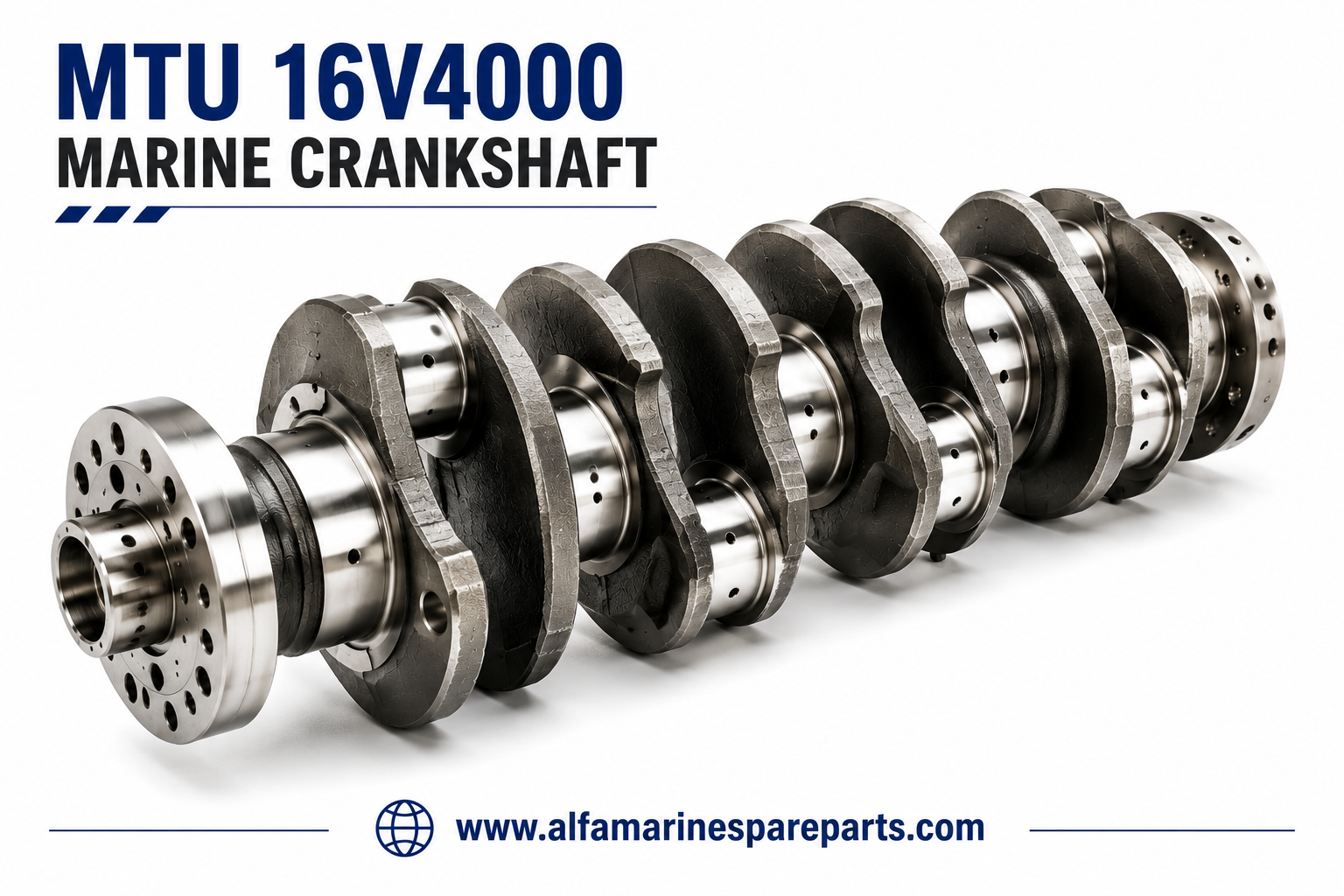
The MTU 16V4000 Marine Crankshaft is the heart of the MTU Series 4000 propulsion engine. Designed to withstand enormous combustion forces, it converts the pistons' reciprocating motion into smooth rotational power that drives the vessel's propulsion system.
Whether installed in a high-speed ferry, offshore support vessel, patrol craft, tugboat, luxury yacht, or naval vessel, the crankshaft operates under constant mechanical stress. Precision engineering, proper lubrication, and regular inspections are essential to ensure long service life and dependable performance.
If you are searching for an MTU 16V4000 Marine Crankshaft, choosing the correct replacement or overhaul component is vital for maintaining engine reliability and reducing costly downtime.
Why This Matters
The crankshaft performs several critical functions within the engine:
- Converts piston movement into rotational power.
- Supports the connecting rods.
- Transfers engine torque to the propulsion system.
- Maintains precise engine timing.
- Works with the main bearings to ensure smooth rotation.
- Absorbs combustion forces from all sixteen cylinders.
- Supports long-term engine durability under continuous heavy loads.
A damaged or worn crankshaft can lead to:
- Low oil pressure.
- Increased engine vibration.
- Bearing failure.
- Abnormal knocking sounds.
- Loss of engine efficiency.
- Catastrophic engine failure.
- Expensive overhaul costs.
Routine inspections and preventive maintenance significantly reduce the risk of crankshaft failure.
Engineering Lesson
How the MTU 16V4000 Marine Crankshaft Works
The crankshaft rotates inside precision-machined main bearings while each connecting rod transfers combustion force from the piston.
During every combustion cycle, the crankshaft must:
- Withstand extremely high torsional loads.
- Maintain perfect alignment.
- Operate on a continuous hydrodynamic oil film.
- Resist fatigue from millions of operating cycles.
- Deliver smooth and balanced power output.
Any interruption in lubrication or bearing support can rapidly damage crankshaft journals and reduce engine reliability.
Proper oil quality, bearing condition, and alignment are essential for protecting the crankshaft throughout its service life.
Engine Room Reality
Experienced marine engineers never inspect a crankshaft in isolation.
Whenever a crankshaft inspection is performed, they also evaluate:
- Main bearings.
- Connecting rod bearings.
- Thrust bearings.
- Connecting rods.
- Pistons.
- Cylinder liners.
- Oil pump.
- Oil coolers.
- Oil filters.
- Engine monitoring system.
A complete inspection helps identify the root cause of wear before the engine is returned to service.
Chief Engineer's Notebook
"A crankshaft rarely fails without warning—oil analysis and vibration monitoring usually reveal the first signs long before serious damage occurs."
Predictive maintenance remains the most effective way to extend crankshaft life.
MTU 16V4000 Marine Crankshaft: Related Components to Inspect
Main Bearings
Inspect for:
- Bearing clearance.
- Fatigue.
- Scoring.
- Lubrication condition.
- Surface wear.
Main bearings support the crankshaft throughout engine operation.
Connecting Rod Bearings
Inspect for:
- Wear patterns.
- Oil film condition.
- Bearing overlay fatigue.
- Clearance measurements.
Abnormal bearing wear often indicates lubrication or alignment issues.
Thrust Bearings
Inspect:
- End float.
- Surface wear.
- Contact pattern.
- Lubrication condition.
Thrust bearings control crankshaft axial movement.
Connecting Rods
Inspect for:
- Alignment.
- Big-end bearing condition.
- Bolt integrity.
- Distortion.
Oil Pump
Inspect:
- Oil pressure.
- Internal wear.
- Gear condition.
- Pressure relief valve.
- Pump housing.
Consistent oil pressure is essential for crankshaft protection.
Oil Coolers
Inspect for:
- Internal contamination.
- Blockages.
- Corrosion.
- Cooling efficiency.
- Leakage.
Maintaining correct oil temperature preserves the protective oil film around the crankshaft.
Lubrication System
Inspect:
- Oil filters.
- Lubrication galleries.
- Oil pressure sensors.
- Oil quality.
- Oil viscosity.
A healthy lubrication system is the foundation of long crankshaft service life.
Engine Monitoring System
Monitor:
- Oil pressure.
- Main bearing temperatures.
- Engine vibration.
- Crankcase pressure.
- Engine load.
- Lubricating oil temperature.
- Trend data from predictive maintenance systems.
Real Marine Maintenance Scenario
Early Crankshaft Inspection Prevented a Complete Engine Failure
A commercial offshore support vessel powered by MTU 16V4000 marine engines began showing subtle changes during routine operation after several thousand running hours.
The Chief Engineer reported:
- Slight reduction in lubricating oil pressure.
- Increased engine vibration at cruising speed.
- Elevated main bearing temperatures.
- Small metallic particles found during routine oil analysis.
- No active alarms from the engine monitoring system.
Although the engine remained operational, the engineering team decided to investigate before the symptoms became more serious.
During the scheduled overhaul, technicians inspected the MTU 16V4000 Marine Crankshaft and associated rotating components.
The inspection revealed:
- Minor polishing on two crankshaft journals.
- Early wear on several main bearings.
- Normal crankshaft alignment.
- No evidence of cracking or fatigue.
- Slight contamination within the lubrication system.
The maintenance team replaced the worn bearings, cleaned the lubrication galleries, renewed the oil filters, inspected the oil pump, verified crankshaft journal dimensions, and reassembled the engine according to MTU specifications.
Following the overhaul:
- Oil pressure returned to specification.
- Engine vibration decreased significantly.
- Bearing temperatures stabilized.
- Oil analysis showed normal wear metal levels.
- The vessel returned to service without requiring crankshaft grinding or replacement.
This example demonstrates how predictive maintenance and early inspection can prevent catastrophic crankshaft failures and significantly reduce repair costs.
Oil Analysis: Protecting the MTU 16V4000 Marine Crankshaft
Routine oil analysis remains one of the most effective methods for monitoring crankshaft condition.
Iron
Iron commonly originates from:
- Crankshaft journals
- Cylinder liners
- Camshafts
- Timing gears
Increasing iron levels may indicate abnormal wear requiring immediate inspection.
Copper
Copper is often an early indicator of:
- Main bearing wear.
- Connecting rod bearing wear.
- Bearing shell deterioration.
Monitoring copper trends allows engineers to schedule maintenance before bearing failure damages the crankshaft.
Lead
Lead commonly originates from bearing overlay material.
Increasing lead levels often indicate bearing fatigue.
Aluminium
Aluminium may originate from pistons or bearing housings.
Unexpected increases should be investigated promptly.
Silicon
Silicon generally indicates dirt contamination entering through the air intake system.
Abrasive particles accelerate crankshaft journal wear.
Fuel Dilution
Fuel contamination reduces oil viscosity and weakens the protective oil film supporting the crankshaft journals.
Water Contamination
Water contamination causes corrosion and reduces lubricant performance.
Immediate corrective action is essential.
Oxidation
Oxidation measures lubricant ageing and helps determine the correct oil replacement interval.
Viscosity
Maintaining correct oil viscosity ensures the crankshaft journals remain protected by a stable hydrodynamic oil film.
Routine oil analysis significantly extends crankshaft and bearing service life.
Engineer's Toolbox
MTU 16V4000 Marine Crankshaft Inspection Checklist
Experienced marine engineers inspect:
✔ Crankshaft journals.
✔ Main bearings.
✔ Connecting rod bearings.
✔ Thrust bearings.
✔ Crankshaft runout.
✔ Crankshaft end float.
✔ Journal surface finish.
✔ Oil passages.
✔ Oil pump.
✔ Lubrication galleries.
✔ Oil filters.
✔ Engine vibration history.
A thorough inspection helps identify wear before major failures develop.
Preventive Maintenance Checklist
Daily
- Monitor oil pressure.
- Check lubricating oil level.
- Observe engine vibration.
- Monitor bearing temperatures.
- Listen for abnormal engine noise.
Weekly
- Inspect for oil leaks.
- Review engine monitoring data.
- Check oil condition.
- Monitor crankcase pressure.
- Review engine performance trends.
Every 250–500 Operating Hours
- Perform laboratory oil analysis.
- Replace oil filters.
- Review wear metal reports.
- Inspect lubrication system.
- Verify oil pressure.
Every 1,000 Operating Hours
- Inspect main bearing clearances.
- Measure crankshaft journal condition.
- Inspect thrust bearings.
- Check crankshaft alignment.
- Review historical oil analysis reports.
Long-Term Maintenance
- Replace bearings during scheduled overhauls.
- Maintain clean lubrication systems.
- Continue predictive oil analysis.
- Monitor vibration trends.
- Investigate abnormal wear immediately.
Marine Engineer Tip
Low oil pressure and increasing vibration are often the first warning signs of crankshaft or bearing problems. Investigating these symptoms early can prevent expensive engine overhauls and extended vessel downtime.
Marine Engineer Quote
"The crankshaft is the backbone of the engine—protect it with clean oil, healthy bearings, and disciplined maintenance."
Common Maintenance Mistakes
Avoid these common mistakes:
- Ignoring gradual oil pressure loss.
- Delaying oil analysis.
- Reusing worn main bearings.
- Ignoring metallic particles in engine oil.
- Failing to measure crankshaft journals during overhaul.
- Operating with contaminated lubricating oil.
- Skipping vibration analysis.
- Returning the engine to service without confirming bearing clearances.
Frequently Asked Questions
What is the MTU 16V4000 Marine Crankshaft?
The MTU 16V4000 Marine Crankshaft is a precision-forged rotating component that converts the pistons' reciprocating motion into rotational power, driving the vessel's propulsion system while supporting extremely high combustion loads.
When should a marine crankshaft be inspected?
The crankshaft should be inspected during major engine overhauls or whenever abnormal oil pressure, increased vibration, bearing wear, metallic particles in the oil, or unusual engine noises are detected.
What causes crankshaft damage?
Common causes include inadequate lubrication, contaminated engine oil, bearing failure, overheating, improper engine alignment, excessive loading, and delayed maintenance.
Can Alfa Marine Spare Parts supply MTU 16V4000 Marine Crankshafts?
Yes. Alfa Marine Spare Parts supplies genuine, OEM, aftermarket, remanufactured, and reconditioned MTU 16V4000 Marine Crankshafts, along with bearings, connecting rods, pistons, cylinder liners, gasket kits, and complete engine overhaul components.
Worldwide Marine Engine Spare Parts Supply
Alfa Marine Spare Parts supplies MTU 16V4000 Marine Crankshafts together with a complete range of genuine, OEM, aftermarket, remanufactured, and reconditioned MTU Series 4000 marine engine spare parts for:
- Commercial cargo vessels
- Offshore support vessels
- Tugboats
- Fast ferries
- Naval vessels
- Patrol boats
- Fishing vessels
- Pilot boats
- Workboats
- Luxury yachts
We support:
- Shipyards
- Marine engineers
- Chief engineers
- Technical superintendents
- Fleet operators
- Marine repair companies
- Offshore operators
- Government fleets
- Maritime contractors
- Yacht management companies
Worldwide delivery is available to the United Kingdom, the United States, Canada, Italy, Spain, France, Germany, the Netherlands, Norway, Greece, Croatia, Monaco, Dubai (UAE), Saudi Arabia, Nigeria, Singapore, Malaysia, Australia, South Africa, Brazil, and major ports worldwide.
Browse Our Complete Catalog
Explore our extensive marine engine parts inventory and engine solutions for all your vessel maintenance requirements.
Website: https://alfamarinespareparts.com
Browse Our Complete Catalog: https://alfamarinespareparts.com/spareparts
Related Engine Pages
- MTU Series 4000 Marine Engine Spare Parts
- MTU 16V4000 Engine Spare Parts
- MTU 12V4000 Genuine OEM Parts
- MTU 20V4000 Marine Engine Parts
- MTU Marine Spare Parts Supplier Worldwide
- MTU 4000 Main Bearings
- MTU 4000 Connecting Rod Bearings
Related Products
- Marine Crankshafts
- Main Bearings
- Connecting Rod Bearings
- Thrust Bearings
- Connecting Rods
- Pistons
- Piston Rings
- Cylinder Liners
- Oil Pumps
- Oil Coolers
- Gasket Kits
- Turbochargers
- Fuel Injectors
Further Reading
Expand your understanding of MTU Series 4000 maintenance with these related topics:
- MTU Series 4000 Engine Overhaul Guide
- Understanding Marine Crankshaft Wear Patterns
- Oil Analysis for Predictive Marine Maintenance
- Main Bearing Inspection Procedures
- Best Practices for MTU 16V4000 Preventive Maintenance
Why Choose Alfa Marine Spare Parts?
Alfa Marine Spare Parts is a trusted supplier of genuine, OEM, aftermarket, remanufactured, and reconditioned MTU marine engine spare parts. Our experienced team supports shipowners, marine engineers, fleet operators, and repair facilities with technically correct component identification and fast worldwide shipping.
Whether you require an MTU 16V4000 Marine Crankshaft, bearings, overhaul kits, or complete engine components, we help minimize downtime by supplying quality parts backed by reliable technical support.
Contact Alfa Marine Spare Parts
Website: https://alfamarinespareparts.com
Browse Our Complete Catalog: https://alfamarinespareparts.com/spareparts
Email: request@alfamarinespareparts.com
Contact Alfa Marine Spare Parts today for expert assistance sourcing MTU 16V4000 Marine Crankshafts and other MTU Series 4000 marine engine spare parts with worldwide delivery.
One Final Thought
The MTU 16V4000 Marine Crankshaft is one of the most critical components in the engine, carrying immense mechanical loads while ensuring smooth and efficient power transmission. Protecting it through proper lubrication, regular oil analysis, vibration monitoring, and scheduled bearing inspections is essential for maximizing engine reliability and service life.
By combining preventive maintenance with high-quality replacement components from Alfa Marine Spare Parts, vessel operators can reduce unplanned downtime, extend overhaul intervals, and keep MTU-powered vessels operating safely and efficiently around the world.