
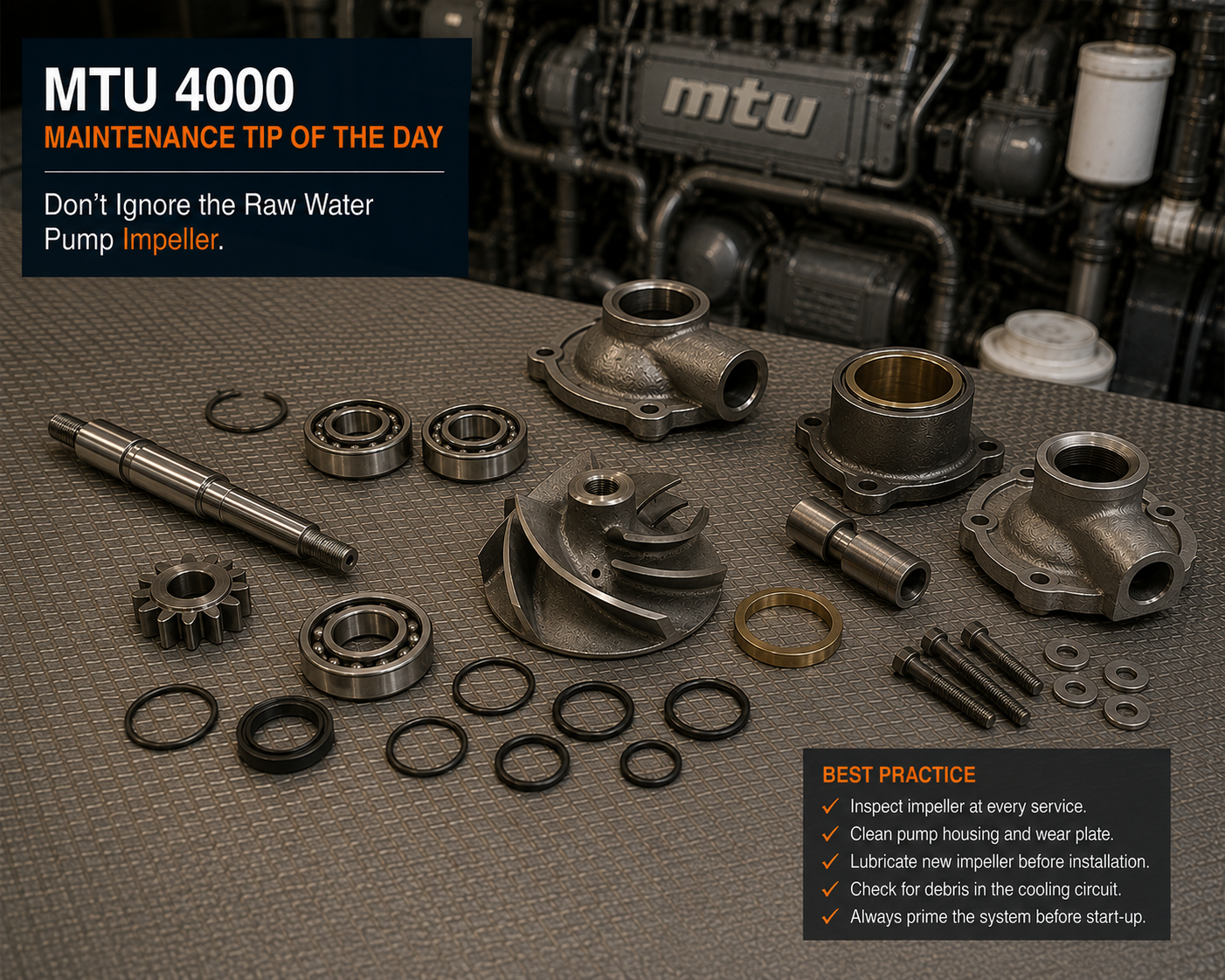
MTU 4000 Raw Water Pump Impeller: The Small Part That Can Save Your Engine
MTU 4000 Raw Water Pump Impeller: Why It Deserves More Attention
If you've spent any time in an engine room, you've probably heard someone say:
"It's just the impeller—we'll replace it and be on our way."
Unfortunately, it isn't always that simple.
The raw water pump impeller is one of the smallest components on an MTU Series 4000 marine engine, yet it performs one of the most important jobs. Every minute the engine is running, the impeller draws seawater through the cooling system, allowing heat exchangers, oil coolers, and other components to remove heat efficiently.
When it fails, the engine can overheat surprisingly quickly.
But here's something that often gets overlooked: replacing the impeller doesn't always solve the problem.
What Does the Impeller Actually Do?
The raw water pump impeller is a flexible rubber rotor with multiple vanes. As it turns inside the pump housing, the vanes flex and create suction, pulling seawater through the cooling system.
That seawater then flows through:
- Heat exchangers
- Oil coolers
- Charge air coolers (where fitted)
- Other cooling passages before being discharged overboard
Without adequate seawater flow, engine temperatures begin to rise.
Why Do Impellers Fail?
Even under normal operating conditions, impellers are wear items.
Common causes of failure include:
- Running the pump dry
- Long periods of engine inactivity
- Aging rubber
- Sand or debris in the seawater
- Excessive operating temperatures
- Incorrect installation
Over time, the rubber becomes less flexible, the vanes crack, or pieces break away completely.
The Mistake Many Engineers Make
Imagine removing an old impeller and noticing two vanes are missing.
You install a new impeller.
Start the engine.
The engine still runs hot.
Sound familiar?
That's because those missing rubber blades rarely disappear.
Instead, they're often carried through the cooling system until they become trapped inside:
- Heat exchangers
- Oil coolers
- Pipework
- Cooling elbows
- Strainers
Even a partial blockage can significantly reduce cooling water flow.
The result?
Higher operating temperatures, reduced cooling efficiency, and hours spent searching for a problem that actually started with a broken impeller.
What Should You Inspect During an Impeller Change?
Replacing the impeller is only one part of the job.
Take a few extra minutes to inspect:
✔ Pump Housing
Look for scoring, corrosion, or excessive wear.
✔ Wear Plate
A worn wear plate reduces pump efficiency even with a brand-new impeller.
✔ Pump Cam
A damaged cam prevents the vanes from sealing properly.
✔ Cover Plate
Grooves or corrosion can allow internal leakage.
✔ O-Rings and Gaskets
Replace damaged seals to prevent air entering the suction side of the pump.
✔ Cooling Circuit
If vanes are missing, inspect downstream components for rubber debris before putting the engine back into service.
Can a Small Impeller Really Cause Engine Damage?
Absolutely.
Restricted seawater flow can eventually lead to:
- Engine overheating
- Reduced oil cooling
- Lower charge-air cooling efficiency
- Increased component wear
- Unexpected shutdowns
- Expensive repairs
Considering the cost of a major marine engine overhaul, spending a little extra time inspecting the cooling system is a worthwhile investment.
Best Practices for MTU 4000 Impeller Maintenance
Experienced marine engineers often follow these habits:
- Replace the impeller according to the maintenance schedule.
- Never run the raw water pump dry.
- Lubricate the new impeller during installation using the recommended lubricant.
- Rotate the engine by hand after installation to seat the vanes correctly.
- Always investigate missing impeller blades.
- Keep a spare impeller and gasket set on board.
Preventive maintenance almost always costs less than emergency repairs.
Frequently Asked Questions
How often should an MTU 4000 impeller be replaced?
Replacement intervals depend on operating hours, engine usage, and the environment. Always follow the maintenance schedule for your specific MTU engine model. Regular inspection is just as important as replacement.
Can I reuse an impeller if it looks good?
If an impeller has been removed, inspect it carefully for cracks, hardened rubber, or permanent vane deformation. Even if it appears serviceable, age and fatigue may have reduced its reliability.
Why is my MTU engine still overheating after replacing the impeller?
One common cause is debris from the old impeller remaining inside the cooling system. Missing rubber vanes can become lodged in heat exchangers, oil coolers, or pipework, restricting seawater flow.
Should I replace the pump gasket every time?
In most cases, replacing the gasket or O-ring during reassembly is good practice. It helps ensure a proper seal and reduces the risk of air leaks or water leakage.
What are the signs of a failing raw water pump impeller?
Typical warning signs include:
- Rising engine temperature
- Reduced cooling water discharge
- Cracked or missing impeller vanes
- Vibration from the pump
- Reduced cooling performance
Final Thoughts
Marine engineering often comes down to paying attention to the details.
The raw water pump impeller may not be the most expensive component on an MTU Series 4000 engine, but it plays a vital role in keeping the cooling system working as intended.
The next time you replace one, don't stop at the pump. Take a few extra minutes to inspect the cooling circuit, look for missing vane fragments, and check the surrounding components. Those simple checks can help prevent overheating, reduce downtime, and keep your engine operating reliably for years to come.
Join the Conversation
Have you ever found broken impeller vanes trapped inside a heat exchanger or oil cooler?
How did you track down the blockage, and what lessons did you learn from the repair?
Share your experience in the comments—your insight could help another marine engineer avoid the same problem.