MTU 12V4000M70 Engine Overhaul: What Really Happens During a Rebuild and Why It Matters
If you've been told that your MTU 12V4000M70 needs an overhaul, it's natural to wonder what that actually involves. Is it simply replacing a few worn parts, or is there much more to it?
The truth is, an engine overhaul is one of the most important investments you can make in the life of your marine engine. Done correctly, it restores reliability, improves performance, and helps prevent costly failures at sea. Done poorly, it can lead to repeated breakdowns, unnecessary expenses, and lost time on the water.
The MTU 12V4000M70, part of the trusted MTU 4000 Series, powers everything from luxury yachts and patrol boats to commercial vessels and offshore support craft. These engines are designed for thousands of hours of operation, but like any high-performance diesel engine, wear is inevitable.
Let's take a closer look at what happens during an overhaul, what problems are commonly discovered, and answer some of the questions we hear most often from vessel owners and marine engineers.
Why Does an MTU 12V4000M70 Need an Overhaul?
Every moving part inside the engine experiences wear over time.
Bearings slowly lose material, piston rings wear against the cylinder liners, injectors become less efficient, and valves no longer seal as perfectly as they once did. This process happens gradually, which is why many operators don't notice the changes until performance begins to suffer.
An overhaul restores these critical components before they cause a major engine failure.
The goal isn't simply to repair what's broken—it's to return the engine to reliable operating condition for many more years of service.
The Engine Usually Gives Warning Signs
One of the biggest mistakes owners make is waiting until the engine completely fails before taking action.
Most engines provide plenty of warning signs if you know what to look for.
You might notice:
- The engine uses more oil than usual.
- Fuel consumption slowly increases.
- Blue or black smoke appears from the exhaust.
- Starting becomes more difficult.
- Engine power feels lower than before.
- Coolant temperature rises more often.
- Oil pressure isn't as stable as it once was.
These symptoms often appear long before serious internal damage occurs.
What Happens During an MTU 12V4000M70 Overhaul?
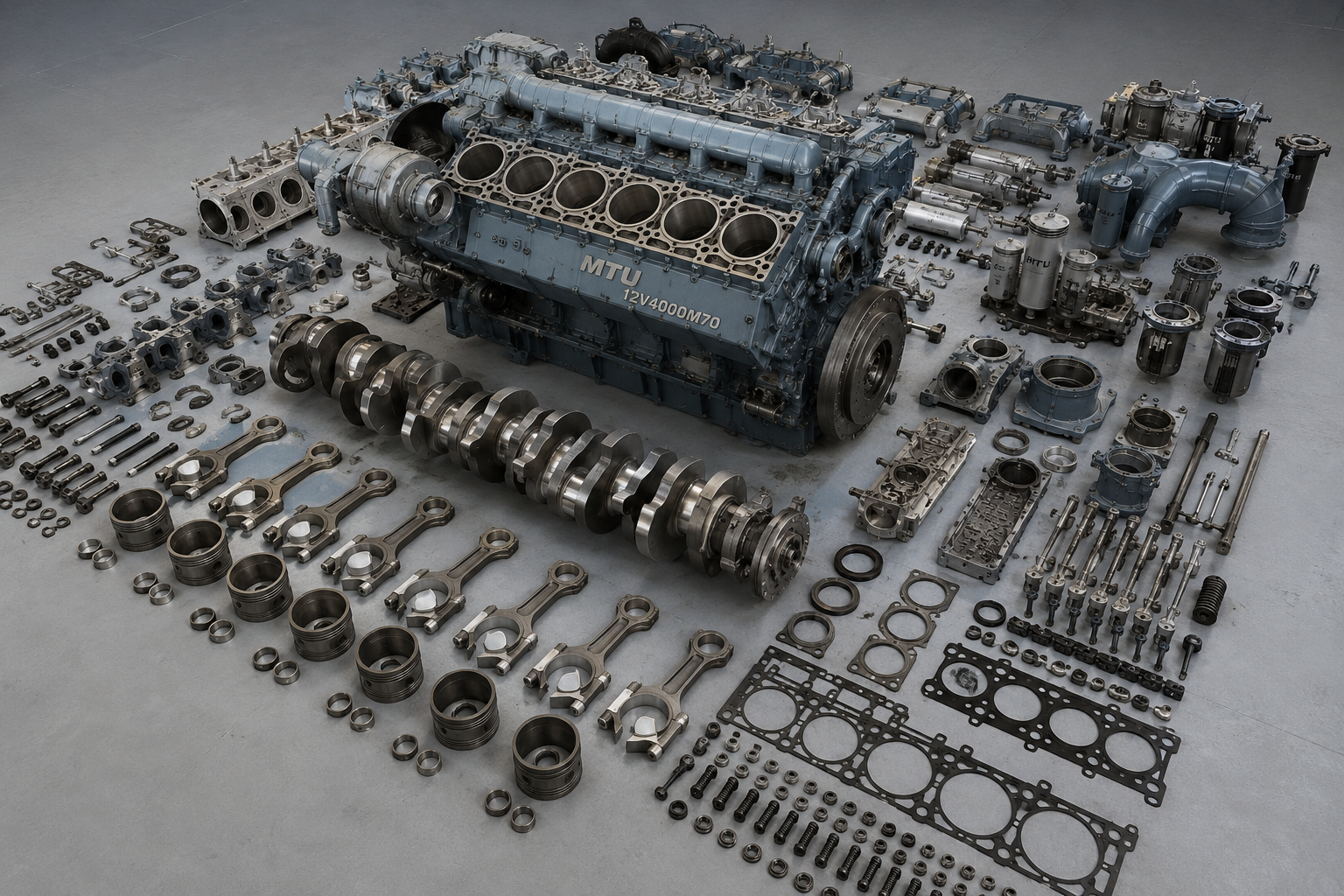
A professional overhaul follows a structured process where every major component is inspected, measured, and restored if necessary.
Top-End Inspection and Rebuild
The overhaul begins with removing the cylinder heads.
This allows technicians to inspect:
- Valves
- Valve guides
- Valve seats
- Valve springs
- Cylinder head surfaces
Any worn or damaged components are repaired or replaced to restore proper compression and combustion efficiency.
Good compression is essential for smooth starting, fuel economy, and engine power.
Bottom-End Inspection
Next comes the lower section of the engine.
The oil pan is removed so the crankshaft, connecting rods, and bearings can be carefully inspected.
Measurements are taken to ensure everything remains within specification.
If the bearings show signs of wear, they are replaced before they have the chance to damage the crankshaft.
Replacing bearings during an overhaul is far less expensive than replacing a crankshaft later.
Pistons and Cylinder Liners
The pistons are removed individually for inspection.
Technicians check for:
- Cracks
- Heat damage
- Worn ring grooves
- Carbon build-up
New piston rings are installed, and the connecting rods are inspected for alignment.
Cylinder liners are also measured carefully.
If excessive wear or scoring is found, new liners are installed to restore compression and eliminate oil consumption caused by worn cylinder walls.
New Gaskets and Seals
One part of an overhaul that often goes unnoticed is replacing all sealing components.
Every O-ring, gasket, and crankshaft seal is replaced during reassembly.
Although these parts are relatively inexpensive, they play a huge role in preventing oil leaks, coolant leaks, and air leaks after the engine returns to service.
Experienced rebuilders never take shortcuts here.
Fuel and Cooling System Inspection
A quality overhaul doesn't stop with the engine block.
Fuel injectors should be tested because worn injectors can increase fuel consumption and create excessive exhaust smoke.
The cooling system also deserves careful attention.
Heat exchangers, seawater pumps, thermostats, and coolant passages should all be inspected for corrosion, blockages, or wear.
A perfectly rebuilt engine can still overheat if the cooling system is neglected.
Electrical System Inspection
The MTU 12V4000M70 depends on electronic engine management.
During an overhaul it's important to inspect:
- ECU connections
- Wiring harnesses
- Battery voltage
- Ground connections
- Sensors
- CAN Bus communication
Many operators replace mechanical parts only to discover the real problem was an electrical fault all along.
Final Engine Testing
After reassembly, the engine isn't immediately returned to the vessel.
A professional overhaul includes testing the engine under controlled operating conditions.
Traditionally, engines are tested on a dynamometer, allowing technicians to monitor:
- Oil pressure
- Coolant temperature
- Fuel pressure
- Turbocharger boost
- Exhaust temperatures
- ECU data
- Engine power output
This confirms the rebuilt engine performs within the required operating tolerances before it goes back into service.
Frequently Asked Questions
How many hours does an MTU 12V4000M70 usually last before an overhaul?
There isn't one fixed number.
Service life depends on operating conditions, maintenance quality, engine load, fuel quality, and cooling system condition.
Some engines require attention earlier because of demanding applications, while others continue running reliably for many thousands of hours with proper maintenance.
Can I keep running the engine if it still starts normally?
Possibly—but it's worth investigating any warning signs.
Many engines continue to start and run even when internal wear has already begun.
Ignoring symptoms such as increased oil consumption, smoke, or reduced performance often turns a relatively simple repair into a much larger overhaul later.
Should the turbocharger be inspected during an overhaul?
Yes.
The turbocharger works under extremely high temperatures and rotational speeds.
Inspecting it while the engine is already dismantled can help identify worn bearings, oil leaks, damaged compressor wheels, or carbon build-up before they become major problems.
Do fuel injectors need replacing during every overhaul?
Not always.
Injectors should be professionally tested first.
If they meet specifications, they may be reused.
If spray patterns are poor or fuel delivery is uneven, refurbishment or replacement is recommended.
Can electrical faults look like mechanical problems?
Absolutely.
Low battery voltage, damaged wiring, corroded connectors, or faulty sensors can all trigger alarms that appear to indicate serious engine problems.
That's why both the mechanical and electrical systems should always be inspected during an overhaul.
Is it worth replacing all seals and gaskets?
Definitely.
Reusing old seals might save a little money initially, but it often leads to oil leaks or coolant leaks shortly after the overhaul.
Replacing them while the engine is already apart is considered best practice.
What is the biggest mistake people make after an overhaul?
Many owners assume the job is finished once the engine starts.
In reality, the first operating hours are extremely important.
Monitoring temperatures, pressures, fluid levels, and following the recommended break-in procedure helps new components seat correctly and extends engine life.
Final Thoughts
A well-executed overhaul gives the MTU 12V4000M70 a new lease on life. It isn't simply about replacing worn parts—it's about understanding the condition of the entire engine and restoring it to the standard it was designed to achieve.
Taking the time to inspect every component, replace worn bearings and liners, renew seals, test injectors, inspect the cooling system, and verify electronic controls all contribute to a more reliable engine and fewer unexpected problems at sea.
If you're planning an overhaul, remember that quality workmanship and attention to detail are just as important as the replacement parts themselves.
At www.alfamarinespareparts.com, we're committed to sharing practical marine engine knowledge to help owners, captains, and marine professionals make informed maintenance decisions. A well-maintained MTU engine isn't just more reliable—it gives you confidence every time you leave the dock.